
P. Lazarou, C. Rotinat
CEA LIST, France
Robotic devices for minimally invasive surgery procedures require flexible tools and careful actuation. But most robotic surgery devices are bulky, expensive, and physically draining for surgeons to operate for long periods of time. At the French Atomic and Alternative Energies Commission (CEA LIST), researchers are investigating miniature phase-change actuators that will reduce the strain placed on surgeons during long procedures. Using COMSOL Multiphysics, Christine Rotinat and Panagiotis Lazarou have simulated a phase-change microactuator that can deliver high loads and ranges of movement that are safe for both patient and surgeon. Their design is based on one by Goldschmidbӧing et al. and relies on the volume expansion of a conductive paraffin composite. They used their simulation of the coupled physics–including nonlinear electrical conductivity, changing viscosity, density, and specific heat capacity–to optimize their design for the best actuation and electrical consumption. Eventually, their microactuator will be integrated into a robotic surgical tool used in the operating room.
Suggested Stories
Undocking Better Boat Landing Designs for Offshore Wind Turbines
Wood Thilsted, a leader in offshore engineering, used structural analysis to design boat landings that can withstand ...
電磁気学の概念の背後にある物理学とアプリケーション
電気工学の学生は彼らが学んでいる電磁気の概念を視覚化することは困難だと感じます. この問題を解決するために Virginia ...
数値シミュレーションによるダムの耐震安全性評価
ピサ大学では地震やその他の地震発生時のダム安全評価の精度を研究するために, 数値シミュレーションを使用しています. 正確な数値モデルは大規模な建築物や建物の構造の完全性とコード要件の遵守を改善することができます.
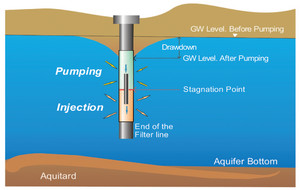
Pumping and Injecting from a Single Borehole
Professor Dr. Martin Sauter leads a group at the University of Göttingen in research on hydrogeology. Cooperating with ...


