
- COMSOL News 2025
- COMSOL News Special Edition: Food Industry
- COMSOL News 2023
- COMSOL News 2022
- COMSOL News 2021
超高級腕時計に受け継がれる時代を超えた伝統を解析
HEPIA, HES-SO Geneva のエンジニアは, COMSOL Multiphysics® ソフトウェアを使用して, 時計製造における希少かつ洗練された高度な機構であるミニッツリピーターの音響をモデル化およびシミュレーションしています. 同チームはこのソフトウェアを用い, 境界要素法によって代理モデルに基づく最適化計算を実行しています.
Mackenzie McCarty 著
2026年8月
一部の高級腕時計には, ミニッツリピーターと呼ばれる複雑な機械式機構が搭載されています. この機構では, 小さなハンマーが小さなゴングを打ち, 1時間, 15分, 1分の単位で異なる音色のチャイムを鳴らし, 時刻を知らせます. ボタンやレバーを操作することで作動するミニッツリピーターは, もともと暗闇の中で時刻を確認するために設計されました. 今日では芸術品とみなされ, ステータス, 卓越した職人技, 過去とのつながりを象徴するものとして身につけられています.
こうした精巧な機構を製作するには, 理想的なチャイム音を実現するための高度な技術と極めて高い精度が必要です. 数百個もの小型部品が使用されるため, 設計の最適化が非常に重要になります. スイス西部応用科学芸術大学 (HES-SO University of Applied Sciences and Arts Western Switzerland) の一部である, ジュネーブ応用科学芸術大学 (School of Engineering, Architecture and Landscape, HEPIA) 内の技術研究所 (inTECH) のエンジニアは, COMSOL Multiphysics® ソフトウェアと簡略化した2Dモデルを使用して, ミニッツリピーターの音響性能をシミュレーションしました.
私たちは, HEPIA で数学の研究員および講師を務める Roland Rozsnyo 氏に, 時計産業, 特にミニッツリピーターの研究における COMSOL Multiphysics® の活用について話を伺いました. 彼は, 放射音響インテンシティと音のスペクトル成分の両方を向上させるために, 腕時計のゴングに対するハンマーの衝撃位置 (ひいては音色) を最適化する方法について説明しました. また, 実行されるシミュレーションの計算効率についても取り上げました. 音響性能は, こうした高級腕時計の重要な品質特性です. そのため, 音の生成プロセスを最適化することは, ユーザー満足度の向上と製品の差別化において極めて重要です. 小型の機械構造内における音響伝搬は複雑であり, 高忠実度のシミュレーションが求められることから, 数値モデリングが広く活用されました.
ミニッツリピーターとは何ですか? 現代の時計製造においてどのような役割を果たしていますか?
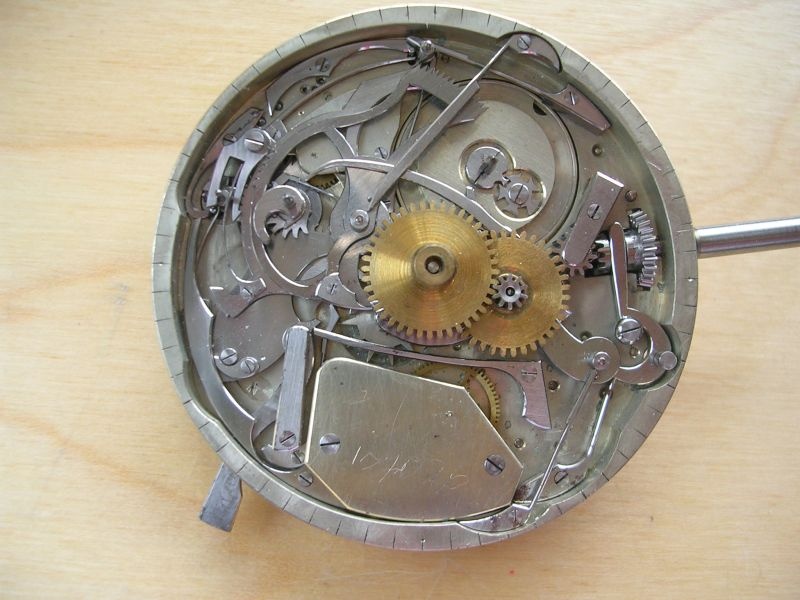
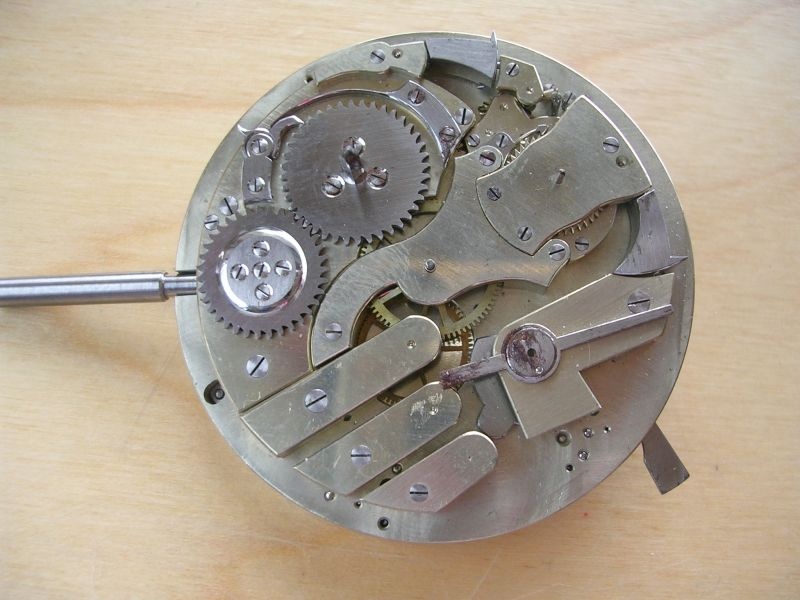
“ミニッツリピーターは現在でも, 時計製造における最も格式が高く, 希少な機能の一つです. 主に, ごく少量のみ生産されるハイエンドな超高級腕時計に搭載されています (図 1). 現代の生活において実用上不可欠な機能ではなくなっていますが, 極めて高度な機械技術と数世紀にわたる時計製造の伝統を象徴するものとして今なお非常に強い象徴的価値を持っています. 顧客は現在もミニッツリピーターが持つ感情的, 芸術的, 文化遺産的な価値に魅力を感じています. 音そのもの, 音楽性, そして各腕時計が持つ独自の音響特性によって, ミニッツリピーターは単なる計時機能ではなく, 真の芸術品となっています.
ミニッツリピーターは, 操作に応じて時刻をチャイムで知らせるように設計されています. 時計職人は美しい音を実現することを望んでおり, 特定の周波数において美しい音を生み出すための主要なパラメーターが何であるかを理解しようとしています. ミニッツリピーター腕時計の基本原理は, ゴングがあり, このゴングをハンマーで打撃することで振動が生じ, その振動が風防ガラスまたは振動膜へ伝わり, そこから音が空気中に放射されるというものです.”
ミニッツリピーターの音響性能の最適化に対し COMSOL Multiphysics® をどのように使用していますか?
“まず, COMSOL Multiphysics® を使用して, 有限要素法 (FEM) と境界要素法 (BEM) の理論的な比較を行います. FEMでは, 固体とその周囲の空気領域の両方をメッシュ化する必要があるため, 計算負荷が大きくなります. 一方, BEMでは境界のみをメッシュ化すればよいため, 特に非有界領域を扱う音響解析において, 必要なメモリと計算時間を大幅に削減できます. この研究では, BEMはFEMと同等の音響解析結果を示しながら, 計算時間と計算資源を大幅に削減できることが明らかになりました (図 3).
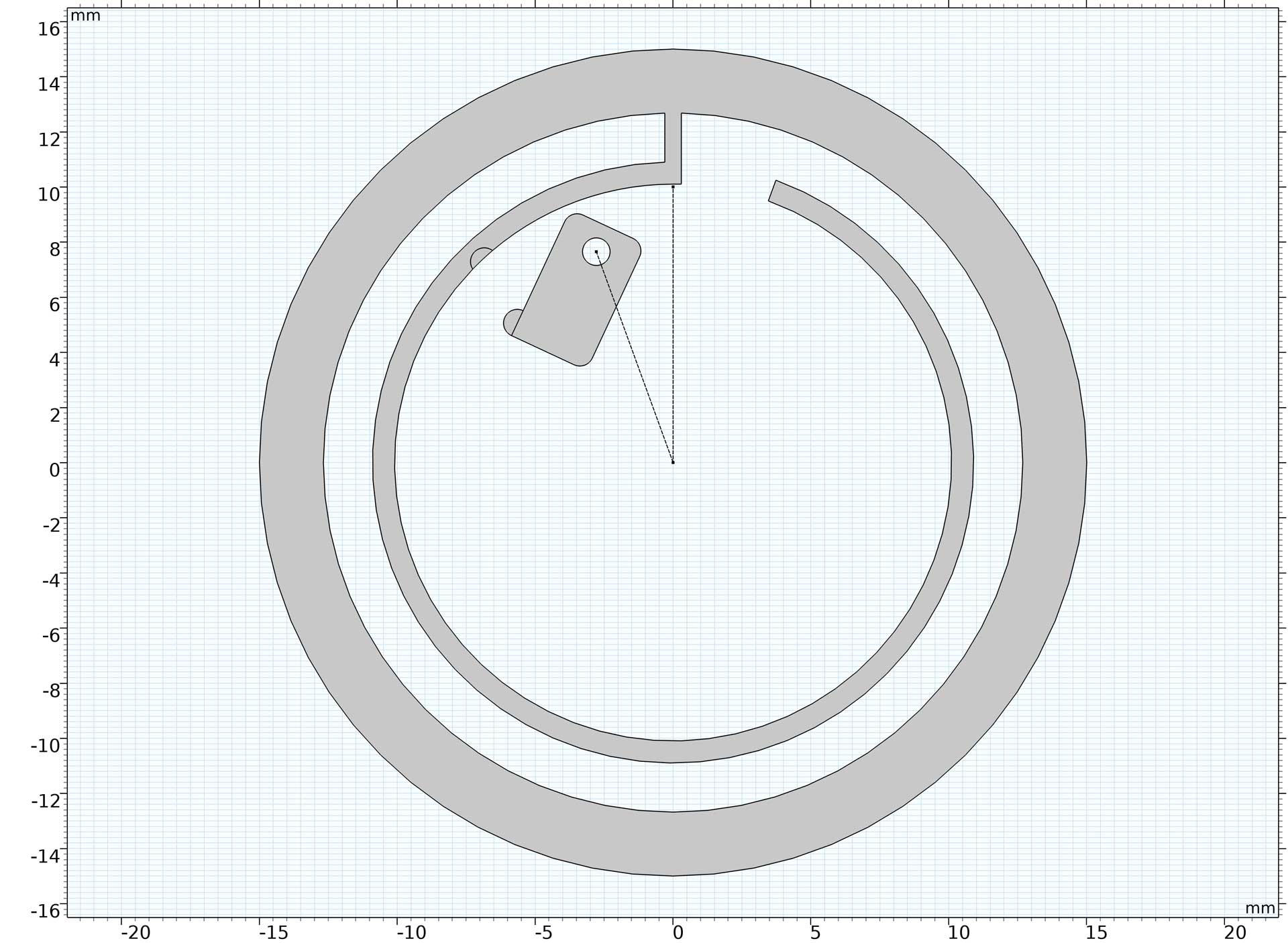
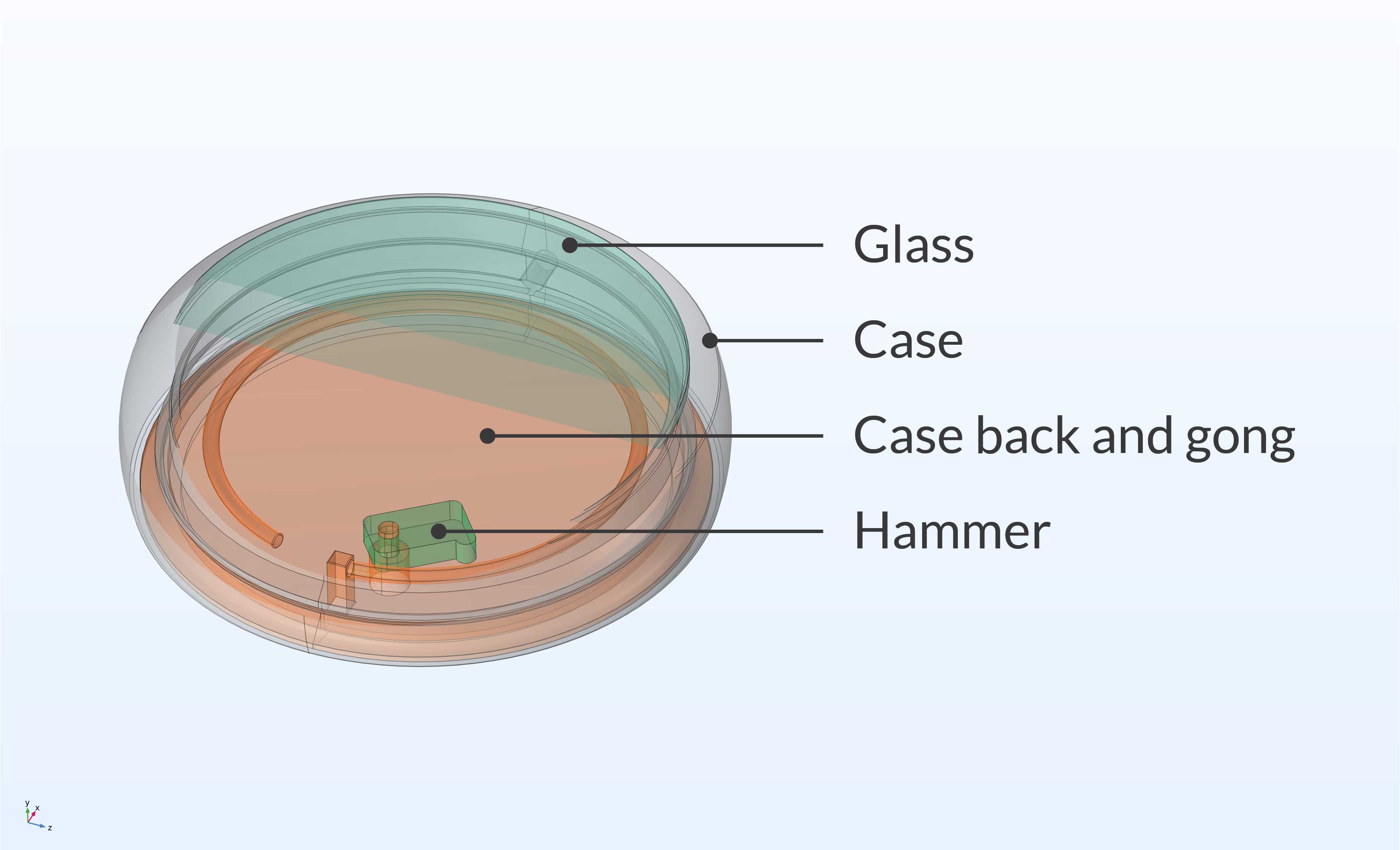
COMSOL Multiphysics® によるシミュレーションでは, ミニッツリピーター機構の音響性能を最適化するために, 簡略化した2Dモデルを使用しました (図 2). ハンマーとゴングの相互作用はマルチボディダイナミクスによってモデル化し, 接触, ばね, 減衰の影響をシミュレーションすることで, 構造振動を生成します.
次に, 構造境界におけるこの加速度を用いて, BEMにより周波数領域で放射音場を計算します. また, BEMのデータを用いて学習させたディープニューラルネットワーク (DNN) ベースの代理モデルを使用し, 計算コストを抑えながら音響応答を近似しました. 高速な最適化反復を可能にするため, Efficient Global Optimization (EGO) アルゴリズムも使用しました. シミュレーションでは, 定義したコスト関数を最小化しながら, 音響インテンシティと音色品質を最適化するハンマーの打撃位置を特定します. この手法は, 計算時間を大幅に短縮できることを示すとともに, 高度な時計音響設計のためのフレームワークを提供します.
FEMを使用して, 腕時計の周囲 1 m の空気領域内で高い可聴周波数を適切に捉えるには, 非常に細かいメッシュが必要です. 通常, 1波長あたり少なくとも5要素が必要となるため, メモリ使用量と計算時間の両面で非常に大規模なモデルになります. BEMでは, 腕時計のジオメトリのみをメッシュ化し, 空気領域は積分定式化によって陰的に処理します. システム行列は密行列になりますが, FEMの体積的な行列と比べると大幅に小さくなります. その結果, 特に3D解析や高周波解析において, メモリ使用量を大幅に削減し, 全体の計算を高速化できます.
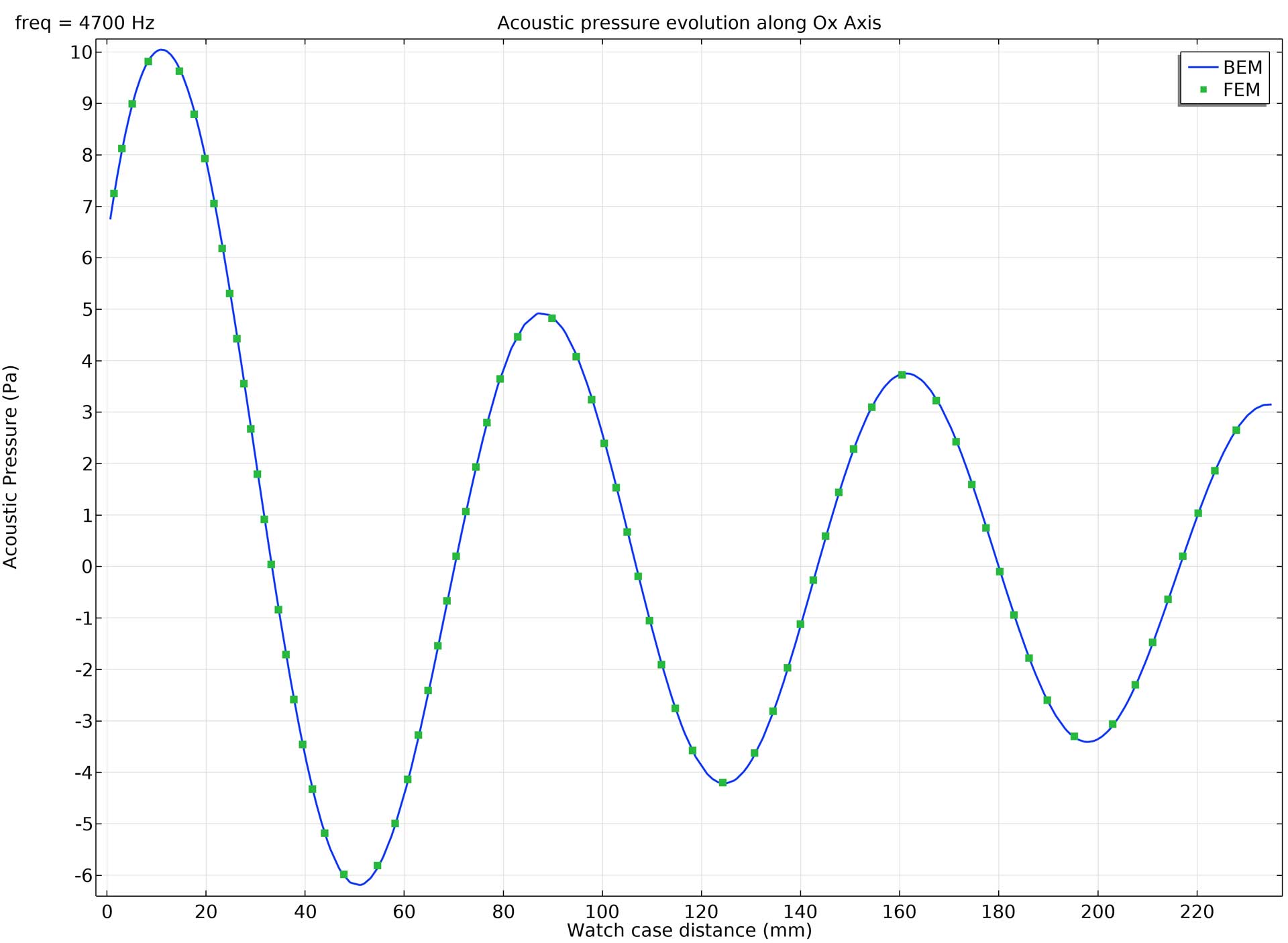
BEMの解析結果を用いることで, 音響放射, 音響インテンシティ, 指向性, ケース形状の影響を, 物理的精度と数値計算効率のバランスを高い水準で保ちながら解析できます.”
モデリングと実験は組み合わせていますか?
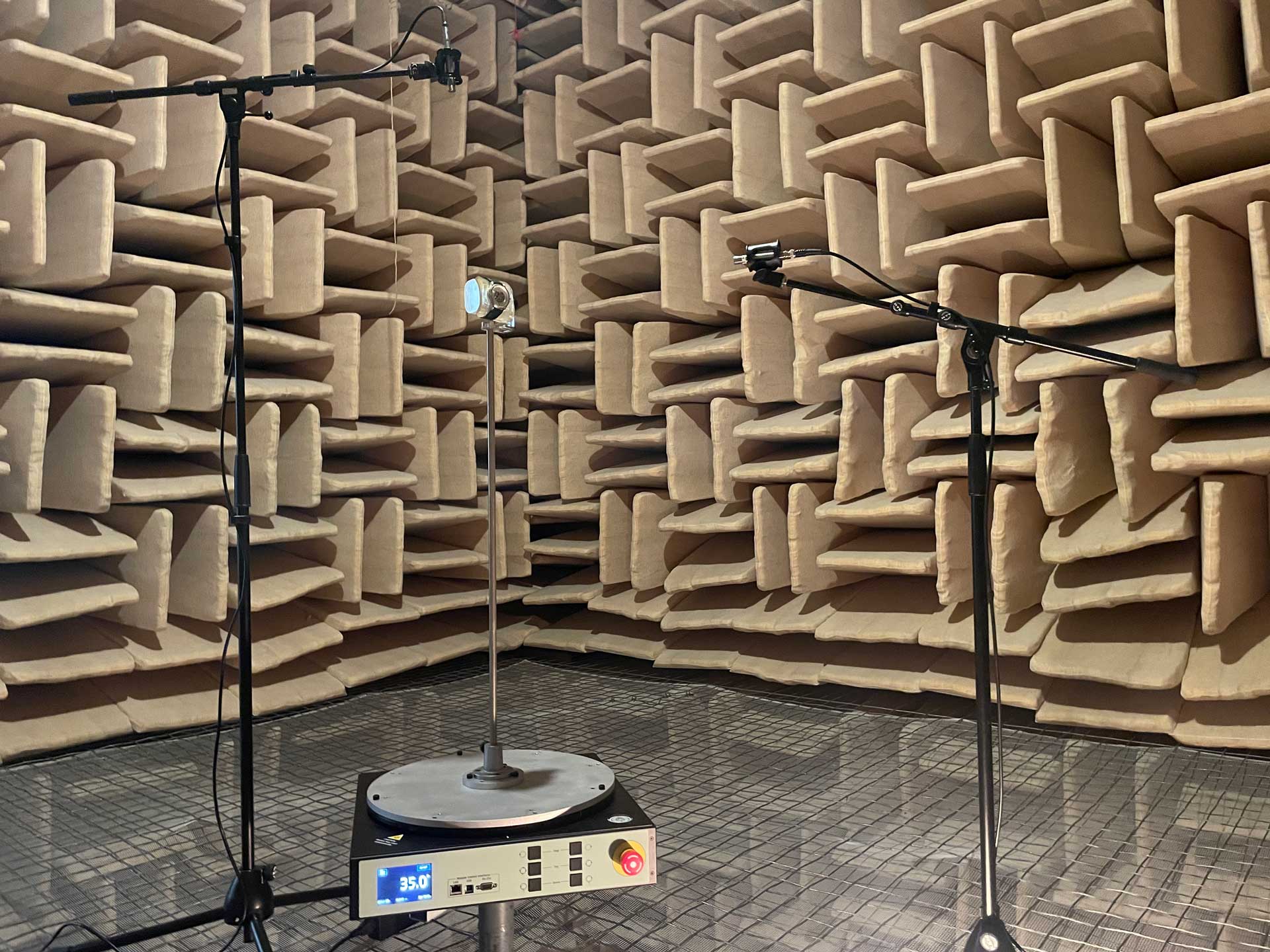
“はい, モデリングは実験と体系的に組み合わせて実施しています. HEPIAの応用音響グループは, 無響室 (図 4) や専用の音響・振動計測システムなど, 腕時計の音響特性を評価するための設備を一式備えています. 私たちは, シミュレーション結果と実験測定結果を日常的に比較しています. これにより, 数値モデルを検証できるだけでなく, 理論だけでは推定が難しい物理パラメーターをより正確に特定し, モデルを改善することもできます. このハイブリッドアプローチにより, シミュレーションの信頼性と産業上の有用性を維持しています.”
時計製造業界において, モデリングとシミュレーションがさらに拡大・発展していく余地はあると思いますか?
“はい, もちろんです. 時計業界におけるシミュレーションの活用は, まだ始まったばかりだと思います. これまでも機械シミュレーションは多く使われてきましたが, 現在ではマルチフィジックスシミュレーションの利用がますます広がっています. 最適化や, 最近では代理モデリングといった機能の活用は, まだ非常に新しい取り組みです. 私たちは, 代理モデリングとマルチフィジックスシミュレーションを組み合わせることで, 直接数値シミュレーションのみに基づく従来手法と比べて, 最適化プロセスを約7倍高速化できることを示しました.
より一般的には, この結果は, 今回の手法によって大幅な計算効率の向上が可能であることを示しています. 実際の高速化率は, 問題の種類, モデルの複雑さ, パラメーター空間によって異なります. しかし, 代理モデルを用いたアプローチでは, 一貫して計算時間を大幅に短縮できます. そのため, 良好な物理精度を維持しながら, 大規模なパラメトリックスタディや最適化ワークフローを, 産業上求められる時間的制約の範囲内で実行できるようになります. 私たちが検討すべきパラメーターは数多くありますが, 代理モデリングによって, 計算時間という点で計算コストを大幅に削減できました. 私たちは計算時間を短縮するためのあらゆる可能性を探っています. COMSOL Multiphysics® には現在, それを実現するためのツールが備わっています.”
時計製造では COMSOL Multiphysics® のほかにどのような機能を使用していますか?
“潤滑や油の広がり, ならびにヒゲゼンマイの空気抵抗を調べるために, 数値流体力学を使用しています. また, 腕時計に使用されている鋼製部品や磁気的な外乱を調べるために, 磁場シミュレーションも行っています. さらに, 腕時計の防水性を確認するために, ドロップテストと呼ばれる試験も使用しています. この試験では, 腕時計を加圧された 40°C の水中に入れた後, 取り出して風防ガラスの上に 5°C の水滴を少量垂らします. これによって熱衝撃が生じ, ガラスに曇りが発生します. 曇りが1分後に消えれば, 腕時計は防水であると判断されます. 消えなければ, 防水ではないと判断されます. しかし, 新しい腕時計には特殊なコーティングが使用されているため, 熱伝導率やガラスの厚さが必ずしも同じではなく, 従来の標準試験では正しい結果が得られなくなっています. そこで, 適切な試験方法を理解するためにシミュレーションを活用したいという要望があり, 私たちはこの現象をモデル化しました.
これは, 3つの物理現象を連成したマルチフィジックスシミュレーションであり, 相変化を伴う伝熱および水分輸送と連成した層流を扱っています. また, すべてが非常に小さなスケールで起こるため, 実験の実施はさらに難しくなります. 空気中で冷却される際の腕時計の温度変化を測定できるセンサーがあります. その測定結果と比較することで, シミュレーションが正しいことを確認し, 検証を行いました.”
業務ではシミュレーションアプリをどのように活用していますか?
“私たちは, 共同研究を行っている企業向けのプロジェクトでシミュレーションアプリを開発してきました. 直近では, バイメタル部品を製造する金属加工企業の Kugler Bimetal と共同研究を行いました. この製造工程では, 1100° の炉から取り出された部品をパルス状の空気で冷却します. 冷却速度が速すぎても遅すぎても最終部品に適切な材料特性が得られないため, 冷却プロセスを完全に制御する必要があります.
工場でこの工程を担当している作業者はシミュレーションの専門家ではありません. そこで, 3年間のプロジェクトの一環として, 冷却を非常に簡単に計算できるアプリを開発しました (図 5). このアプリは製造現場のオペレーター向けに設計されています. 私たちの狙いは, シミュレーションを専門家以外の人々にも広く活用してもらうことです. オペレーターは結果を確認し, 起きていることが適切かどうかを判断するとともに, パラメーターを迅速に変更できます. このアプリを使用することで, ジオメトリ, 材料, 熱条件などの製造パラメーターが, バイメタル部品の機械的および熱的挙動に与える影響を迅速に調べることができます. オペレーターは, 'このパラメーターを設定すれば, より良い結果が得られる' ということを理解し, 工場内で直接検討できます. 私たちは, 炉の温度などの主要パラメーターを設定しました. 炉の温度は, アプリ内で初期条件として変更でき, 設定に応じて異なる冷却結果が得られます. ユーザーはこれらの値を非常に簡単に変更できます. 工場内にコンピューターを設置することは難しいため, オペレーターはタブレットや携帯電話を使用します.
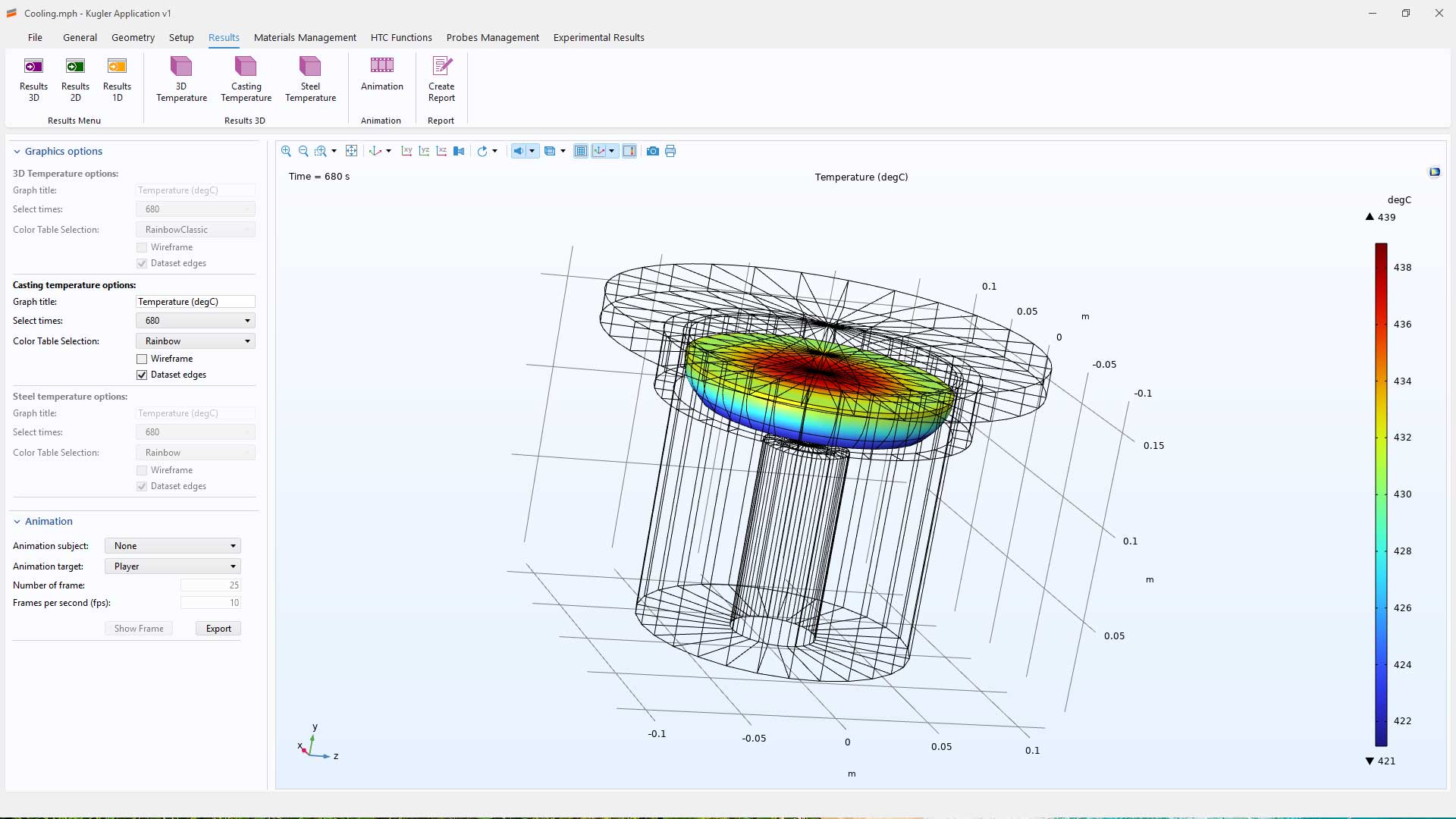
導入結果から, 実機試験の回数が大幅に削減され, 工程への理解が深まり, 製造部品の再現性も向上したことが示されています. このアプリは, 生産ワークフローに組み込まれた実用的な意思決定支援ツールとして機能しています.”
謝辞
Roland Rozsnyo 氏は, 本 Q&A で紹介した研究への支援に対し, 以下の方々に心より感謝の意を表しています. 数値音響および実験音響を専門とする HEPIA, HES-SO Geneva の准教授 Romain Boulandet 氏, HEPIA, HES-SO Geneva の研究助手 (マイクロテクノロジー修士) Marc Chambordon 氏, HEPIA, HES-SO Geneva の研究助手 (機械工学修士) Víctor Sánchez Mejía 氏, HEPIA, HES-SO Geneva の機械エンジニアおよび研究助手 Gaétan Simonnot 氏です. また, Kugler Bimetal 向けシミュレーションアプリを開発した HEPIA の科学研究員 (応用数学博士) Alexandre Masserey 氏にも感謝の意を表しています.




