
Lorenzo Bortot, CERN, Switzerland
Engineers and physicists at CERN go to great lengths to ensure that the high-power superconducting magnets that maintain the circular trajectory of particles inside the Large Hadron Collider (LHC) do not revert to a resistive state, an event known as a quench. To understand and prevent quench events, Lorenzo Bortot, an electrical engineer and research fellow at CERN, used numerical simulation to develop a multiphysics, multiscale, and multirate representation of the electrodynamics and thermal evolution of a quench event.
Suggested Stories
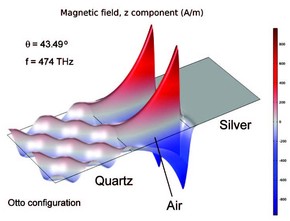
Surface Plasmon Resonance
Surface Plasmon Resonance (SPR) is created by surface plasmons, coherent electron oscillations existing between any ...
超音波トランスデューサーで石油ガス抽出の品質基準を達成
Baker Hughes 社は, 抽出された石油やガスの試験に使用するトランスデューサーを 3D 超音波シミュレーションで最適化することで, 試作コストを 30% 削減しました.

Modeling the Electrochemistry of Blood Glucose Test Strips
Lifescan Scotland is a medical device company that designs and manufactures blood glucose monitoring kits for the ...
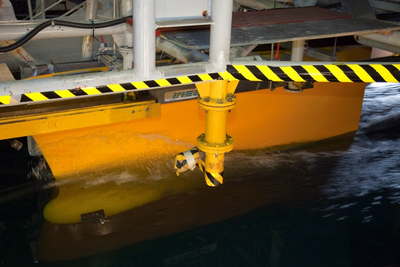
Sonar Dome Vibration Analysis
There has been a recent move towards utilizing bulbous bows on ships to house different types of sonar systems, but it ...


