
Lorenzo Bortot, CERN, Switzerland
Engineers and physicists at CERN go to great lengths to ensure that the high-power superconducting magnets that maintain the circular trajectory of particles inside the Large Hadron Collider (LHC) do not revert to a resistive state, an event known as a quench. To understand and prevent quench events, Lorenzo Bortot, an electrical engineer and research fellow at CERN, used numerical simulation to develop a multiphysics, multiscale, and multirate representation of the electrodynamics and thermal evolution of a quench event.
Suggested Stories
Keynote: Simulation of MEMS Sensors at Bosch
In this keynote talk at the COMSOL Conference 2025 Amsterdam, Daniel Maier of Bosch discusses MEMS sensors and the ...
RadiaSoft で改良型シンクロトロン真空チャンバーへの道を開く
アルゴンヌ国立研究所(ANL)の目標の1つは高度な光子源粒子加速器のシンクロトロンビームの明るさを高めることです. これを行うためにRadiaSoft LLC ...
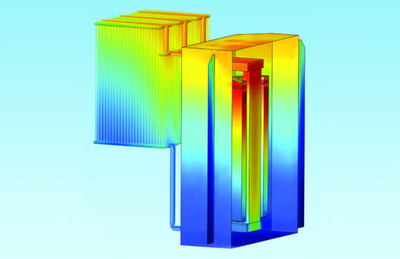
Simulation Enables the Next Generation of Power Transformers and Shunt Reactors
From power generation to its distribution to end users, power transformers and shunt reactors are used throughout the ...
Light, Strong, and Defect-Free Laser Welding: Perfecting the Process for the Automotive Industry
Dozens of safety features in modern automobiles help reduce risk while driving, but regardless of their complexity, ...


