
Enhancing Transmission Line Performance: Using Simulation to Optimize Design
J. Leman
POWER Engineers, ID, USA
Designing power transmission lines requires accounting for many factors: mechanical stress due to environmental conditions and hardware loads, performance testing, and--of course--electrical analysis. Transmission line hardware contains both insulating and conducting assemblies. One common electrical phenomenon is called corona discharge, which occurs when electric fields near the surfaces of insulating assemblies and high-voltage conductors cause the surrounding air molecules to ionize. This can cause electromagnetic interference, visible light, energy losses, and audible noise. In a project to reduce corona discharge in transmission lines, Jon Leman, a senior project engineer at the consulting firm POWER Engineers, Inc. used COMSOL Multiphysics to model an insulator assembly. His team used their simulation to determine the electric field strength and electric potential around different surfaces of the transmission line hardware. They used their results to predict which areas were most susceptible to corona discharge, and gained valuable knowledge about how insulator assembly designs can be modified for better performance.
Suggested Stories

シミュレーションアプリによる太陽電池設計の最適化
Zilina 大学の修士課程の学生によって設計された SolCelSim アプリは, 研究者がシミュレーションソフトに不慣れでも, 太陽電池設計のシミュレーションを可能にします.
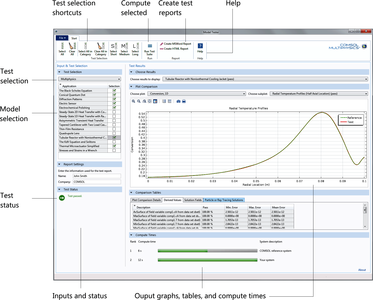
Nuclear-Safety-Related SQA Procedure Automation with Custom Applications
In an environment as highly regulated and potentially dangerous as the nuclear industry, software quality assurance ...
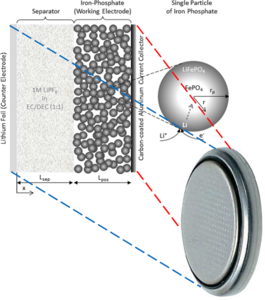
Highly Accurate Li-ion Battery Simulation
Battery management systems (BMSs) are designed to protect the batteries and predict their charge level. They use ...
Magnetic Transmissions Increase Lifespan of Offshore Wind Farms
Sintex is a developer and manufacturer of magnetic couplings, systems that transmit torque and power with ...


