
General Atomics Designs Helicon Antenna for Tokamak with Simulation
Humberto Torreblanca, General Atomics, USA
Built by engineers at General Atomics, the DIII-D tokamak needs to achieve temperatures that are 10 times hotter than the core of the Sun to achieve nuclear fusion. To accomplish this, a novel heating system using a helicon antenna that can inject 1 megawatt of RF power is being designed and built. Humberto Torreblanca, the DIII-D tokamak chief operator, and his team are using multiphysics simulation to model all aspects of the design, such as the magnetic field distribution inside and outside the tokamak vessel as well as the electric field distribution and RF losses of the helicon antenna.
Suggested Stories
Surface Plasmon Resonance
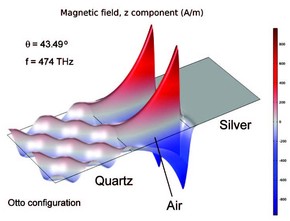
Surface Plasmon Resonance (SPR) is created by surface plasmons, coherent electron oscillations existing between any ...
Shape Changing Lubricants
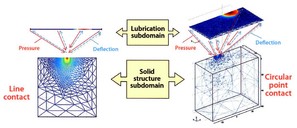
Shell Global Solutions UK is conducting research to optimize lubricants for the fuel economy. A problem exists in ...
シミュレーションによる電離計の性能向上
半導体製造と素粒子物理学の研究は, 高真空または超高真空 (HV/UHV) 条件に依存します. HV/UHV 環境で圧力を測定するためのより優れたイオン化ゲージの開発を支援するために, リヒテンシュタインの INFICON ...
Keeping LEDs Cool Gets More Manageable Through Simulation
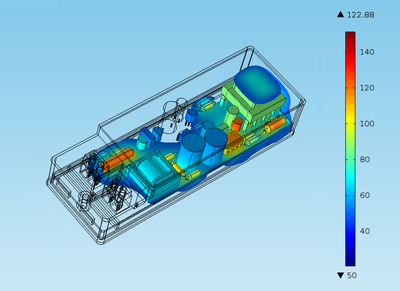
Light-emitting diodes (LEDs) offer many benefits over incandescent lighting, such as long life spans and high luminous ...


