
General Atomics Designs Helicon Antenna for Tokamak with Simulation
Humberto Torreblanca, General Atomics, USA
Built by engineers at General Atomics, the DIII-D tokamak needs to achieve temperatures that are 10 times hotter than the core of the Sun to achieve nuclear fusion. To accomplish this, a novel heating system using a helicon antenna that can inject 1 megawatt of RF power is being designed and built. Humberto Torreblanca, the DIII-D tokamak chief operator, and his team are using multiphysics simulation to model all aspects of the design, such as the magnetic field distribution inside and outside the tokamak vessel as well as the electric field distribution and RF losses of the helicon antenna.
Suggested Stories
Bosch 社は自動車産業の電動化の未来に力を注ぎます
Bosch 社は, 電気自動車のドライブトレインに不可欠な2つのコンポーネントである三相インバーターと DC リンクキャパシタを設計するために, 熱および電磁界シミュレーションを実施しました. 最適化されたインバーターは, ...
Defending Automotive Components Against Corrosive Destruction
Galvanic corrosion, which occurs when the surfaces of different adjoining metals begin to degrade, costs the ...
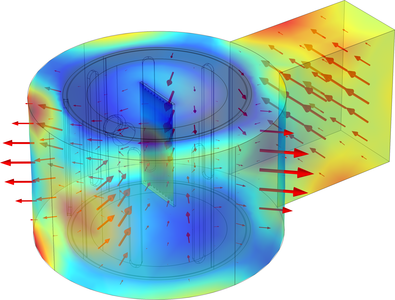
Developing a New Microreactor for Organic Synthesis Using Microwave Heating
The chemical reactions used to generate solvents and certain pharmaceuticals rely on organic synthesis, a process of ...
Getting Touchy-Feely with Touchscreen Design
We rely on capacitive touchscreens whenever we interact with a smartphone, MP3 device, or car video screen. ...


