
NEXT ENERGY Analyzes Heat Transfer in Lithium-Ion Batteries
Gerd Liebig, Pamina Bohn, NEXT ENERGY EWE Research Centre for Energy Technology, Germany
Lithium-ion batteries, which have a tendency to degrade at high temperatures, must adhere to stringent regulations guaranteeing their ability to withstand operating temperature fluctuations. Researchers at NEXT ENERGY used heat transfer modeling to study whether high welding temperatures can create enough temperature propagation within cells to cause irreversible damage, such as electrolyte decomposition and capacity loss. They discovered that tab welding can, in fact, induce irreversible damage, but laser welding is significantly less detrimental.
Suggested Stories

Conjugate Heat Transfer
This is an application brief describing the concept of Conjugate Heat Transfer, which is important in many industrial ...
Simulating Printhead Unimorph Actuators at FUJIFILM Dimatix
FUJIFILM Dimatix, a top producer of commercial inkjet printheads, uses multiphysics simulation to develop MEMS ...
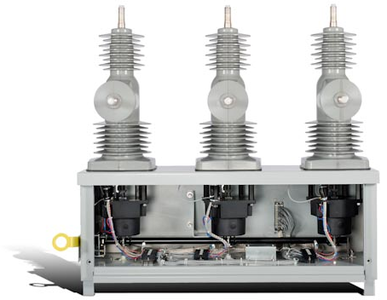
How Reclosers Ensure a Steady Supply of Power: It’s All in the Magnet
When a tree branch touches overhead cables and causes a momentary short circuit, your lights may flicker. A device ...
シミュレーションによる電離計の性能向上
半導体製造と素粒子物理学の研究は, 高真空または超高真空 (HV/UHV) 条件に依存します. HV/UHV 環境で圧力を測定するためのより優れたイオン化ゲージの開発を支援するために, リヒテンシュタインの INFICON ...


