
Shuya Yoshioka
Ritsumeikan University
Shiga, Japan
Human activity steals oxygen from natural water sources such as lakes and this oxygen-deficient water often contains high levels of toxic substances such as metals and organic material. Thus the number of lakes that can be used as a source of water is reduced, straining the available resources and creating a need for water-treatment plants of water which can have negative impacts when powered using fossil fuels.
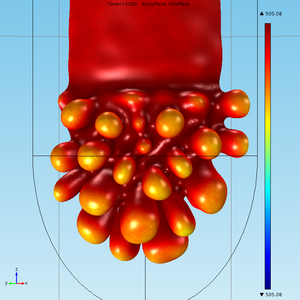
Treating this oxygen-deficient water can be done by injecting oxygen microbubbles into the water to oxidize the metals and cause them to precipitate and stimulate the activity of mircro-organisms that breach down organic material. In testing the volume of microbubbles needed and the appropriate size of those bubbles, a team at Ritsumeikan University in Japan used COMSOL Multiphysics to predict all environmental phenomena having an impact on the body of water (wind, water flow, temperature, chemical reactions, and diffusion).
The team was able to test optimal depth and location for the introduction of the microbubbles in the Sounoseki Dam and is now using COMSOL Multiphysics to apply this process in other locations.
Suggested Stories
Understanding the Origin of Uncertainty in Thermometer Calibration
Thermometers have widespread application and like any measurement device, they must be calibrated. Many do this with ...
EPFLで未来のために設計する若いエンジニアに刺激を
スイス連邦工科大学ローザンヌ(EPFL)のEPFLoopはマルチフィジックスシミュレーションの助けを借りて 2018 SpaceX ハイパーループポッドコンペティションのためにポッドを設計しました. 彼らは世界のトップ3チームに入り, ...
超高級腕時計に受け継がれる時代を超えた伝統を解析
HEPIA, HES-SO Geneva のエンジニアは, 従来のアプローチと比べて約7倍高速な代理モデル主導のプロセスを活用し, 高級腕時計のミニッツリピーターを微調整しています. その方法について Q&A 形式でご紹介します.

Multiphysics Simulations Enable Development of Fast, Cheap MEMS-Based Bacteria Detector
Professor Mark Reed and his team at Yale University are using COMSOL Multiphysics to develop a MEMS-based solution for ...


