
Boston Scientific Simulates Release Mechanisms in Drug-Eluting Stents
T. Schauer, I. Guler
Boston Scientific Corporation, MN, USA
Stent insertion through the coronary artery is a common procedure used to treat restricted blood flow to the heart caused by stenosis. Following the procedure, restenosis may occur due to excessive tissue growth around the stent. Researchers at Boston Scientific are using multiphysics simulation to better understand how drug-eluting stents prevent tissue regrowth and further improve their design.
In COMSOL Multiphysics, the researchers developed a pore-shell model of a stent coating designed for controlled release of medication into surrounding tissues. In their model, the stiff-spring method was implemented to ensure a continuous diffusive flux of medicine at the pore-shell interface. The Optimization Module was used to refine model parameters that could not be determined experimentally, such as the polymer shell thickness and the retardation coefficient of the pores in the stent coating. Both simulation and experimental data confirm a fast release mechanism from pores and slow diffusion through the polymer encapsulant in the shell.
Suggested Stories
海底ケーブルの数値モデル化による洋上風力発電所への電力供給
Hellenic Cables 社は, 有限要素モデリングを使用して, 洋上風力発電所で使用される地中海底ケーブルの設計を解析, 検証し, 持続可能な電力で世界をより良くつなぐことに貢献しています.
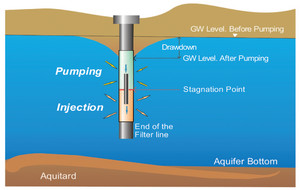
Pumping and Injecting from a Single Borehole
Professor Dr. Martin Sauter leads a group at the University of Göttingen in research on hydrogeology. Cooperating with ...
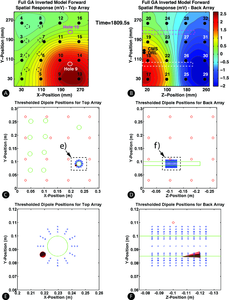
Multiphysics Simulations Help Track Underground Fluid Movements
Combining acoustic and electromagnetic analyses helps scientists to more efficiently measure and survey subterranean ...
Helicon Antenna Supports Nuclear Fusion
Built by engineers at General Atomics, the DIII-D tokamak needs to achieve temperatures that are 10 times hotter than ...


