
Ivana Milanovic, University of Hartford, USA
While covering the required fundamental material in undergraduate academic programs is the top priority, students require an extra set of knowledge and skills to flourish in the workforce. This is especially true in science, technology, engineering, and mathematics (STEM) fields, where there is rarely an abundance of time for inquiry-based learning and the development of field-specific skills. To address this issue, the University of Hartford integrated multiphysics modeling into their curricula. Using the Application Builder in the COMSOL Multiphysics® software, the university created simulation-based laboratory assignments through apps, which enhanced students’ physical intuition and their ability to visualize physical concepts.
Suggested Stories

Analysis of Subsea Umbilicals and Cables
JDR Cables designs-to-spec and manufactures subsea umbilical systems of cables and reelers for the oil and gas and ...
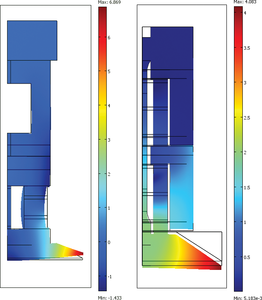
Making Smart Materials Smarter with Multiphysics Simulation
Smart materials with magnetostrictive behavior are engineered and incorporated in high-precision devices by the ...
Researching a New Fuel for the HFIR: Advancements at ORNL Require Multiphysics Simulation to Support Safety and Reliability
In response to the increasing awareness of the risks associated with the proliferation of nuclear materials, the ...

バイオメディカル業界におけるシミュレーションの活用の拡大
インプラントやステントから MRI や脊髄刺激まで, 数値モデリングは生物医学装置の開発にとって最も重要です. 詳細を確認し, この業界の主要なプレーヤーから話を聞いてください.


