
J. Knox, R. Coker
NASA Marshall Space Flight Center, AL, USA
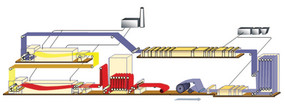
To ensure astronaut safety on space missions, it is necessary to routinely revitalize the atmosphere in manned spacecraft. Jim Knox, Rob Coker, and a team of engineers at the NASA Marshall Space Flight Center have developed a water-saving system called an Isothermal Bulk Dessicant (IBD). The IBD is used to collect water from the atmosphere for re-use. It consists of packed beds lined with silica gel; as air flows through, water is adsorbed onto the silica gel and then transferred back to the atmosphere through desorption once the air has continued on to a CO2 removal system. Using a COMSOL Multiphysics model, Knox and Coker simulated the gas flow and heat transfer in a four-bed IBD. They tracked the flow rates, pressure conditions, and water concentration as water adsorbed and desorbed. Their model predicted that the IBD successfully saved 85% of the water from the atmosphere. As they use COMSOL to optimize their designs, they hope to offer NASA integrated systems that will enable farther space travel than ever before.
Suggested Stories
Better Ways to Heat and Cool Buildings
Adsorptive climate control systems can reduce the power required to heat and cool buildings by running primarily on ...
シミュレーションによる電離計の性能向上
半導体製造と素粒子物理学の研究は, 高真空または超高真空 (HV/UHV) 条件に依存します. HV/UHV 環境で圧力を測定するためのより優れたイオン化ゲージの開発を支援するために, リヒテンシュタインの INFICON ...
Optimized Heating Process with Uniform Coating
Rautaruukki Oyj supplies metal-based components and systems to the construction and mechanical engineering industries, ...
Submarines: Corrosion Protection or Enemy Detection?
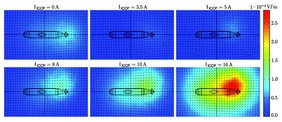
Submarines create underwater electric potential (UEP) signatures when using corrosion protection systems. These ...


