
J. Knox, R. Coker
NASA Marshall Space Flight Center, AL, USA
To ensure astronaut safety on space missions, it is necessary to routinely revitalize the atmosphere in manned spacecraft. Jim Knox, Rob Coker, and a team of engineers at the NASA Marshall Space Flight Center have developed a water-saving system called an Isothermal Bulk Dessicant (IBD). The IBD is used to collect water from the atmosphere for re-use. It consists of packed beds lined with silica gel; as air flows through, water is adsorbed onto the silica gel and then transferred back to the atmosphere through desorption once the air has continued on to a CO2 removal system. Using a COMSOL Multiphysics model, Knox and Coker simulated the gas flow and heat transfer in a four-bed IBD. They tracked the flow rates, pressure conditions, and water concentration as water adsorbed and desorbed. Their model predicted that the IBD successfully saved 85% of the water from the atmosphere. As they use COMSOL to optimize their designs, they hope to offer NASA integrated systems that will enable farther space travel than ever before.
Suggested Stories
Tiptoeing Through the Tulips to Protect Power Plants
ABB, a multinational leader in electrification products and power grid technology, develops generator circuit ...
オープンプランオフィスにおける音とスタイルの調和
オープンプランのオフィスでは, 共同作業環境が提供されます. しかし, 隣の同僚からの騒音が頻繁に発生することもあります. オープンプランのワークスペースの音響条件を改善するために, スイスのコンサルタント会社 Zeugin ...
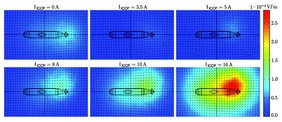
Submarines: Corrosion Protection or Enemy Detection?
Submarines create underwater electric potential (UEP) signatures when using corrosion protection systems. These ...
Bringing Glucose Monitoring to New Levels Through Integrated Sensor Design
The test strips in glucose monitors, widely used by people with diabetes to maintain good health, are sensitive to ...


