
M. Bechis
Prysmian, Italy
The design and testing of high-voltage cables for terrestrial and submarine applications is paramount to Prysmian's business model. A fundamental challenge in designing power transmission systems is optimizing the cables so that they can reliably deliver the required steady-state current while remaining at, or preferably below, the maximum permissible operating temperature. Incorporating multiphysics simulation into the R&D workflow at Prysmian has allowed engineers to design and test cables before constructing prototypes, while also considering unfavorable thermal environments that can be difficult to control in actual experiments. Multiphysics models with transient analysis allowed for evaluating thermal performance of parameterized cable geometries, while incorporating factors such as daily variations in solar irradiation and even current load changes instead of the usual constant current condition. The expanded simulation capabilities at Prysmian have led to improved procedures for cable design and better service to both customers and colleagues.
Suggested Stories
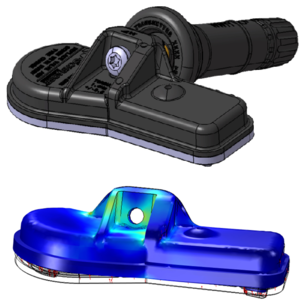
Optimizing Built-in Tire Pressure Monitoring Sensors
Built-in tire pressure sensors need to be able to withstand the wear and tear of working within a car’s tire rim. ...
Keynote: Numerical Simulation of Primary Alkaline Zn–MnO2 Batteries
In this keynote talk from COMSOL Day: Batteries & Fuel Cells, Xiaotong Chadderdon of Energizer introduces primary ...
Lightweighting with Aluminum: Corrosion Apps Guide Leading Design
To achieve fuel efficiency goals, conventional materials for car structures, such as structural steel, must be ...
Keynote: Automotive Audio in the Digital Age
The goal of audio systems is to recreate live sound as accurately as possible, no matter where they are being used. ...


