
Simulation Turns Up the Heat and Energy Efficiency at Whirlpool Corporation
N. Garcia-Polanco
Whirlpool Corporation, Italy
Engineers working on a joint research project between Whirlpool Corporation and the European initiative GREENKITCHEN project are using simulation to improve the energy efficiency of domestic ovens. Since only ten to twelve percent of the total energy expended by an oven is actually used to heat the food, the researchers had plenty to investigate. Using COMSOL Multiphysics® software and the Heat Transfer Module, the team created a model of Whirlpool’s Minerva oven to study the heat transfer processes of convection, conduction, and radiation. The resulting model, which simulates the standard test for energy consumption in the European Union (known as the “brick test”), analyzes the energy, temperature profile, and moisture concentration over different heating cycles. The results of this study will help with future initiatives at Whirlpool and GREENKITCHEN to reduce national energy consumption and improve energy efficiency in Europe.
Suggested Stories
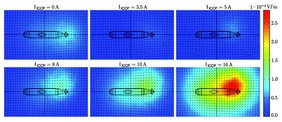
Submarines: Corrosion Protection or Enemy Detection?
Submarines create underwater electric potential (UEP) signatures when using corrosion protection systems. These ...

Numerical Simulation-Based Topology Optimization Leads to Better Cooling of Electronic Components in Toyota Hybrid Vehicles
The Toyota Research Institute in Ann Arbor drives cutting-edge research in energy efficiency, mobility infrastructure, ...
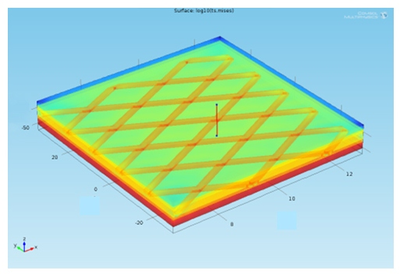
Boeing Simulates Thermal Expansion in Composites with Expanded Metal Foil for Lightning Protection of Aircraft Structures
Carbon fiber composites are used extensively throughout the body of modern aircraft, such as the Boeing 787 ...
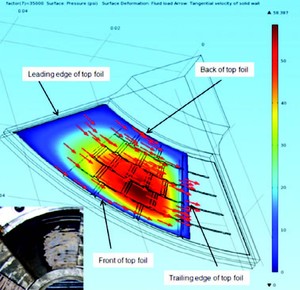
Multiphysics Analysis of CO2 Foil Thrust Bearing Characteristics
Knolls Atomic Power Laboratory (KAPL) is a research and development facility supporting the United States Naval ...


