
Lorenzo Bortot, CERN, Switzerland
Engineers and physicists at CERN go to great lengths to ensure that the high-power superconducting magnets that maintain the circular trajectory of particles inside the Large Hadron Collider (LHC) do not revert to a resistive state, an event known as a quench. To understand and prevent quench events, Lorenzo Bortot, an electrical engineer and research fellow at CERN, used numerical simulation to develop a multiphysics, multiscale, and multirate representation of the electrodynamics and thermal evolution of a quench event.
Suggested Stories
Graphene Paves the Way for Next-Generation Plasmonics
Alexander V. Kildishev, associate professor of electrical and computer engineering, is leading computational ...
Accelerating Custom Capacitor Design with Simulation Apps
When a component is as ubiquitous as a capacitor, its design process needs to allow for a lot of customization. This ...
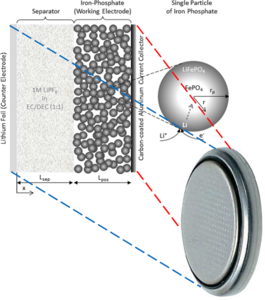
Highly Accurate Li-ion Battery Simulation
Battery management systems (BMSs) are designed to protect the batteries and predict their charge level. They use ...
Keynote: Using COMSOL Multiphysics® for Circuit Board Thermal Analysis
The aerospace and defense industry requires stronger circuit boards than those needed for everyday electronics due to ...


