
Lorenzo Bortot, CERN, Switzerland
Engineers and physicists at CERN go to great lengths to ensure that the high-power superconducting magnets that maintain the circular trajectory of particles inside the Large Hadron Collider (LHC) do not revert to a resistive state, an event known as a quench. To understand and prevent quench events, Lorenzo Bortot, an electrical engineer and research fellow at CERN, used numerical simulation to develop a multiphysics, multiscale, and multirate representation of the electrodynamics and thermal evolution of a quench event.
Suggested Stories
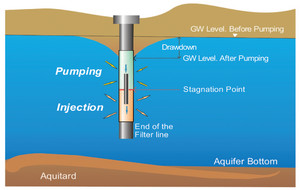
Pumping and Injecting from a Single Borehole
Professor Dr. Martin Sauter leads a group at the University of Göttingen in research on hydrogeology. Cooperating with ...
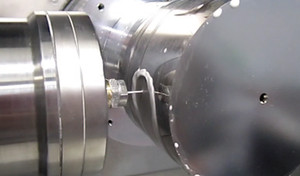
A Smooth Optical Surface in Minutes
Zeeko Ltd is a technology company that manufactures corrective polishing machines for optics and other surfaces. They ...
A STEP in the Right Direction: Modeling AC Losses in a Tokamak Design
The Spherical Tokamak for Energy Production (STEP) program aims to deliver a prototype fusion energy plant in the ...
Shake, Rattle, and Roll
The Norwegian Geotechnical Institute (NGI) is an international center for research and consulting that investigates ...


