
Fraunhofer ISE Optimizes Climate Control Systems with Simulation
Eric Laurenz, Hannes Fugmann, Fraunhofer ISE, Germany
Adsorptive climate control systems can reduce the power required to heat and cool buildings by running primarily on waste heat, natural gas, and solar thermal energy instead of electricity. While adsorption-based chillers, heat pumps, and thermal storage units are available commercially, they need to be more efficient, compact, and cheaper to produce in order to be available on a larger scale.
Researchers at the Fraunhofer Institute for Solar Energy Systems (ISE) use numerical simulation and experimentation to better understand and design heat exchangers for adsorption systems, including wire-based structures with high surface areas. Using COMSOL Multiphysics® software, the research team captured the dynamics of the adsorption and desorption processes that release heat into buildings. Their work entails modeling water vapor and heat transfer through porous structures, such as sorbent, as well as isothermal fluid flow and heat transfer through solids, to achieve an optimized exchanger geometry.
Suggested Stories
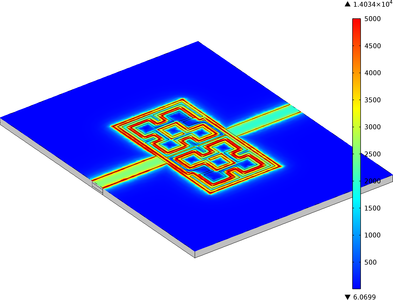
Analysis of Spiral Resonator Filters
As the world becomes more digital, there is growing demand for advanced wireless systems. Increasingly high data rate ...
ダリエス水車で発電し魚を守る
Physixfactor社は, シミュレーションを利用して, オランダの沿岸部の洪水対策に使用する水車タービンの設計をシミュレーションで行いました. 従来の水力発電用タービンと比較して, 新しいタービン設計では魚の死亡率が20%から1 ...
Seeking Out Electrical Arcing Regions in Satellite Systems
Space is the epitome of an unpredictable and harsh environment. These conditions are near impossible to replicate via ...
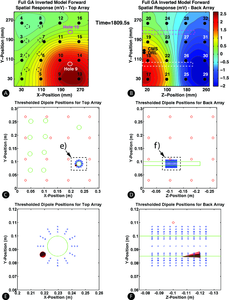
Multiphysics Simulations Help Track Underground Fluid Movements
Combining acoustic and electromagnetic analyses helps scientists to more efficiently measure and survey subterranean ...


