
J. Morgan, R. Greegor, P. Ackerman, Q. Le
Boeing, WA, USA
Carbon fiber composites are used extensively throughout the body of modern aircraft, such as the Boeing 787 Dreamliner, because of their exceptional strength and light weight. Expanded metal foil (EMF) is added to the composite structure layup as a protective measure to dissipate the extreme heat and current generated by a lightning strike. Engineers at Boeing Research and Technology (BR&T) are using multiphysics simulation and physical measurements to ensure that protective coatings on the EMF remain intact when subjected to thermal stress arising from the ground-to-air flight cycle. The impact of the EMF design parameters on stress buildup and displacement in each layer of the composite structure layup was evaluated in COMSOL Multiphysics®. Experiments correlated well with simulation results, which confirmed that designs characterized by lower displacements also have a reduced likelihood of crack formation.
Suggested Stories
マルチフィジックスシミュレーションによる非破壊美容処置の設計
CoolSculpting® と CoolTone® は, それぞれ対象となる皮下脂肪を除去し, 筋肉を強化するように設計された, 別個の非破壊的な医療美的処置です. Allergan Aesthetics は, ...
Innovative Motor Designs for Electric Cars Come to Life
If electric vehicles are to ultimately transcend from niche to mainstream, their motor designs must continually ...
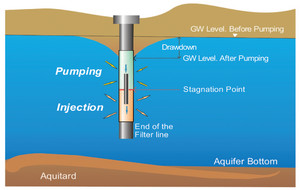
Pumping and Injecting from a Single Borehole
Professor Dr. Martin Sauter leads a group at the University of Göttingen in research on hydrogeology. Cooperating with ...
ABBの電磁流量計デジタルツインがパフォーマンスを向上
ABBは仮想環境で実際の流量計を模擬するために電磁流量計のデジタルツインを構築しました. デジタルツインはマルチフィジックスモデリングに基づいてABBが流量計の設計を改善し, フィールド条件下でのデバイス性能を予測することを可能にします.


