
NEXT ENERGY Analyzes Heat Transfer in Lithium-Ion Batteries
Gerd Liebig, Pamina Bohn, NEXT ENERGY EWE Research Centre for Energy Technology, Germany
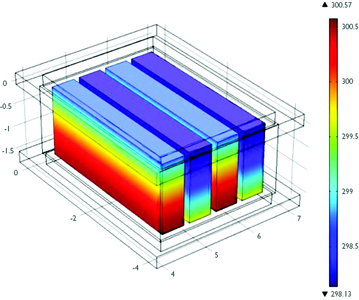
Lithium-ion batteries, which have a tendency to degrade at high temperatures, must adhere to stringent regulations guaranteeing their ability to withstand operating temperature fluctuations. Researchers at NEXT ENERGY used heat transfer modeling to study whether high welding temperatures can create enough temperature propagation within cells to cause irreversible damage, such as electrolyte decomposition and capacity loss. They discovered that tab welding can, in fact, induce irreversible damage, but laser welding is significantly less detrimental.
Suggested Stories
シミュレーションアプリによる遠隔教育の学生へのラボ授業の提供
ニュージャージー工科大学で, 1人の教授とその学生が, 世界中の工学およびラボの授業で使用できる15のシミュレーションアプリを設計しました.
Keynote: Using COMSOL Multiphysics® for Circuit Board Thermal Analysis
The aerospace and defense industry requires stronger circuit boards than those needed for everyday electronics due to ...
Simulation Helps Improve Atmosphere Revitalization Systems for Manned Spacecraft
To ensure astronaut safety on space missions, it is necessary to routinely revitalize the atmosphere in manned ...
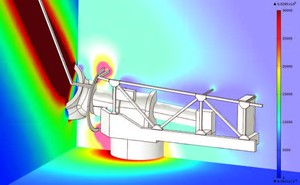
Lightning-Proof Wind Turbines
Søren Find Madsen, Global Lightning Protection Services A/S, Lejre, Denmark Global Lightning Protection Services A ...


