
Konica Minolta Uses Simulation to Study and Optimize OLED Devices
Leiming Wang, Konica Minolta Laboratory, USA
As the demand for lightweight and flexible electronics continues to increase, so does the demand for lightweight and flexible light sources. Organic LEDs (OLEDs) have garnered tremendous interest because of their inherent elasticity, but suffer from a lack of brightness and efficiency. Researchers at Konica Minolta are working to alleviate these limitations and minimize light lost in their OLED designs. Using the COMSOL Multiphysics® software, they simulated the electromagnetic field and light emission distribution for a variety of nanostructured cathode geometries, determined the optimal configuration, and were able to cut light losses in half.
Suggested Stories
MTC Develops Simulation App to Revolutionize Design for Additively Manufactured Parts
Tolerances and precision in the aerospace industry are astoundingly tight. Because of the high degree of regulation ...
Simulations for Solar
Engineers at EMIX use numerical analysis to characterize and optimize all aspects of design for the manufacture of ...
冷凍および冷却技術のための熱交換器設計の最適化
thermofin GmbHは, マルチフィジックスシミュレーションを使用して, 熱交換器デバイスがさまざまなクライアントのニーズに合わせて最適化されるようにします.
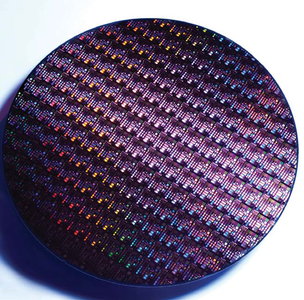
Pushing the Limits of Chip Density
Chip manufacturers have been adhering to Moore’s law, a law stating that the number of transistors that can be ...


