
S. Lei, R. Enright, R. Frizzell, D. Hernon
Bell Labs, Ireland
The information and communication technology industry needs new energy-efficient devices that can keep up with the explosive growth in data traffic of the last few years. Bell Labs, the research arm of Alcatel-Lucent, is taking the lead in an initiative to reduce the carbon footprint of high-speed communication devices and platforms by investing in new methods for cooling electronics and harvesting energy. The team at Bell Labs used COMSOL Multiphysics to simulate the optical, thermal, and electrical performance of laser systems with integrated microthermoelectric coolers; they used their results to optimize designs of photonic devices and take advantage of the thermoelectric effect. They also simulated the structural, magnetic, and electrical behavior of electromechanical systems to investigate the best design for converting mechanical vibrations into electricity, which will reduce the need for frequent battery replacements for wireless sensors. With their continued research into these topics and the power of simulation, many new technologies for improving energy efficiency are on the horizon.
Suggested Stories
Manipulate and Control Sound: How Mathematical Modeling Supports Cutting-Edge Acoustic Metamaterials Research
Researchers at Duke University are using numerical modeling to develop metamaterial structures for acoustic cloaking. ...
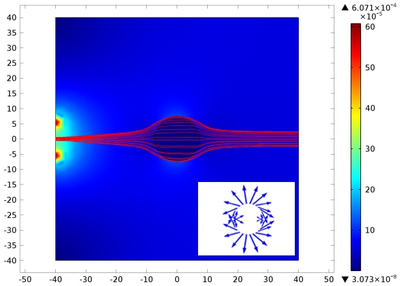
Patterning Cells with the Flip of a Switch for Bioengineering Applications
Dielectrophoresis (DEP) is a method of patterning cells and particles used in medical, electronics, and energy ...
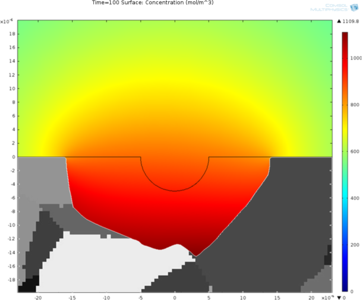
Simulation-Led Strategy for Corrosion Prevention
Corrosion is a widespread concern costing the US billions of dollars annually. For the Navy, specifically, it is the ...
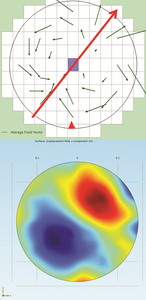
Modeling of Complex Physics Speeds Chip Development
With technological advancements accelerating so rapidly, more powerful computer chips are needed to meet the high ...


