
J. Yang, M. Perrin, P. Lalanne
CNRS, France
Nanoresonators, or optical nanoantennas, manage the concentration, radiation, and absorption of light at the nanometer scale and show stunning promise for future improvements to technology, such as sensors, computers, and other electronics. However, the ways that these devices scatter light and interact with their surrounding environment are not well understood, nor are the electromagnetic properties of the complex metal shapes that comprise them. Numerical approaches to calculating the resonance modes and excitations in nanoresonators have historically been cumbersome and error-prone.
Now, researchers and engineers at Institut d’Optique d’Aquitaine (Paris, France) are using COMSOL Multiphysics simulations to rapidly and precisely determine physical properties, calculate the resonance modes, and analyze the electromagnetic fields and scattering that occur due to excitation. They expect that their new approach to modeling these nanoresonators will lead to advancements in the development and use of nanoelectromechanical devices (NEMS) for a wide range of applications such as photovoltaics, spectroscopy, and improved electronic systems.
Suggested Stories
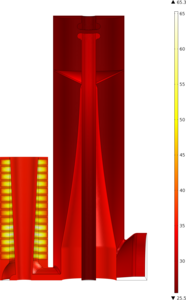
Doubling Beam Intensity Unlocks Rare Opportunities for Discovery at Fermi National Accelerator Laboratory
Behind the discovery of the most fundamental and rare physical processes within our universe is powerful technology, ...
Simulating Laser-Material Interactions
California-based Lawrence Livermore National Laboratory (LLNL) oversees the National Ignition Facility (NIF), which ...
海底構造物を可視化するための無人潜水艇の訓練
USM の研究者たちは, シミュレーションアプリと機械学習技術を用いることで, 水面下に何があるかを自律的かつ正確に明らかにする能力を持つ水中無人探査機 (UUV) のための基礎を築いています.
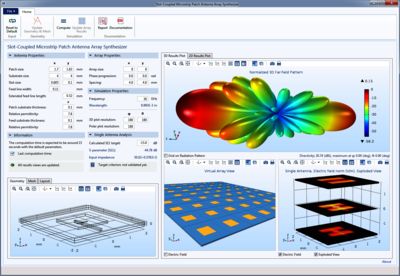
Communicating from Space: The Front End of Multiscale Modeling
As satellites and astronauts travel further out in space, the more communication challenges they are faced with. This ...


