
Toyota Improves Electronic Component Cooling with Simulation
Toyota Research Institute of North America, MI, USA
The Toyota Research Institute in Ann Arbor drives cutting-edge research in energy efficiency, mobility infrastructure, and safety. Here, Ercan Dede and his team are designing heat sinks (or cold plates), which are affixed to fragile electrical systems and other applications in Toyota’s hybrid vehicles.
Their simulations simulate the cold plate’s topology for improved cooling efficiency while minimizing pressure drop. Previous designs provided good heat transfer, but at the cost of significant pressure drops across the plate. Making use of branching channels, the heat sinks provide the same heat transfer but with an optimized flow path. Using LiveLinkTM for SolidWorks®, they were able to create fast and accurate design iterations, leading to an optimal cold plate topology.
SolidWorks is a registered trademark of Dassault Systèmes SolidWorks Corp.
Suggested Stories
Keynote: Democratizing In Silico Ablation R&D via Simulation Apps
In this keynote talk from COMSOL Day: MedTech, Marcela Mercado Montoya of IN SILICO STEM introduces the capabilities ...
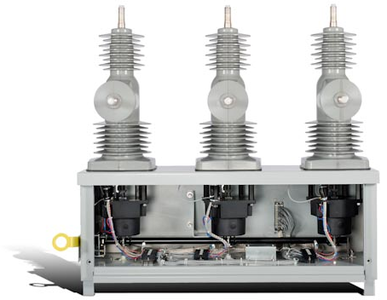
How Reclosers Ensure a Steady Supply of Power: It’s All in the Magnet
When a tree branch touches overhead cables and causes a momentary short circuit, your lights may flicker. A device ...
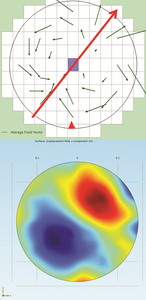
Modeling of Complex Physics Speeds Chip Development
With technological advancements accelerating so rapidly, more powerful computer chips are needed to meet the high ...
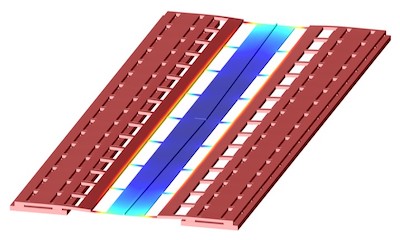
シミュレーションによるシリコンフォトニック MEMS 移相器の設計
スイス連邦工科大学ローザンヌ校の研究者は, シミュレーションを使用して, シリコンフォトニック MEMS 移相器の光学的および電気機械的性能を最適化し, それによって光ファイバーネットワークの速度, 容量, ...


