
F. De Vita, S. Di Marco, F. Costa and P. Turchi
Altran, Italy
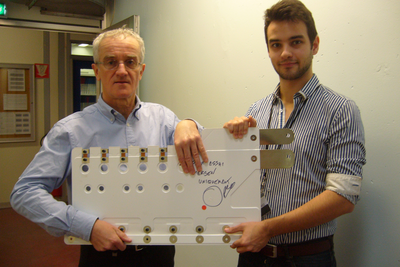
Stealth airplanes and ships avoid radar detection by optimizing the shape of surfaces to reflect away from the radar source or absorb its energy. Yet, if a ship or aircraft’s antenna for communication purposes is to operate properly, it cannot be completely covered up. This makes it one of the remaining components with a large radar cross section and can essentially destroy the overall system’s invisibility to radar.
Altran, a global leader in innovation and high-tech engineering consulting, set out to design frequency selective surfaces with geometrical patterns that would optimize the stealth technology. The performance of a FSS is linked to its shape, thickness, choice of substrates and the phasing between individual elements. There are many possibilities, and testing each one physically would be time consuming for designers. Altran turned to simulation with COMSOL Multiphysics to investigate the frequency responses of a variety of shapes and sizes and how they are distributed on a surface in order to find promising candidates in just minutes.
Suggested Stories
Control of Joule Heating Extends Performance and Device Life
Large electrical systems carrying high currents could pose a danger if any of their components, such as fuses and bus ...
Optimizing Passenger Vehicle Design with Simulation Apps
The fast-paced passenger vehicle design process at Mahindra, a multinational automotive manufacturer, demands ...
Optimized Heating Process with Uniform Coating
Rautaruukki Oyj supplies metal-based components and systems to the construction and mechanical engineering industries, ...
Giving Furniture Testing a Leg Up
Chairs must meet quality standards, which requires lengthy and costly testing. To reduce the burden on manufacturers, ...


