
Shuya Yoshioka
Ritsumeikan University
Shiga, Japan
Human activity steals oxygen from natural water sources such as lakes and this oxygen-deficient water often contains high levels of toxic substances such as metals and organic material. Thus the number of lakes that can be used as a source of water is reduced, straining the available resources and creating a need for water-treatment plants of water which can have negative impacts when powered using fossil fuels.
Treating this oxygen-deficient water can be done by injecting oxygen microbubbles into the water to oxidize the metals and cause them to precipitate and stimulate the activity of mircro-organisms that breach down organic material. In testing the volume of microbubbles needed and the appropriate size of those bubbles, a team at Ritsumeikan University in Japan used COMSOL Multiphysics to predict all environmental phenomena having an impact on the body of water (wind, water flow, temperature, chemical reactions, and diffusion).
The team was able to test optimal depth and location for the introduction of the microbubbles in the Sounoseki Dam and is now using COMSOL Multiphysics to apply this process in other locations.
Suggested Stories
Simulation-Based Design of New Implantable Hearing Device
Cochlear Technology Centre Europe (CTCE) develops new technology for hearing implants. Their current work is with a ...
Multiphysics Simulation Helps Miele to Optimize Induction Stove Designs
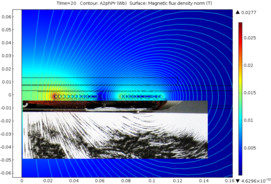
The induction stove was designed to meet a consumer need for better precision and speed than traditional stoves. ...
海底構造物を可視化するための無人潜水艇の訓練
USM の研究者たちは, シミュレーションアプリと機械学習技術を用いることで, 水面下に何があるかを自律的かつ正確に明らかにする能力を持つ水中無人探査機 (UUV) のための基礎を築いています.
がん個別化医療を支援するシミュレーションアプリが登場
バジリカータ大学のスピンオフ企業である iBMB は, 乳がんの腫瘍の進行を腫瘍内科医がより正確にモニタリング・評価できるよう支援するシミュレーションアプリを開発しました. このアプリは, 臨床現場への導入が可能な段階にあります.


