
Ivana Milanovic, University of Hartford, USA
While covering the required fundamental material in undergraduate academic programs is the top priority, students require an extra set of knowledge and skills to flourish in the workforce. This is especially true in science, technology, engineering, and mathematics (STEM) fields, where there is rarely an abundance of time for inquiry-based learning and the development of field-specific skills. To address this issue, the University of Hartford integrated multiphysics modeling into their curricula. Using the Application Builder in the COMSOL Multiphysics® software, the university created simulation-based laboratory assignments through apps, which enhanced students’ physical intuition and their ability to visualize physical concepts.
Suggested Stories
Manipulate and Control Sound: How Mathematical Modeling Supports Cutting-Edge Acoustic Metamaterials Research
Researchers at Duke University are using numerical modeling to develop metamaterial structures for acoustic cloaking. ...
Simulation Summit Panel: The Multiphysics Roadmap
Speakers from NVIDIA, Stanford University, and MathWorks, as well as COMSOL and moderator DE 24/7, discuss the future ...
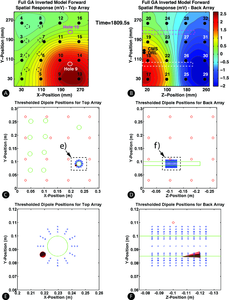
Multiphysics Simulations Help Track Underground Fluid Movements
Combining acoustic and electromagnetic analyses helps scientists to more efficiently measure and survey subterranean ...
シミュレーションアプリによる遠隔教育の学生へのラボ授業の提供
ニュージャージー工科大学で, 1人の教授とその学生が, 世界中の工学およびラボの授業で使用できる15のシミュレーションアプリを設計しました.


