
Ivana Milanovic, University of Hartford, USA
While covering the required fundamental material in undergraduate academic programs is the top priority, students require an extra set of knowledge and skills to flourish in the workforce. This is especially true in science, technology, engineering, and mathematics (STEM) fields, where there is rarely an abundance of time for inquiry-based learning and the development of field-specific skills. To address this issue, the University of Hartford integrated multiphysics modeling into their curricula. Using the Application Builder in the COMSOL Multiphysics® software, the university created simulation-based laboratory assignments through apps, which enhanced students’ physical intuition and their ability to visualize physical concepts.
Suggested Stories

Modeling of Complex Physics Speeds Chip Development
With technological advancements accelerating so rapidly, more powerful computer chips are needed to meet the high ...
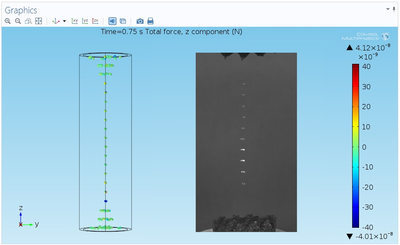
Floating on Sound Waves with Acoustic Levitation
As part of an industry that saves lives on a regular basis, pharmaceutical companies are in need of systems that can ...
Efficient Grid Operation and Maintenance with Simulation Apps
Engineers at NARI Group Corporation developed the Cable Condition Analysis Expert System App, based on their ...
補聴器技術で世界の聴覚を支援
この Q&A では, Sonion 社の Michele Colloca 氏が, 補聴器設計における主な課題と, モデリングとシミュレーションが研究開発の加速にどのように役立つかについて解説します. Sonion 社は, ...


