
J. Knox, R. Coker
NASA Marshall Space Flight Center, AL, USA
To ensure astronaut safety on space missions, it is necessary to routinely revitalize the atmosphere in manned spacecraft. Jim Knox, Rob Coker, and a team of engineers at the NASA Marshall Space Flight Center have developed a water-saving system called an Isothermal Bulk Dessicant (IBD). The IBD is used to collect water from the atmosphere for re-use. It consists of packed beds lined with silica gel; as air flows through, water is adsorbed onto the silica gel and then transferred back to the atmosphere through desorption once the air has continued on to a CO2 removal system. Using a COMSOL Multiphysics model, Knox and Coker simulated the gas flow and heat transfer in a four-bed IBD. They tracked the flow rates, pressure conditions, and water concentration as water adsorbed and desorbed. Their model predicted that the IBD successfully saved 85% of the water from the atmosphere. As they use COMSOL to optimize their designs, they hope to offer NASA integrated systems that will enable farther space travel than ever before.
Suggested Stories
マルチフィジックスモデリングを通してブリルアンオプトメカニカルインタラクションを理解する
Campinas 大学とCorning の研究者は, 光弾性と移動境界効果がどのように連携して導波ガイド, 光ファイバー, その他のナノフォトニック構造におけるブリルアン散乱を増強(または抑制)させるかを見たいと考えていました. ...
Virtually Tuning an Automotive Audio System
HARMAN is a market leader in connected car setups and equips 80% of the world's luxury cars with premium audio ...
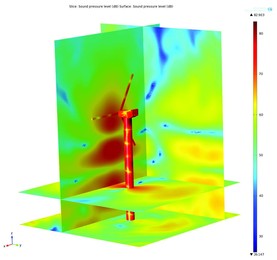
Wind Turbine Noise Reduction
Xi Engineering Consultants Ltd specializes in complex vibration issues, like those caused by wind turbines. The ...
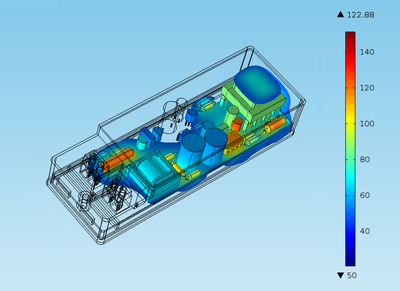
Keeping LEDs Cool Gets More Manageable Through Simulation
Light-emitting diodes (LEDs) offer many benefits over incandescent lighting, such as long life spans and high luminous ...


