
Harvey Buck, Roche Diagnostics Operations, Inc., Indianapolis, IN, USA
The test strips in glucose monitors, widely used by people with diabetes to maintain good health, are sensitive to chemical interferences and environmental conditions. The manufacturing process and electrode configuration of these strips also affects response accuracy. Researchers at Roche Diagnostics Operations, Inc. used multiphysics simulation to analyze the chemical reactions and voltage response in their glucometers.
Using COMSOL Multiphysics, Harvey Buck, principal scientist at Roche, investigated different configurations and materials used in the test strips. He analyzed the electrical response to an applied voltage during the chemical reaction catalyzed in a sample. Through numerical simulation, he predicted the sensitivity of electrical impedance measurements to mechanical properties of the sensor. He also optimized the electrode configuration, maximized sensitivity to cell fraction in a sample, and minimized sensitivity to manufacturing tolerances. These simulation results have given the Roche team a better understanding of their integrated sensor design for glucose monitoring.
Suggested Stories
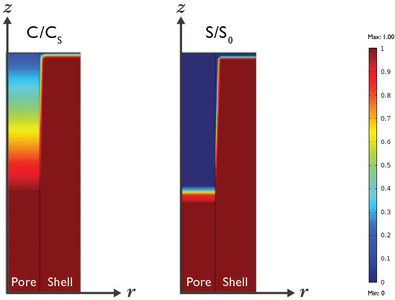
Simulating the Release Mechanism in Drug-Eluting Stents
Stent insertion through the coronary artery is a common procedure used to treat restricted blood flow to the heart ...
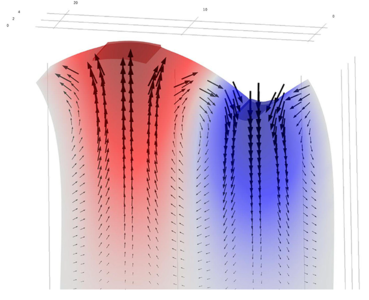
Gaining Insight into Piezoelectric Materials for Acoustic Streaming
Many sensors, such as flow sensors and those used in medical diagnostics, rely on microfluidic devices. However, ...
Bringing Glucose Monitoring to New Levels Through Integrated Sensor Design
The test strips in glucose monitors, widely used by people with diabetes to maintain good health, are sensitive to ...
Modeling Scar Effects in Electrical Spinal Cord Stimulation
The Neuromodulation Group at Lahey Clinic conducted a study based upon spinal cord stimulation (SCS). SCS involves ...


