AC/DC モジュール

低周波電磁気と電気機械部品のシミュレーション

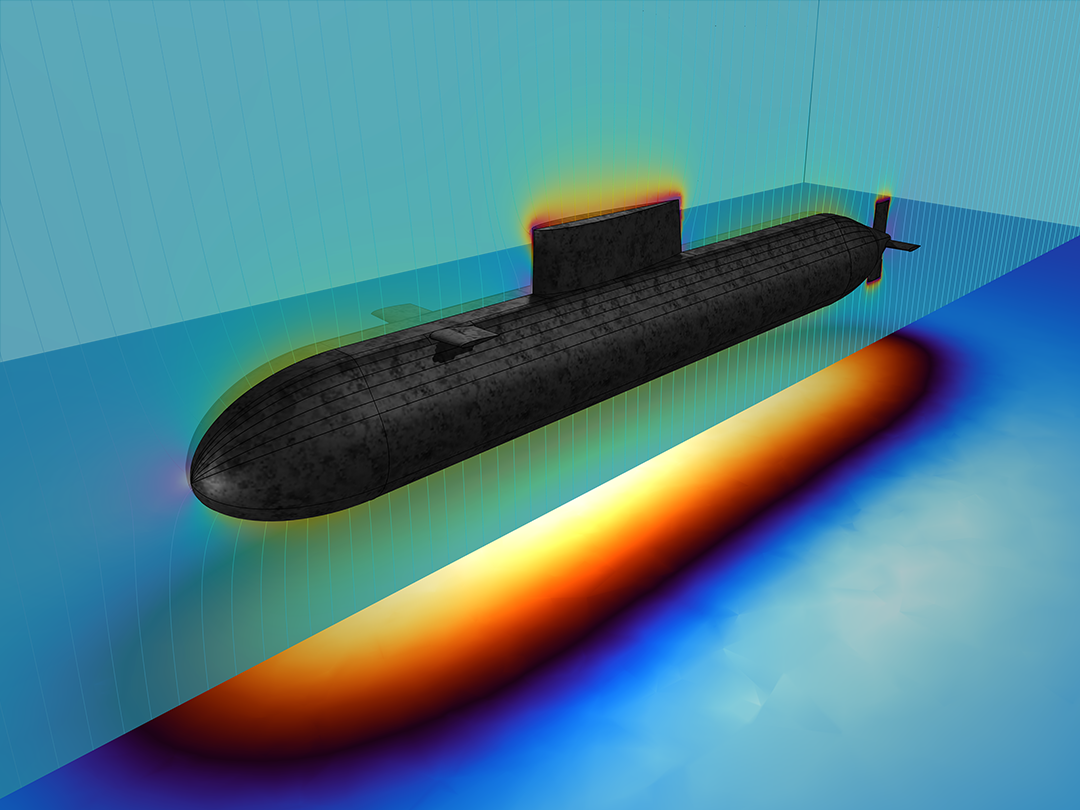
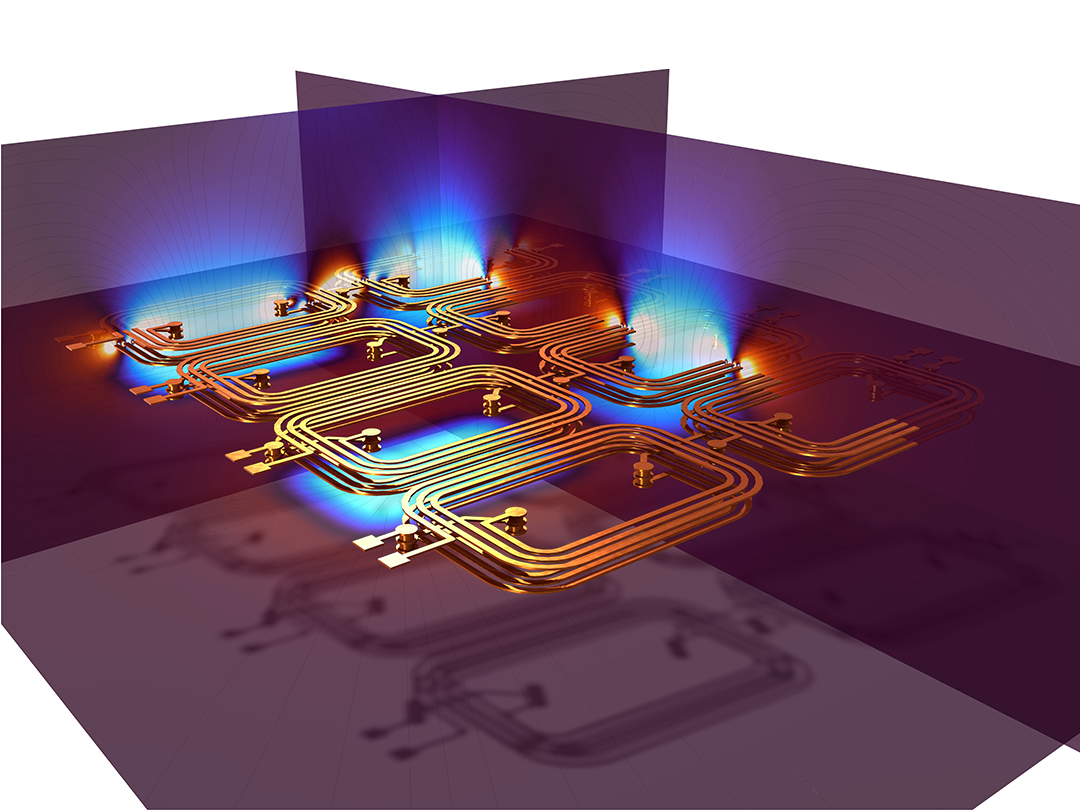
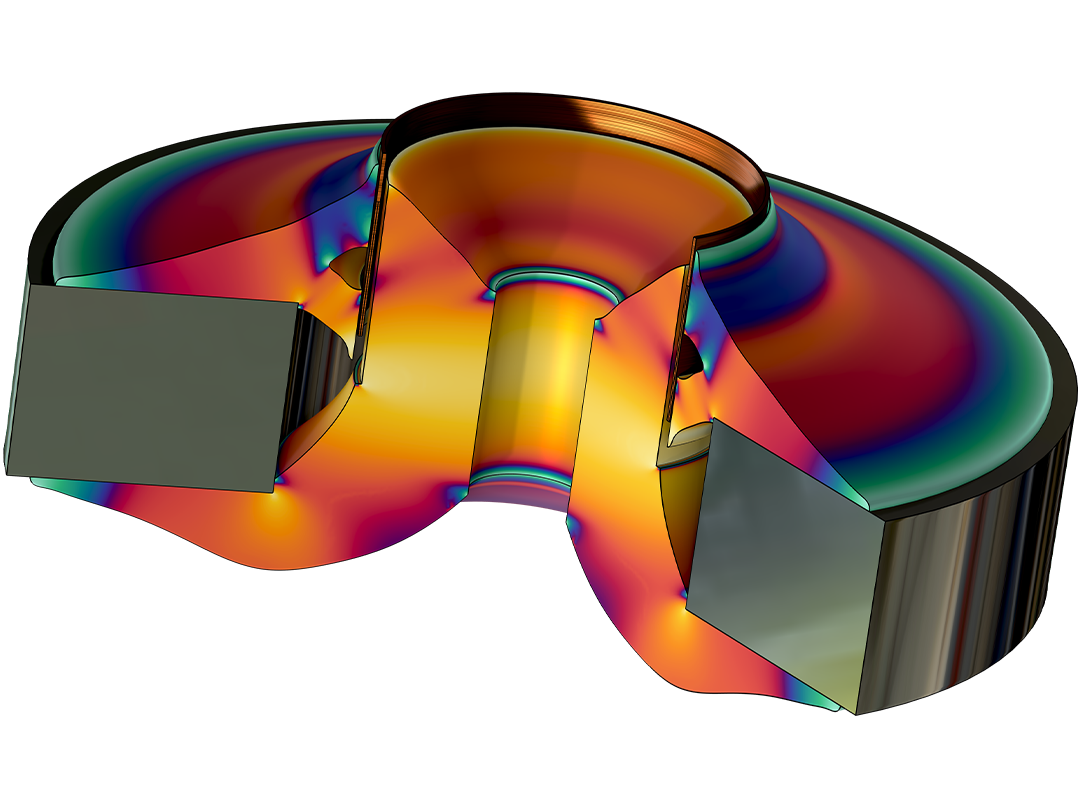
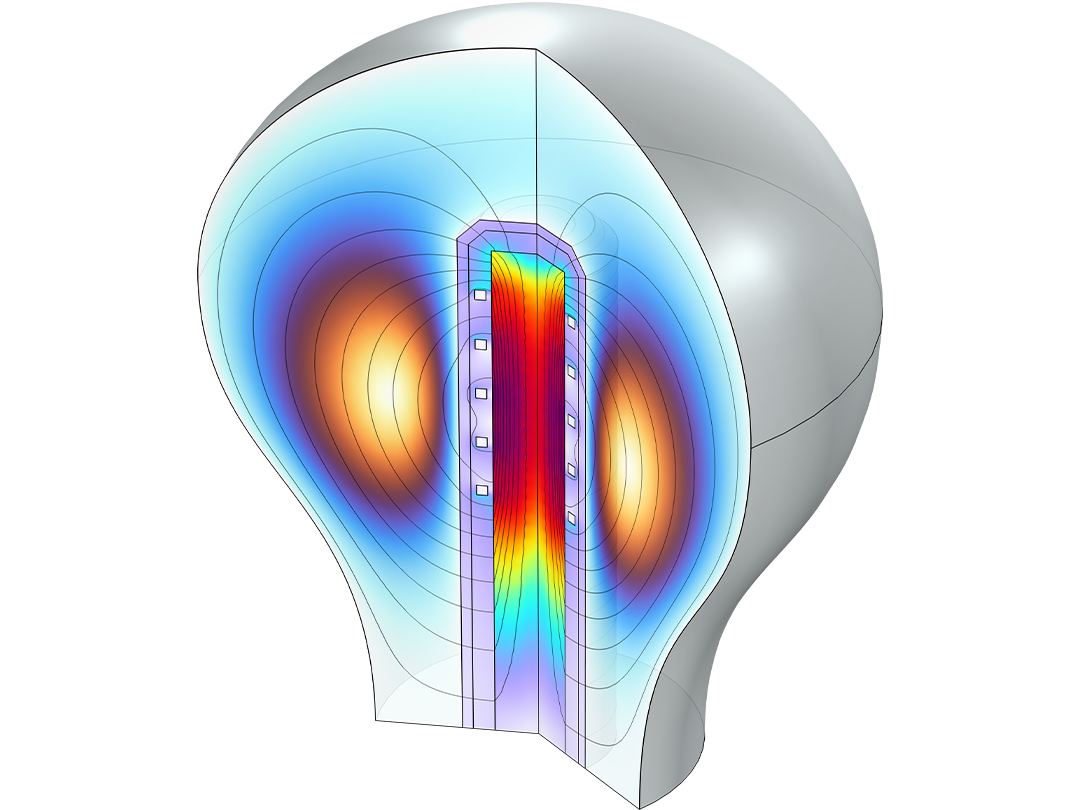
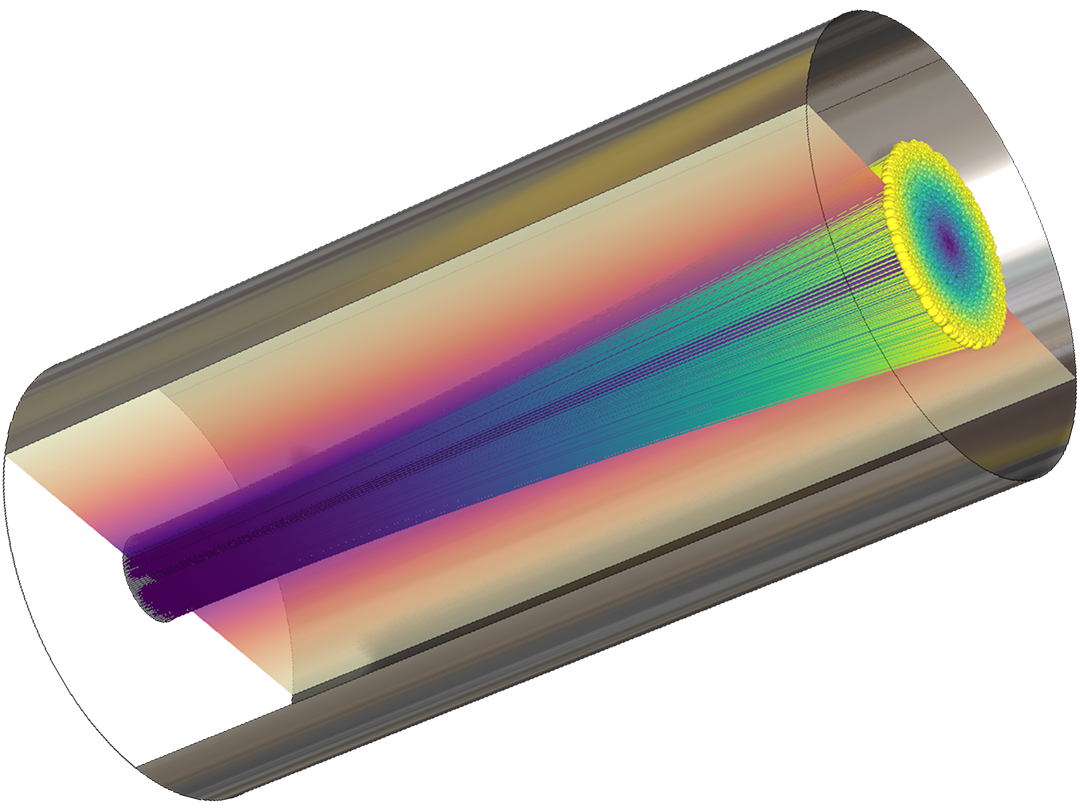
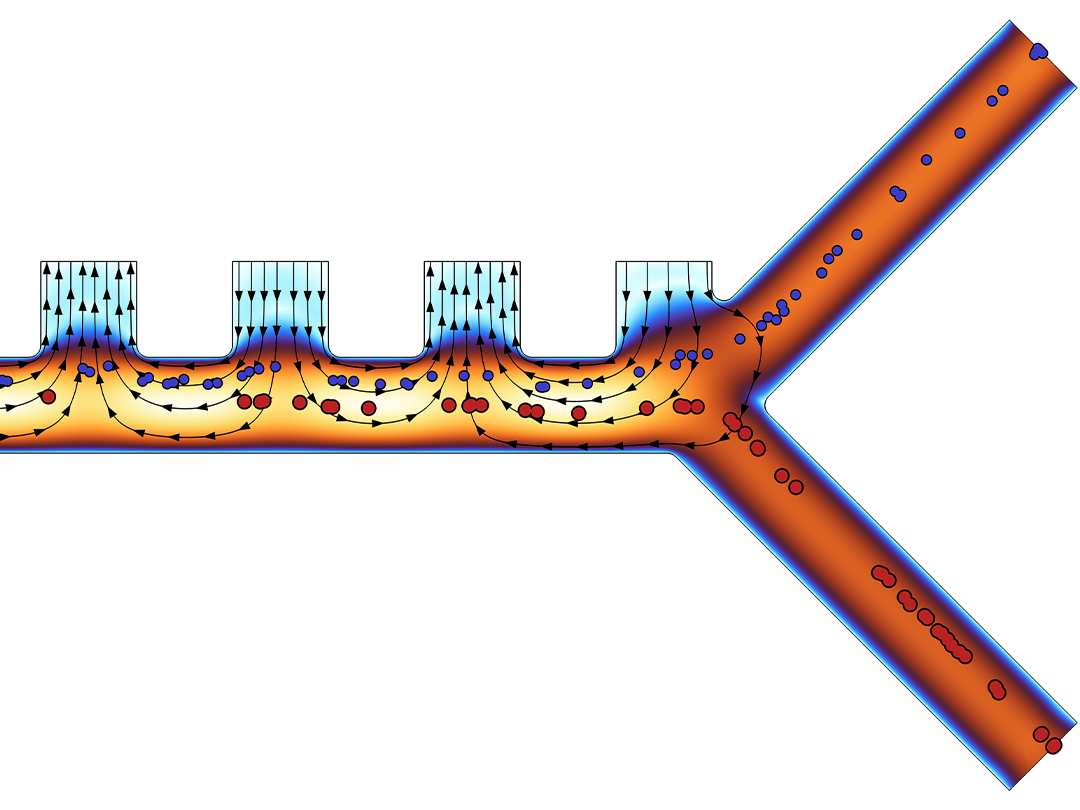
定常低周波レンジの電磁システムとプロセスの解析には, 強力で柔軟なシミュレーションツールが必要です. COMSOL Multiphysics® プラットフォームの AC/DC モジュールアドオンには, 幅広いモデリング機能と EMI/EMC および電磁場解析のためのマックスウェル方程式を解く数値解法を提供します.

COMSOL® ソフトウェアのマルチフィジックス機能によって, 電磁気モデル上の熱伝導, 構造力学, 音響など他の物理的効果の影響を調べることができます.

COMSOL へお問い合わせ
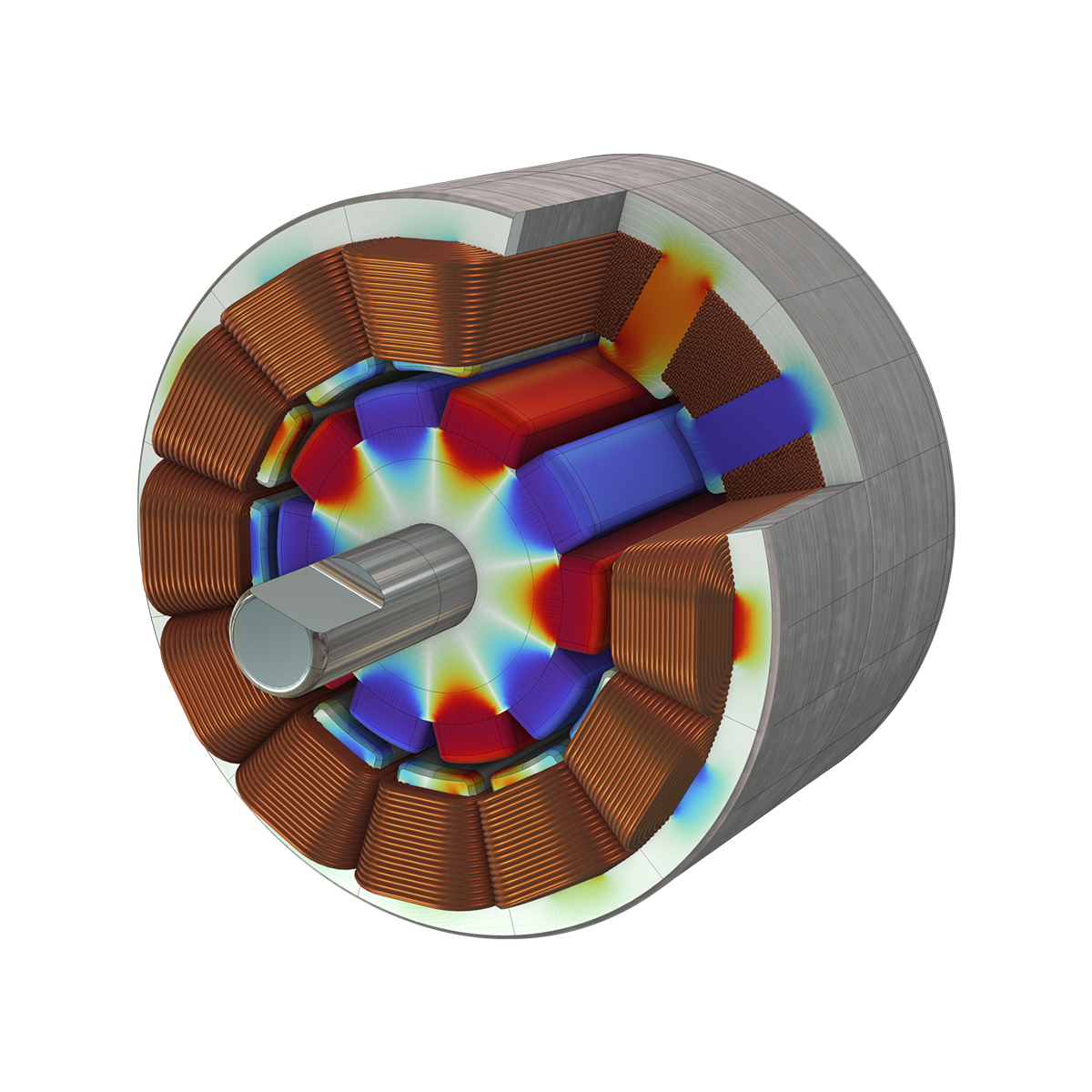
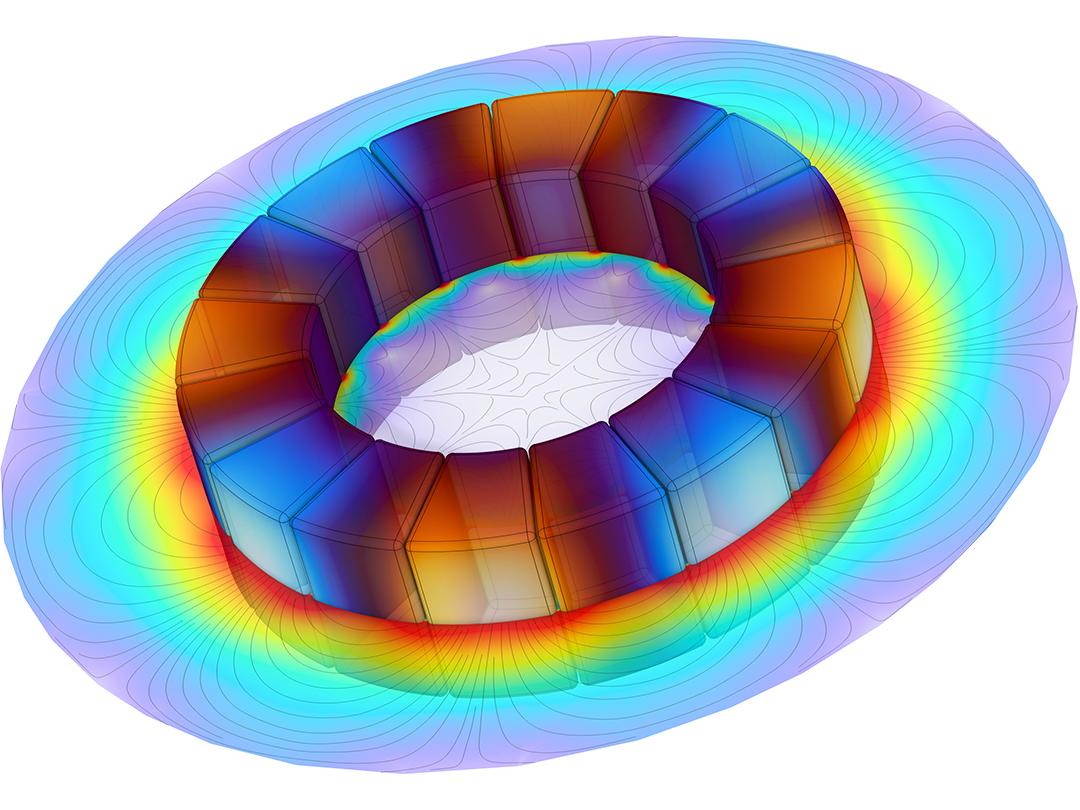
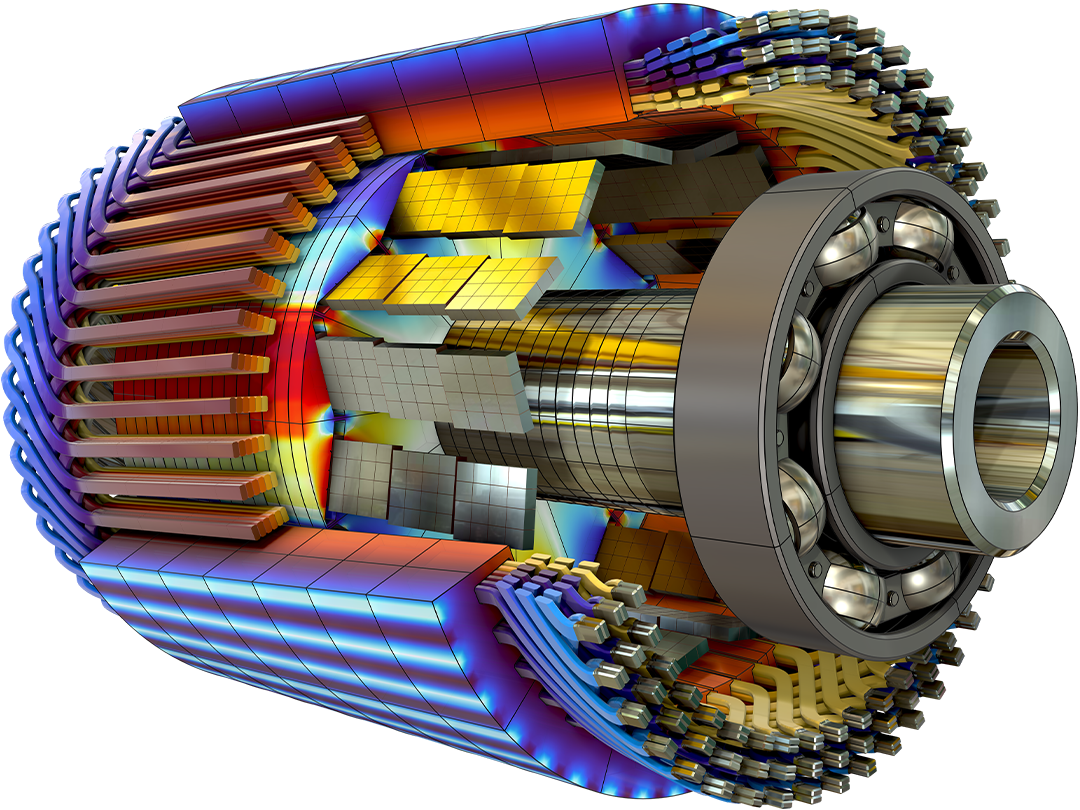
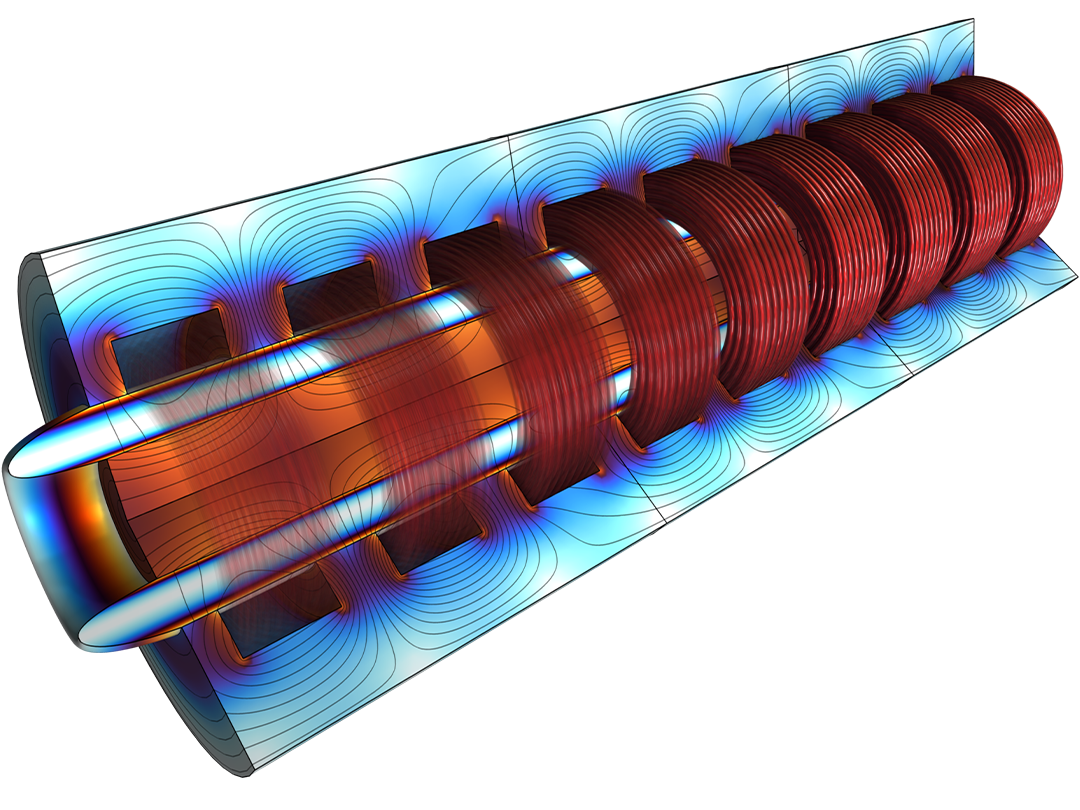
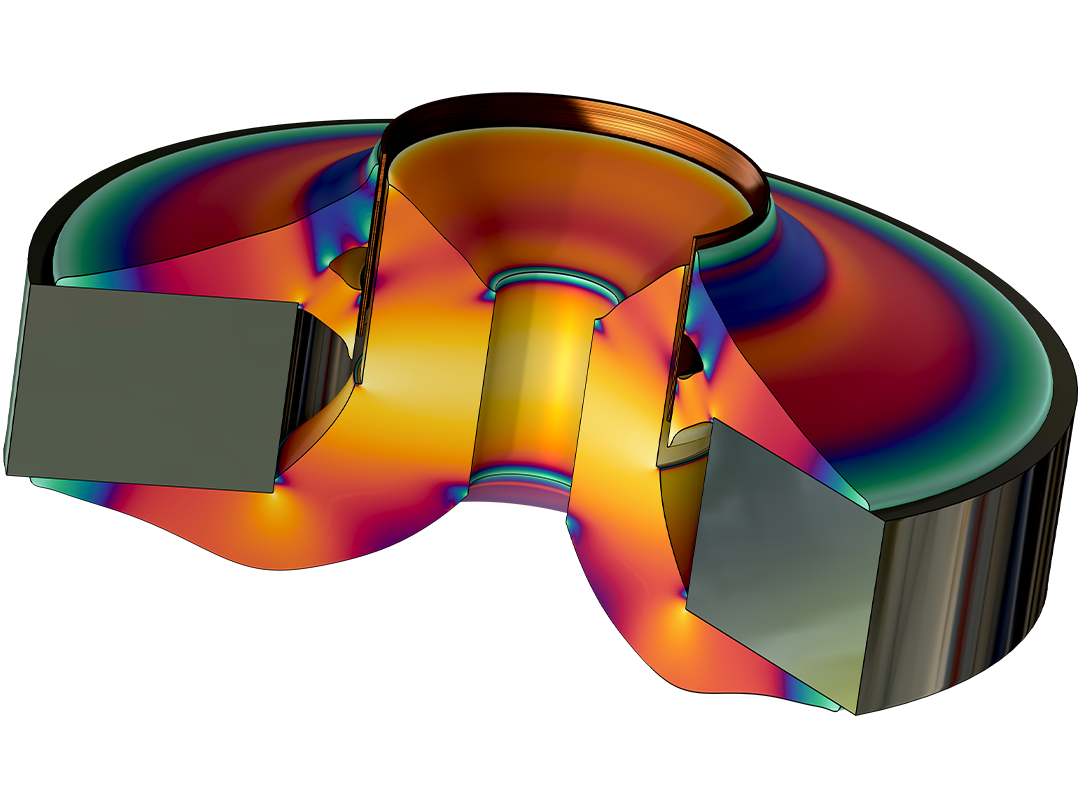
銅製コイルとレインボーコアで可視化された3次元永久磁石モーターモデル.

静電気

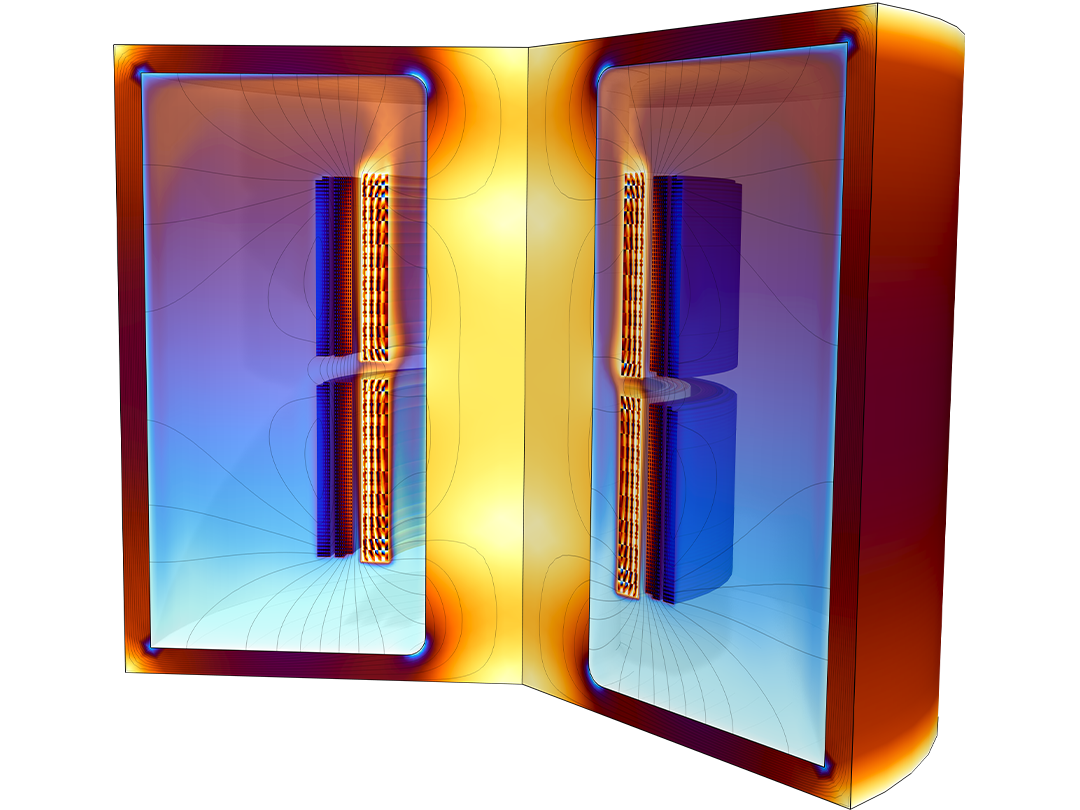
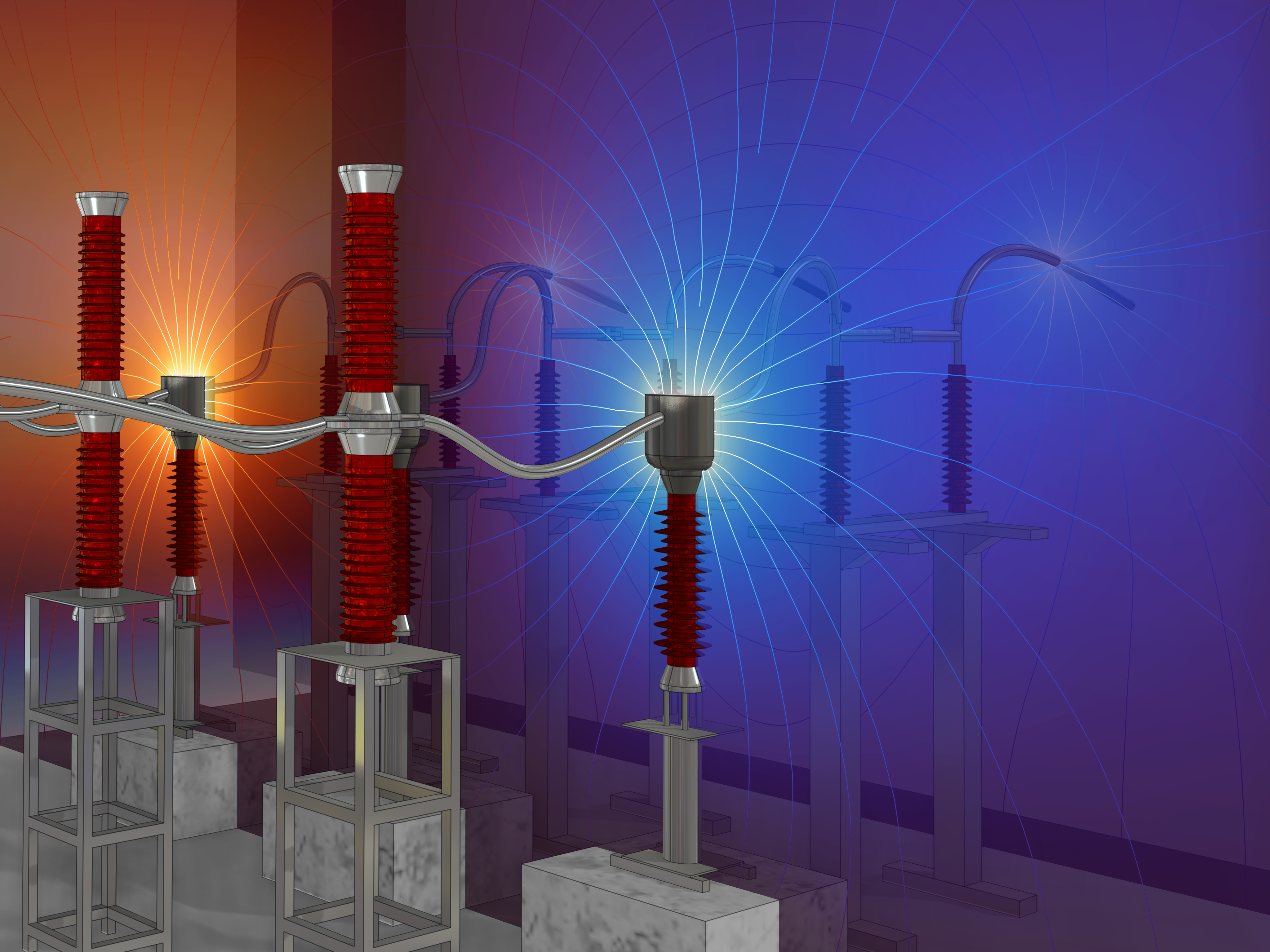
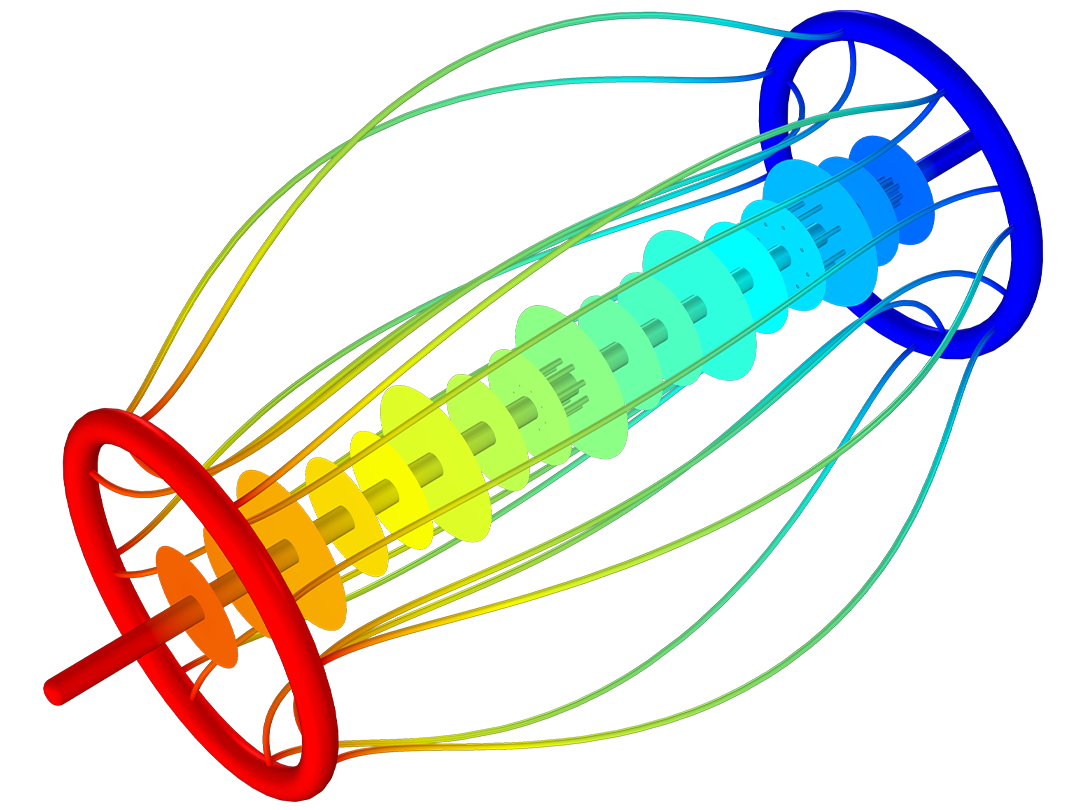
静電気力計算を使用して, 容量性機器と電気絶縁体を解析します. このアプローチは, 電流が流れておらず, 電界が電位と電荷分布によって決定される誘電体に適用できます. 電位を解く方法として, 有限要素法 (FEM) と境界要素法 (BEM) があり, これらを組み合わせることで有限要素-境界要素のハイブリッド法を用いることができます. 計算された電位場に基づいて, 静電容量マトリックス, 電場, 電荷密度, 静電エネルギーといった量を計算できます.

電流

DC (直流), 過渡, または AC (交流) 電流をモデル化することにより, 抵抗性および導電性機器を効率的に解析できます. 定常低周波条件下で, 磁場が無視できる場合, 正確な結果を得るには電流のモデリングで十分です. オームの法則に基づく計算は, 電位を解くことによって非常に効率的になります. 結果として生じる電位場に基づいて, 抵抗, コンダクタンス, 電界, 電流密度, および電力損失といったさまざまな量を計算できます.

AC/DC モジュールでは, 定常, 周波数領域, 時間領域, 小信号解析のいずれも可能です. 時間領域と周波数領域では, 容量変化の影響を考慮することもできます.
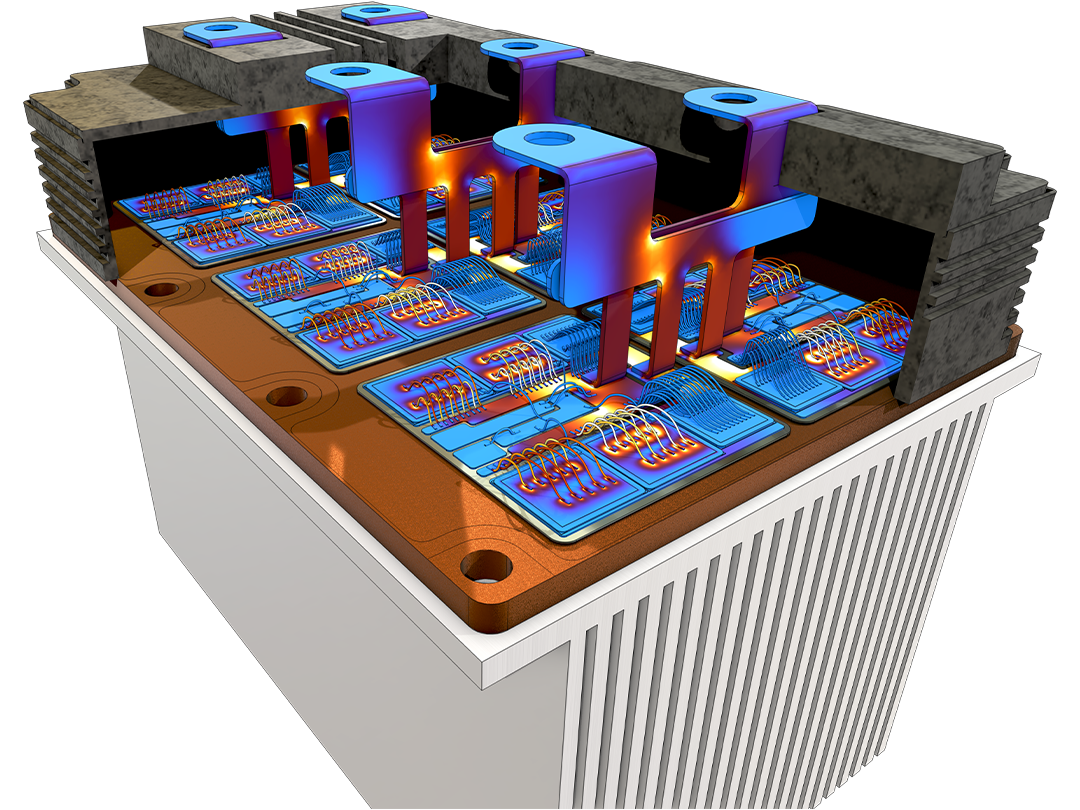
静磁気

静磁場, 寄生インダクタンス, およびコイル, 導体, 磁石にかかる力を計算します. さまざまな非線形磁性材料を含む広範な材料データベースから選択するか, 独自の非線形材料を定義することができます. また, 電流か磁性材料, またはその両方が存在する, といった条件に応じてさまざまな定式化が可能です.

有限要素法 (FEM) と境界要素法 (BEM) はどちらも, 電流がない場合の静磁気に使用できます. また, これらを組み合わせて有限要素-境界要素のハイブリッド法を使用することも可能です.

最も一般的なケースである, 電流と磁性材料の両方が存在する場合, ベクトル場の定式化により, 電位と入力電流を定義し, 電流密度分布, 磁場, 磁力, 電力損失, 相互インダクタンスを計算します.

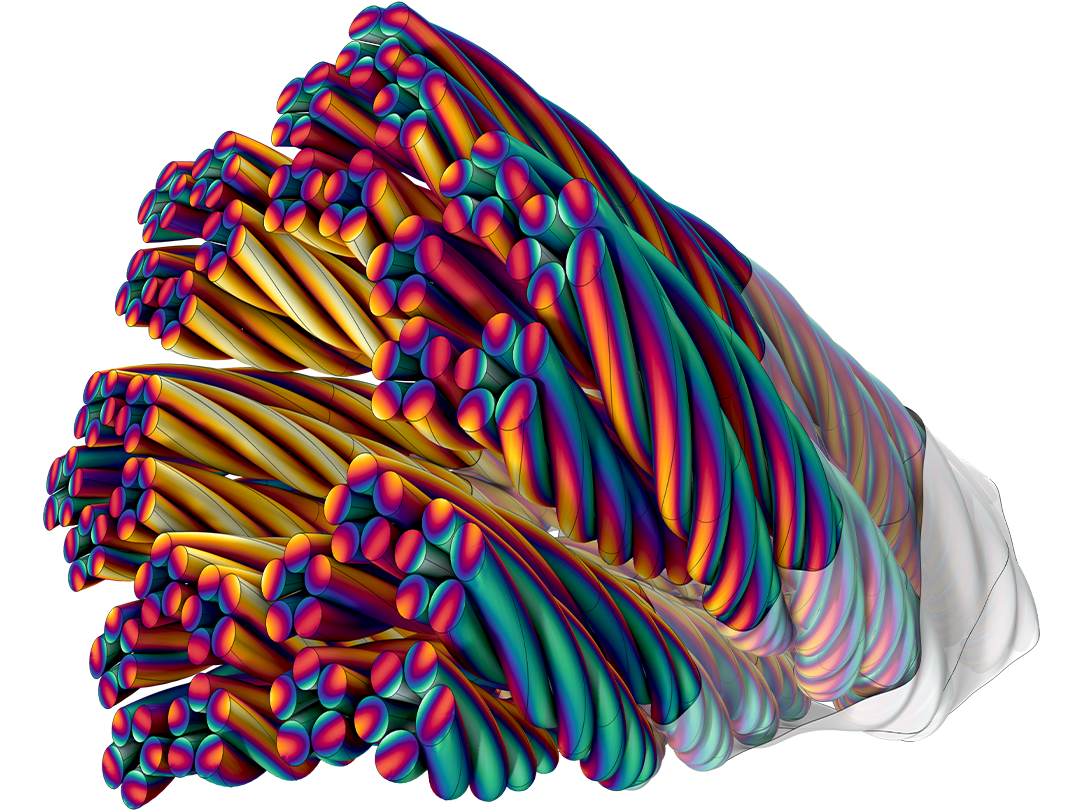
コイルのモデル化には, 各ワイヤー内の正確な電流分布を計算する明示的な方法と, 巻数の多いコイルに非常に有効な均質化された方法があります. 複雑な形状のコイルも, コイルの電流分布を計算することによって自動的に処理されます.

Electromagnetics

Full electromagnetics modeling is used to analyze electrical components where electric currents and magnetic fields are coupled. In time-varying problems with significant induction effects, magnetic fields induce currents, and those currents in turn generate magnetic fields.

Electrodynamic effects can be investigated, including skin and proximity effects, Lorentz forces (induction through motion), resonance, and crosstalk. Both frequency-domain and time-domain modeling are supported in 2D and 3D. Specialized formulations are also available for transient magnetic modeling of superconductors.

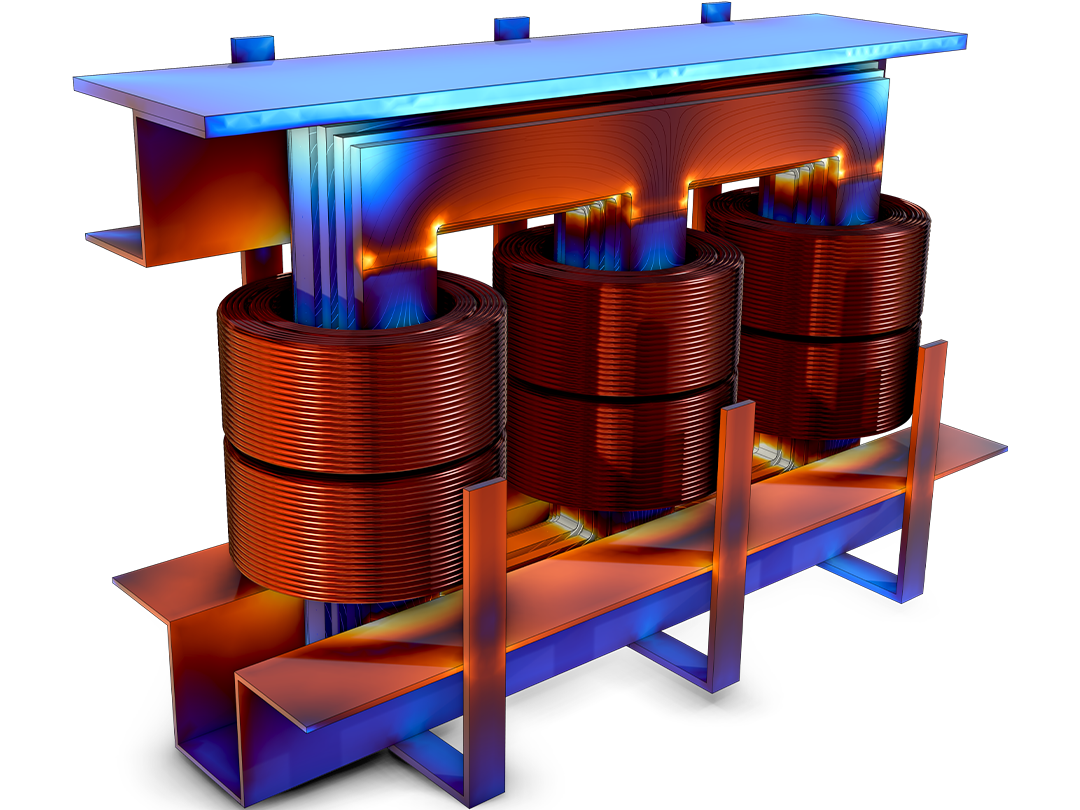
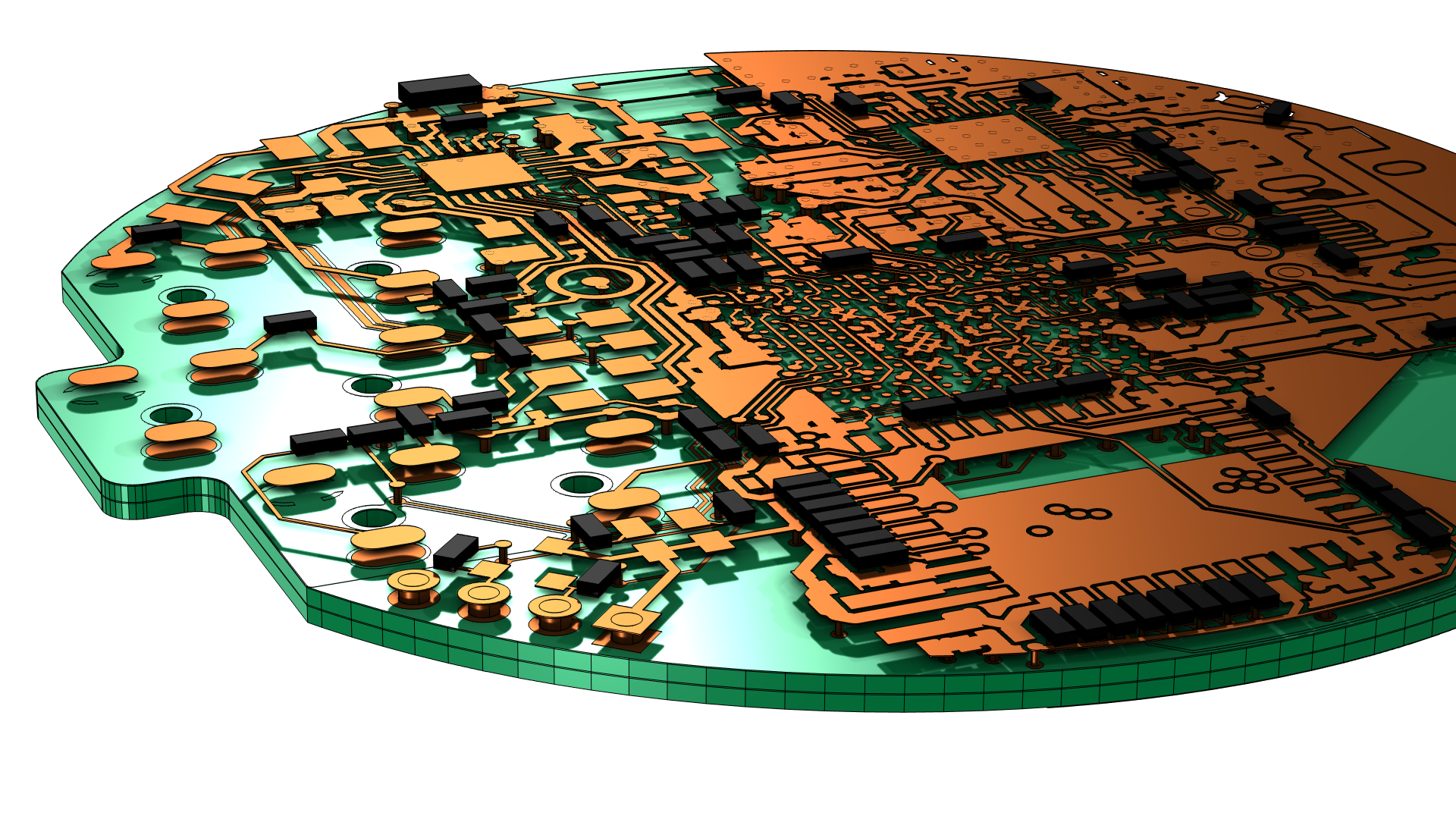
Typical applications include coils, induction chargers and heaters, switches, busbars, transformers, PCB transient effects, shielding, crosstalk, superconducting devices, magnetohydrodynamics, and nondestructive testing (NDT).

Electromagnetics simulations can be coupled to any other add-on product, such as the Heat Transfer Module, the Structural Mechanics Module, or the CFD Module.

Electric Machinery

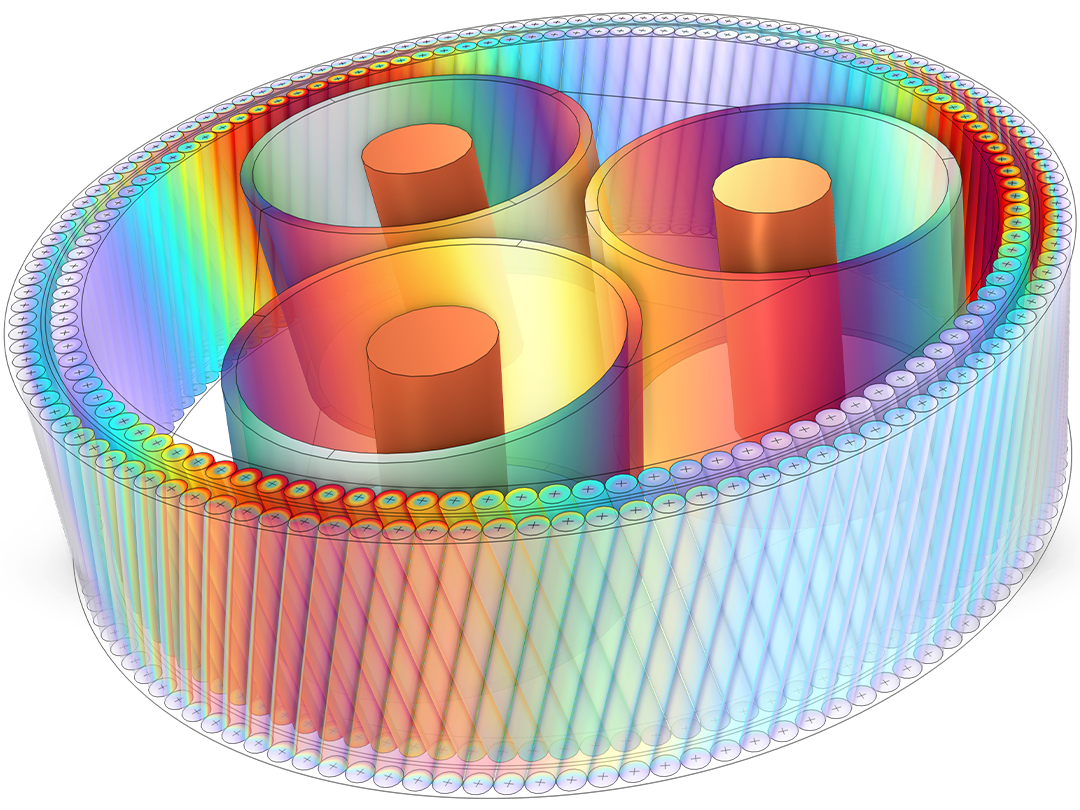
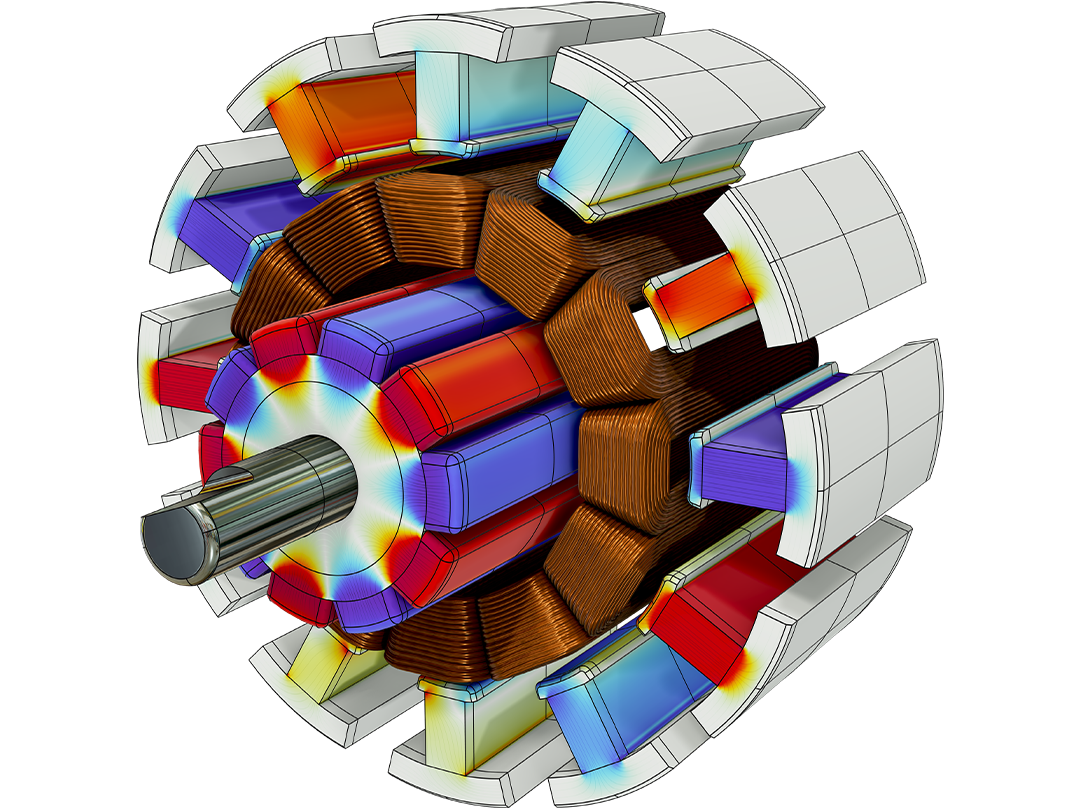
Modeling of electric machinery enables optimization of motors, generators, and actuators. Built-in functionality makes it possible to investigate induction and permanent magnet motors, including the evaluation of torque, eddy current losses in magnets, forces, induced currents, and the impact of mechanical loads. Both rigid and flexible body dynamics can be studied under the influence of electromagnetic forces and torques.

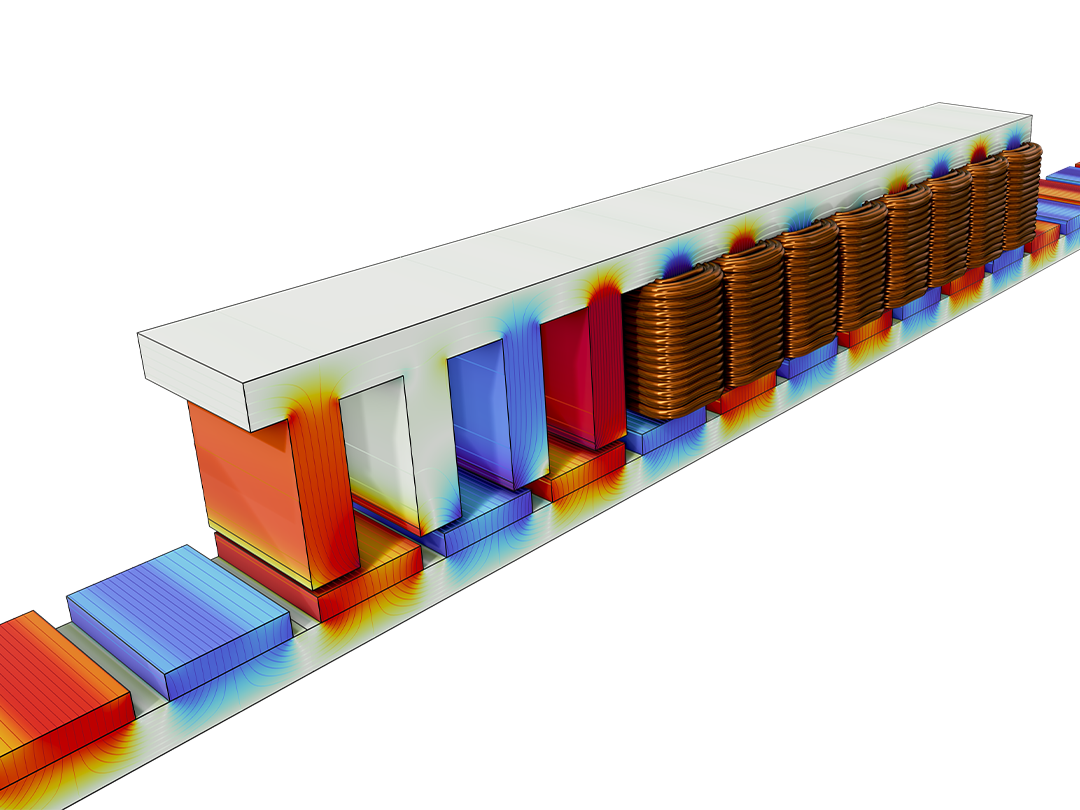
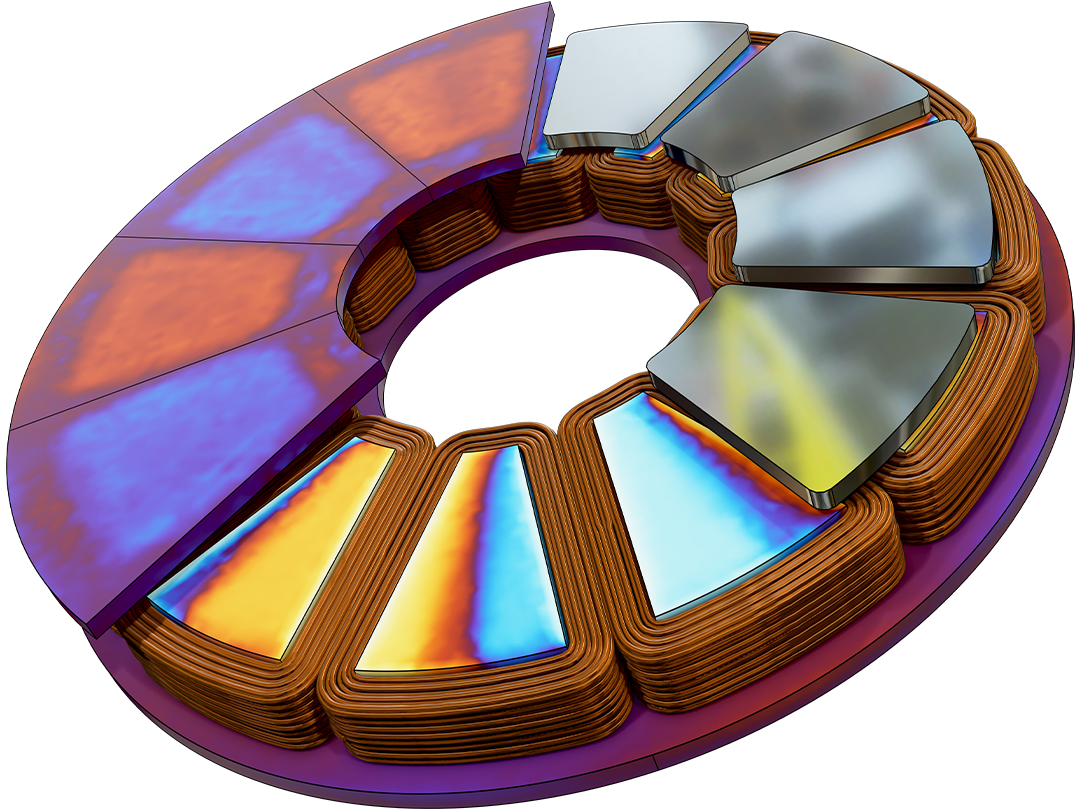
Specialized features support the design of various machine types, from radial flux motors to hybrid axial–radial flux rotors, claw-pole rotors, and tubular linear machines. Linear motion can also be modeled using moving mesh functionality, which is important for devices such as plungers, solenoids, switches, and actuators.

By combining the AC/DC Module with other physics modules, multiphysics analyses — including structural mechanics for deformation, rotordynamics, heat transfer for thermal management, acoustics for noise and vibration, and CFD for cooling channel optimization — can be performed.

Electrical Circuits

The AC/DC Module provides a dedicated physics interface for analyzing lumped systems and circuits. Using this interface, common components such as voltage and current sources, resistors, capacitors, inductors, transformers, diodes, and transistors can be modeled. More complex elements can be added using subcircuits. Circuits can also be imported and exported in the SPICE netlist format.

Circuit models can be combined with 2D or 3D finite element models. Resistance, capacitance, and inductance matrices can be extracted from finite element models, which can then be used to create efficient lumped circuit representations. The direct coupling between circuits and finite element models enable simulation of, for example, motor control circuits or oscillator circuits in induction chargers. Hybrid submodeling is possible as well, where detailed finite element regions are reduced to circuit representations for efficient simulation.

AC/DC モジュールの特徴と機能

AC/DC モジュールには今ページで紹介しているさまざまな性能に特化した機能が備わっています.
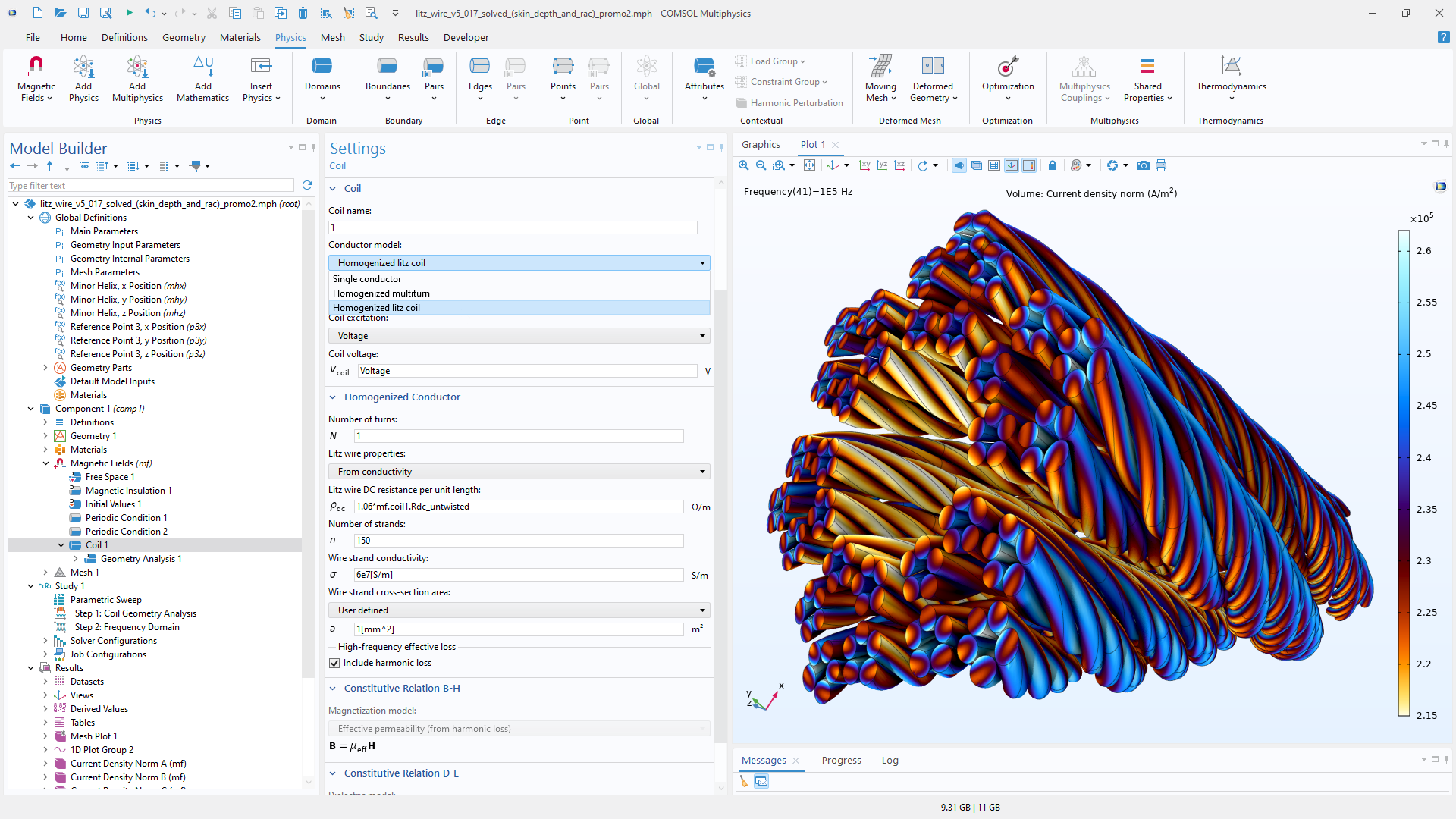
A close-up view of the Model Builder with the Coil node highlighted and a litz wire model in the Graphics window.

組込みユーザーインターフェース

AC/DC モジュールには, 上記の電磁気学の各分野に対応したユーザーインターフェースが組み込まれており, 特定のモデリング目的のバリエーションを提供します. これらのインターフェースでは, ドメイン方程式, 境界条件, 初期条件, 事前定義されたメッシュ, 定常および過渡解析のソルバー設定を持つ事前定義されたスタディ, および事前定義されたプロットと計算値がセットで定義されます.

また, 異なるインターフェースを接続し, 簡単にモデル化する機能もあります. これは, インダクター, コイル, モーターに便利です.
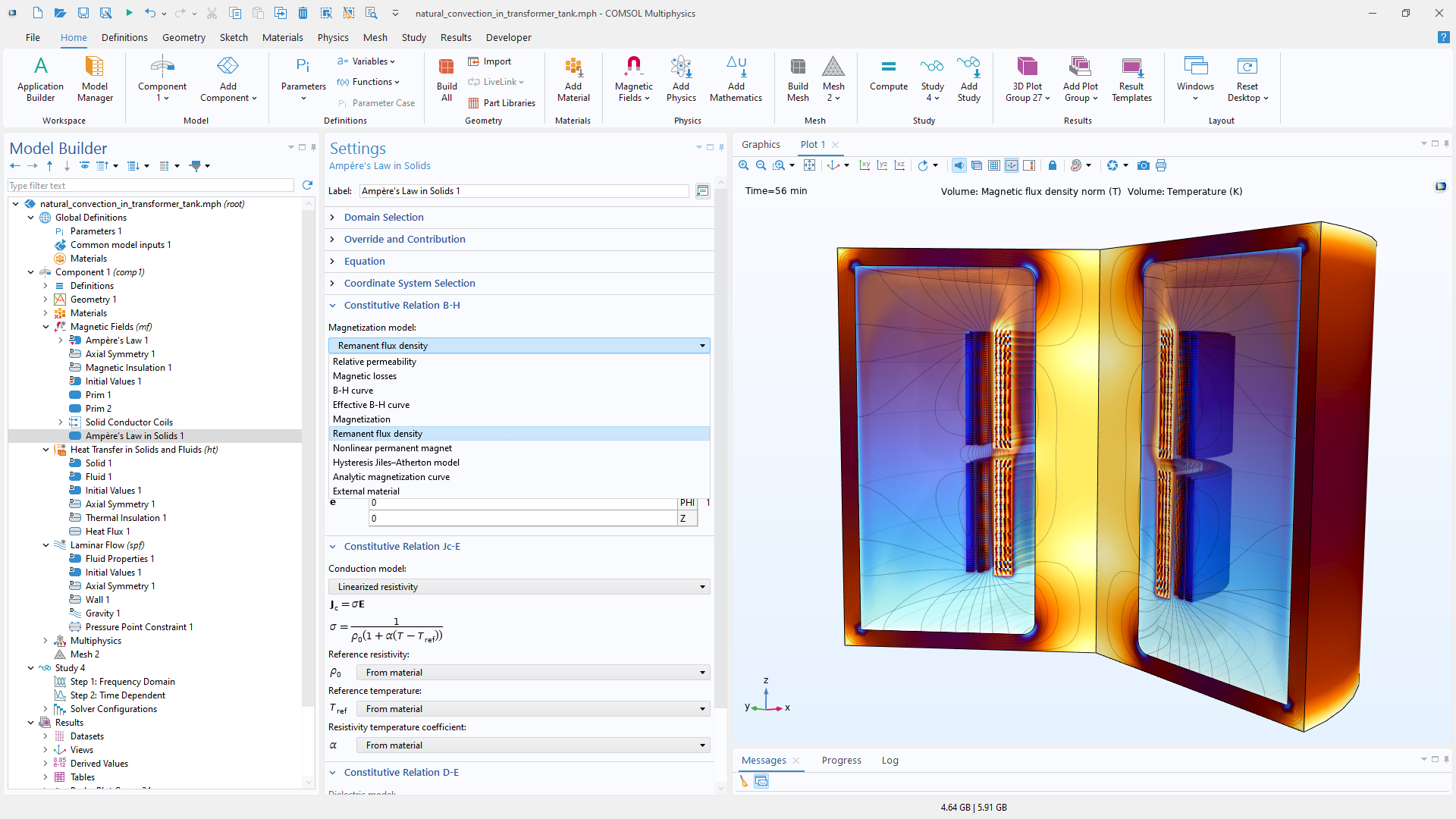
A close-up view of the Ampère's Law in Solids settings and a transformer tank model in the Graphics window.

Magnetic Materials

A comprehensive database of magnetic materials is included in the AC/DC Module, covering ferromagnetic, ferrimagnetic, soft magnetic (B–H curves), and hard magnetic materials (permanent magnets). Support is provided for nonlinear material models, magnetic loss modeling in the frequency domain using effective B–H curves and complex permeability, as well as anisotropic hysteresis based on the Jiles–Atherton model.

Specialized capabilities for modeling laminated electrical steel include laminated core modeling features and empirical loss models such as Steinmetz and Bertotti, which enable realistic loss estimation without resolving individual lamina.

Materials can be defined as spatially varying, anisotropic, time varying, or field dependent. Full support is provided for user-defined properties and modeling of custom behaviors, including anisotropic nonlinearity, permanent demagnetization, and Curie effects.

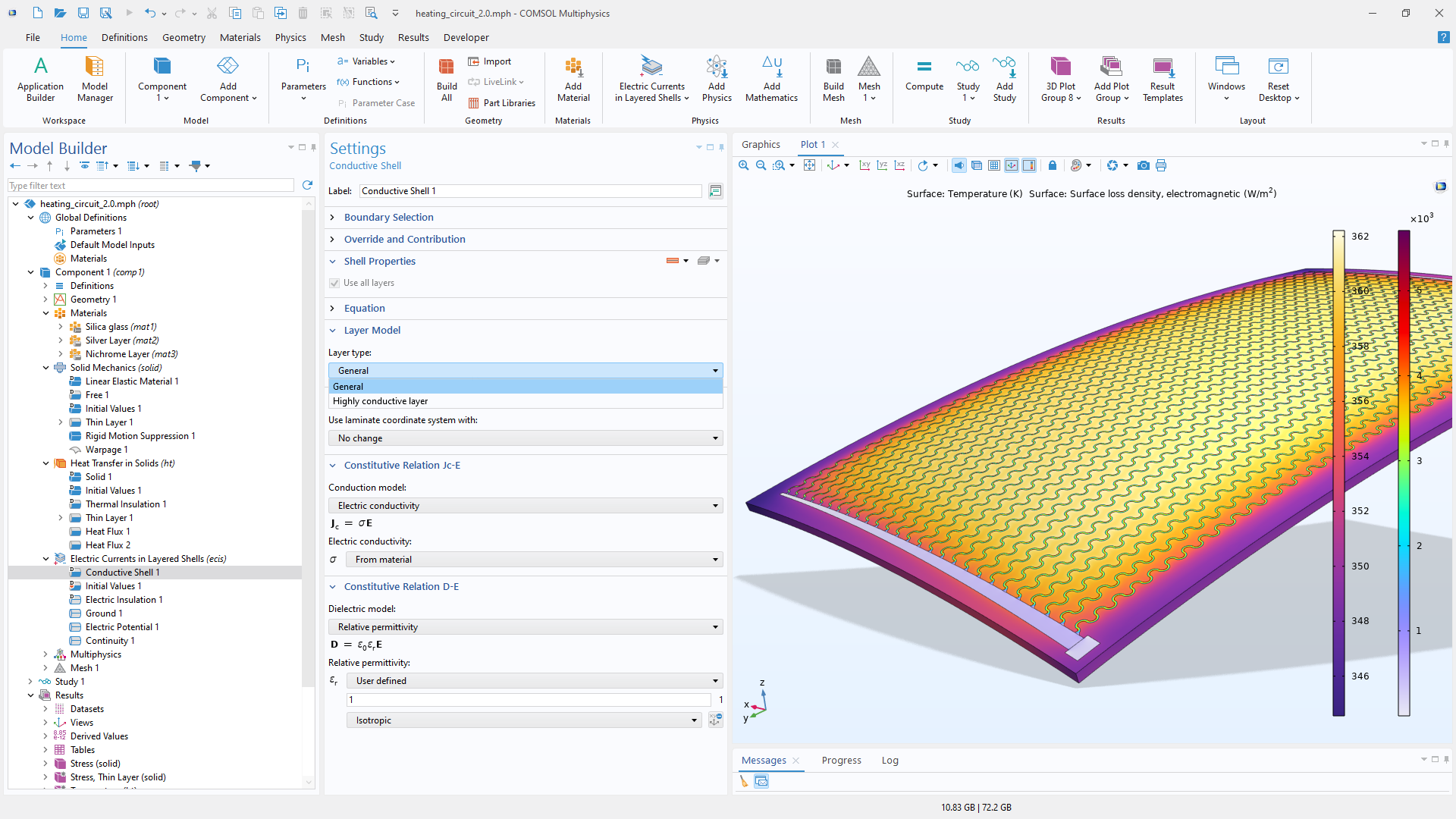
A close-up view of the Conductive Shell settings and a heating circuit model in the Graphics window.

Thin Structures and Layered Materials

Very thin structures can be efficiently modeled using shell formulations for direct current, electrostatic, magnetostatic, and induction analyses. In addition, specialized functionality supports the modeling of direct currents in multilayer shell structures. The electromagnetic shell modeling capabilities allow thin volumetric domains to be replaced by zero-thickness boundary conditions with equivalent physical behavior, significantly simplifying geometry preparation, meshing, and solution procedures.

At higher frequencies, where the skin depth becomes small and currents are confined to the conductor surface, specialized boundary features provide a more efficient conductor representation.

For dielectric and weakly conducting materials, the framework supports:

  • Polarization effects and remanent electric displacement
  • A wide range of complex loss models, including ferroelectric behavior
  • Dispersion models in both the frequency and time domains

Built-in dispersion formulations include multipole Debye, Cole–Cole, and Havriliak–Negami models. These capabilities are especially important for tissue modeling and bioengineering applications.

The same level of flexibility available for magnetic materials also applies to conductors and dielectrics. Through user-defined formulations, the material library can be easily extended to incorporate custom material models.

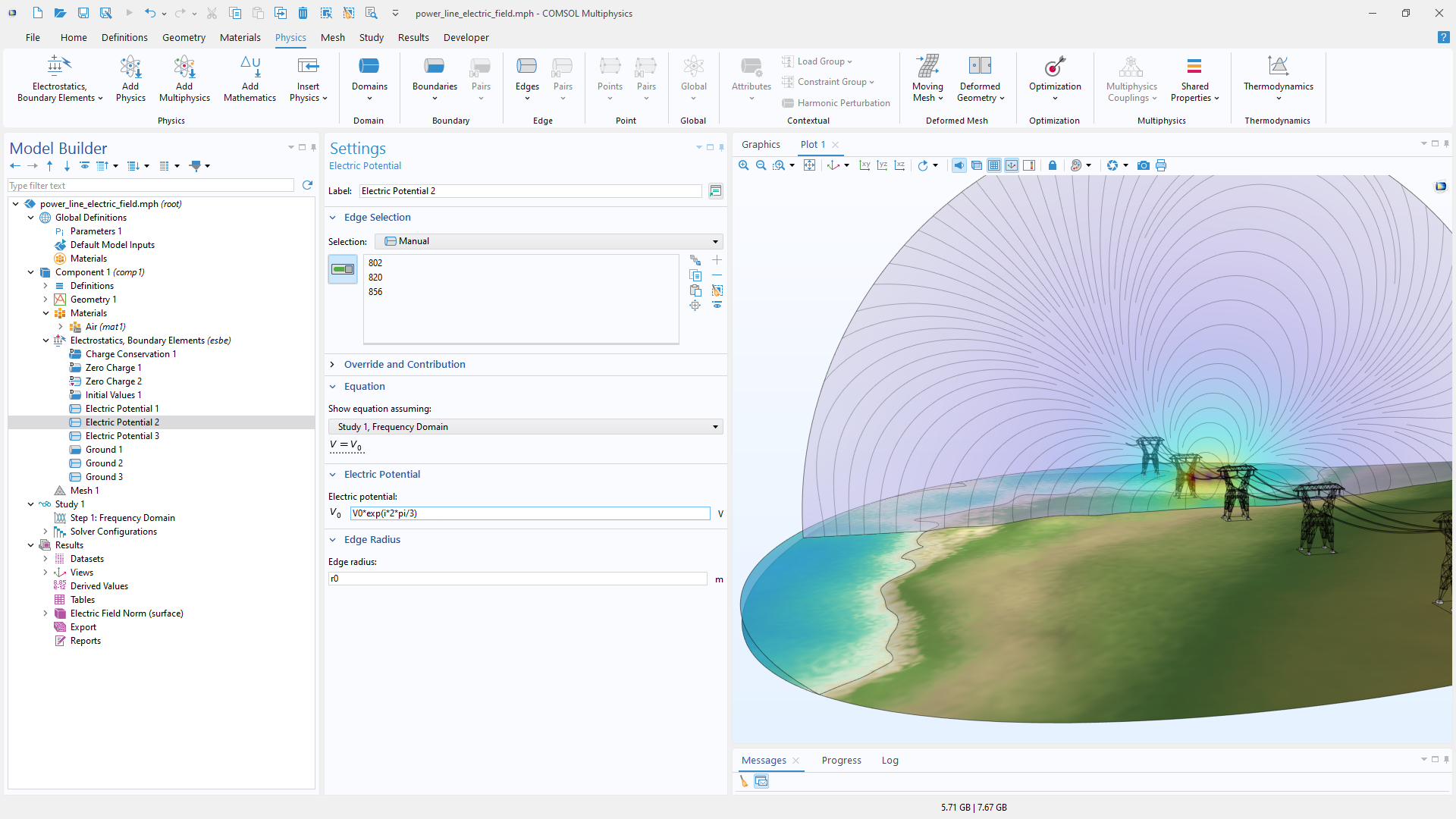
A close-up view of the Model Builder with the Electric Potential node highlighted and a power line model in the Graphics window.

Unbounded or Large Domains

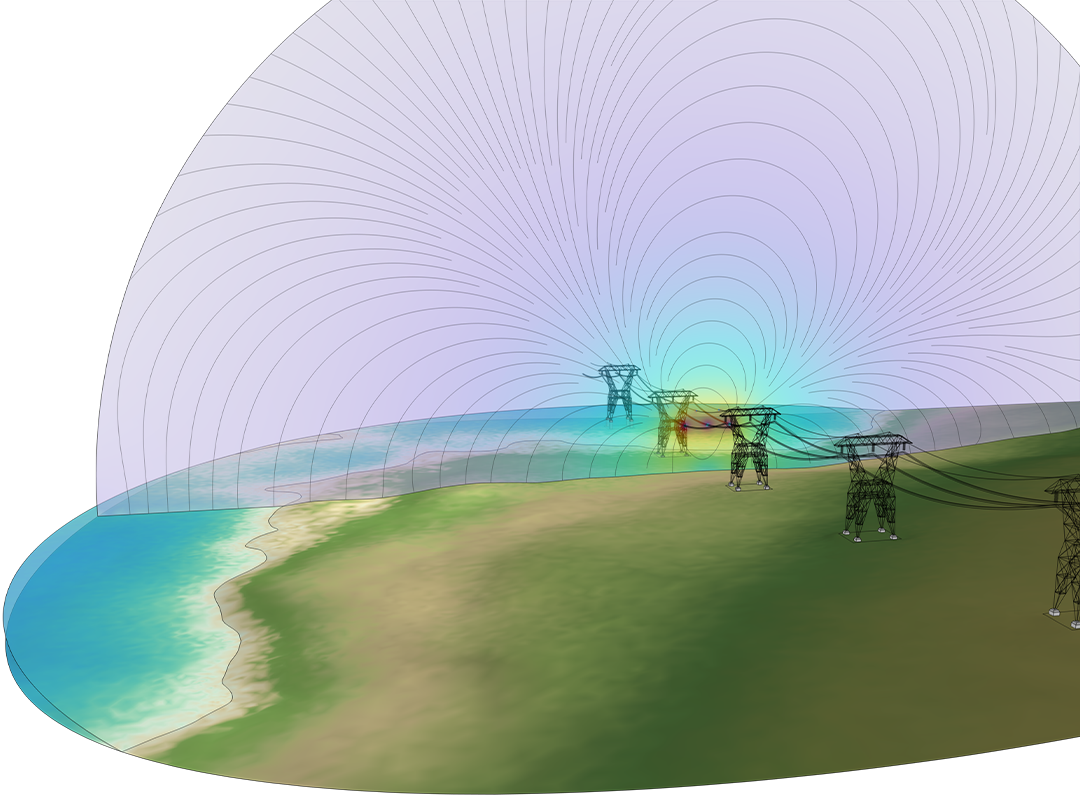
To accurately model unbounded or large domains, infinite elements are available for both electric and magnetic field formulations. For electrostatic and magnetostatic analyses, the boundary element method (BEM) provides an alternative approach for representing large or infinite regions. In addition, the BEM can be coupled with finite element–based physics interfaces to enable hybrid BEM–FEM simulation.

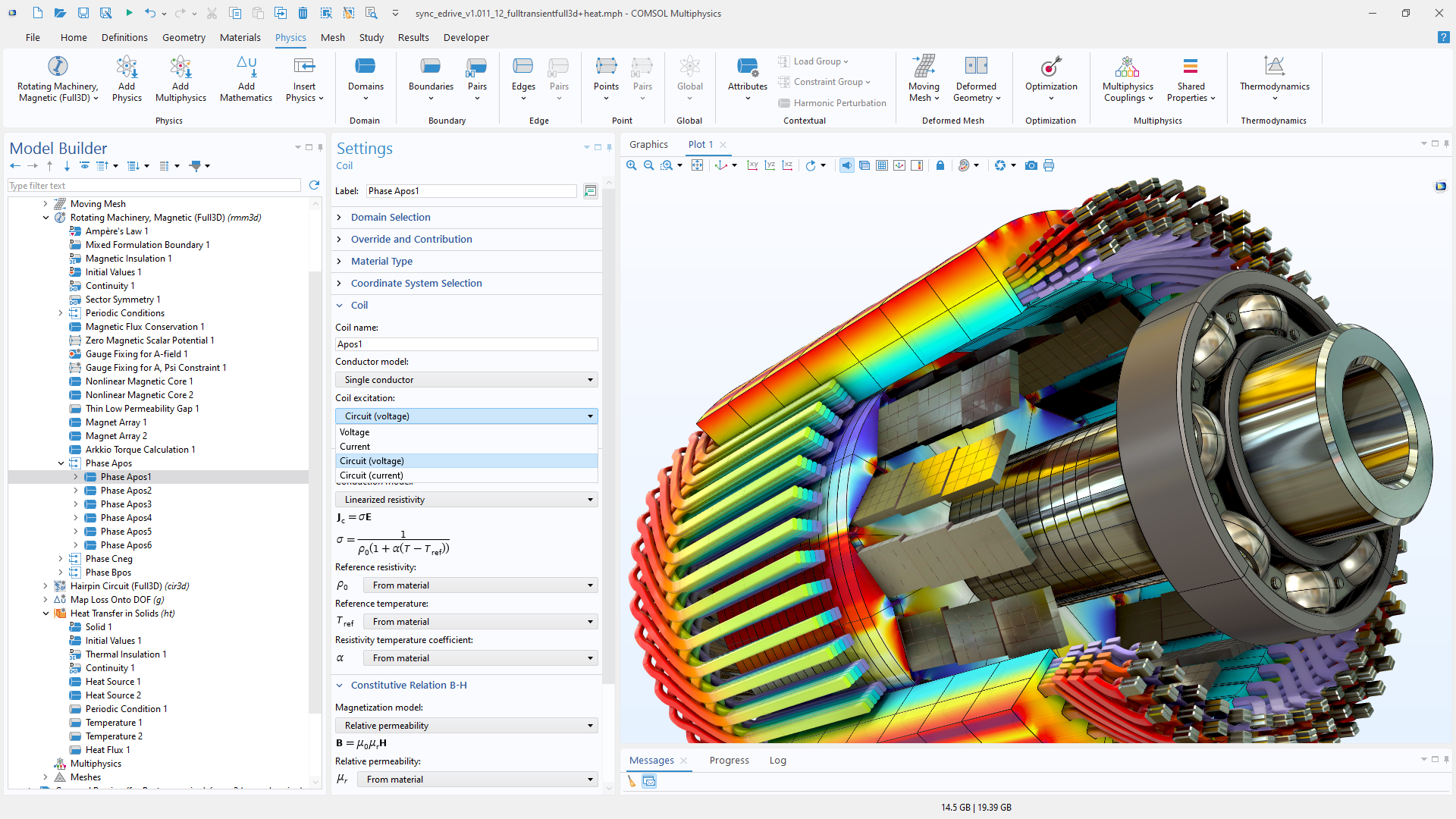
A close-up view of the Coil settings and a motor model in the Graphics window.

Coils, Terminals, and Device Excitations

The AC/DC Module's electromagnetics modeling capabilities include specialized functionality for accurate simulation of electromagnetic excitations, loads, and device behaviors.

The coil modeling tools handle everything from solid conductors with skin and proximity effects to stranded wire bundles designed to minimize AC losses. They also support designs such as litz wires, tightly wound coils, and segmented high-voltage conductors.

Terminal definitions make it easy to specify voltages, currents, or charges while also supporting floating potentials, measurement points, and electrical circuit connections. Options for distributed capacitance and impedance modeling enable accurate representation of electrodes with dielectric or resistive coatings.

A range of general-purpose excitation methods is also available, which includes support for voltage constraints, for example, ground planes, and the ability to define surface currents directly.

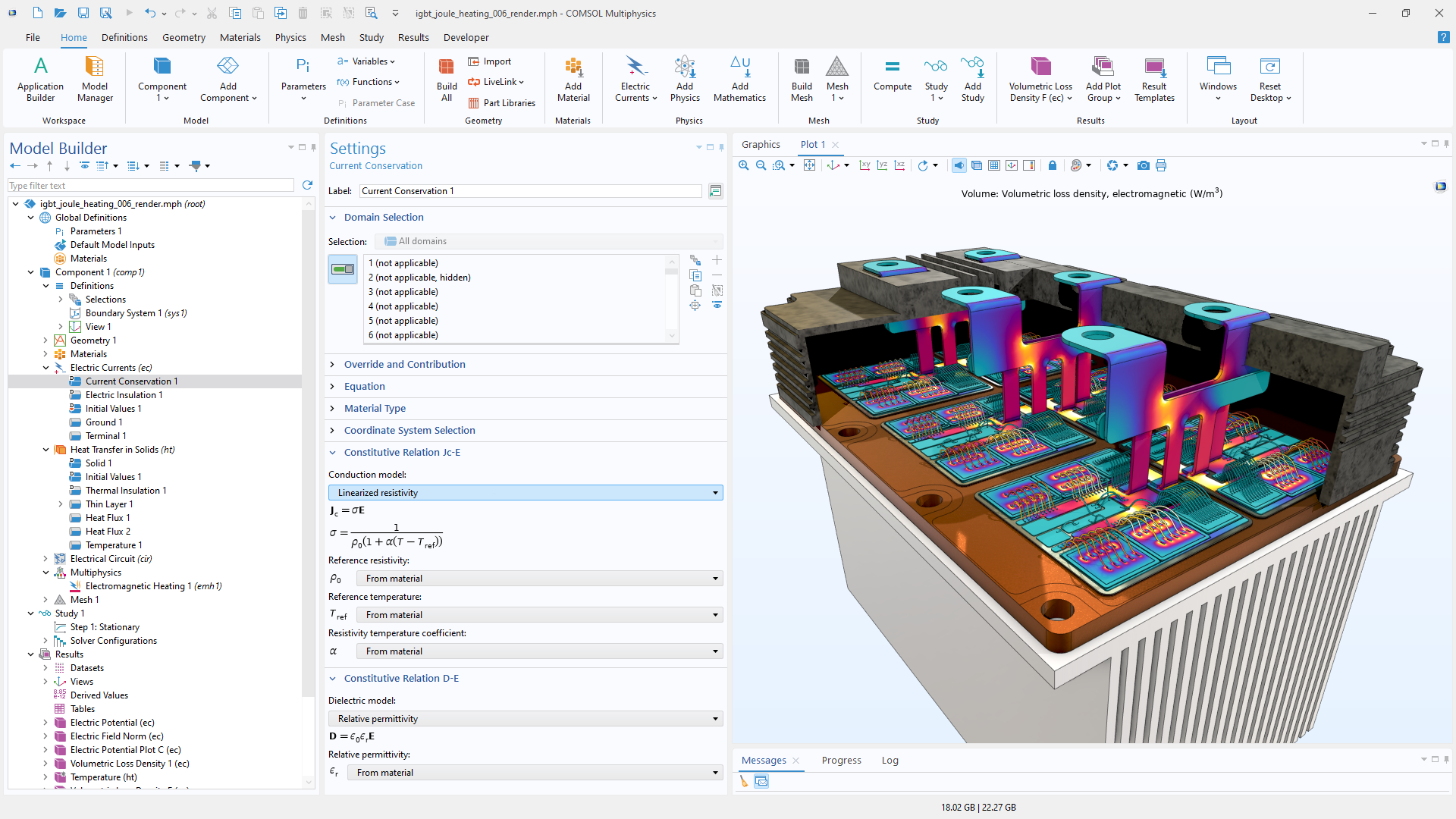
A close-up view of the Model Builder with the Current Conservation node highlighted and an IGBT model in the Graphics window.

Electric and Dielectric Materials

Conducting materials support both temperature- and electromagnetic-field-dependent behavior. Under electrodynamic conditions, skin and proximity effects can be included or selectively suppressed, enabling efficient modeling of laminated steel, wound coils, and twisted wire bundles. In particular, litz cables can be modeled at or above their design frequency without resolving individual strands.

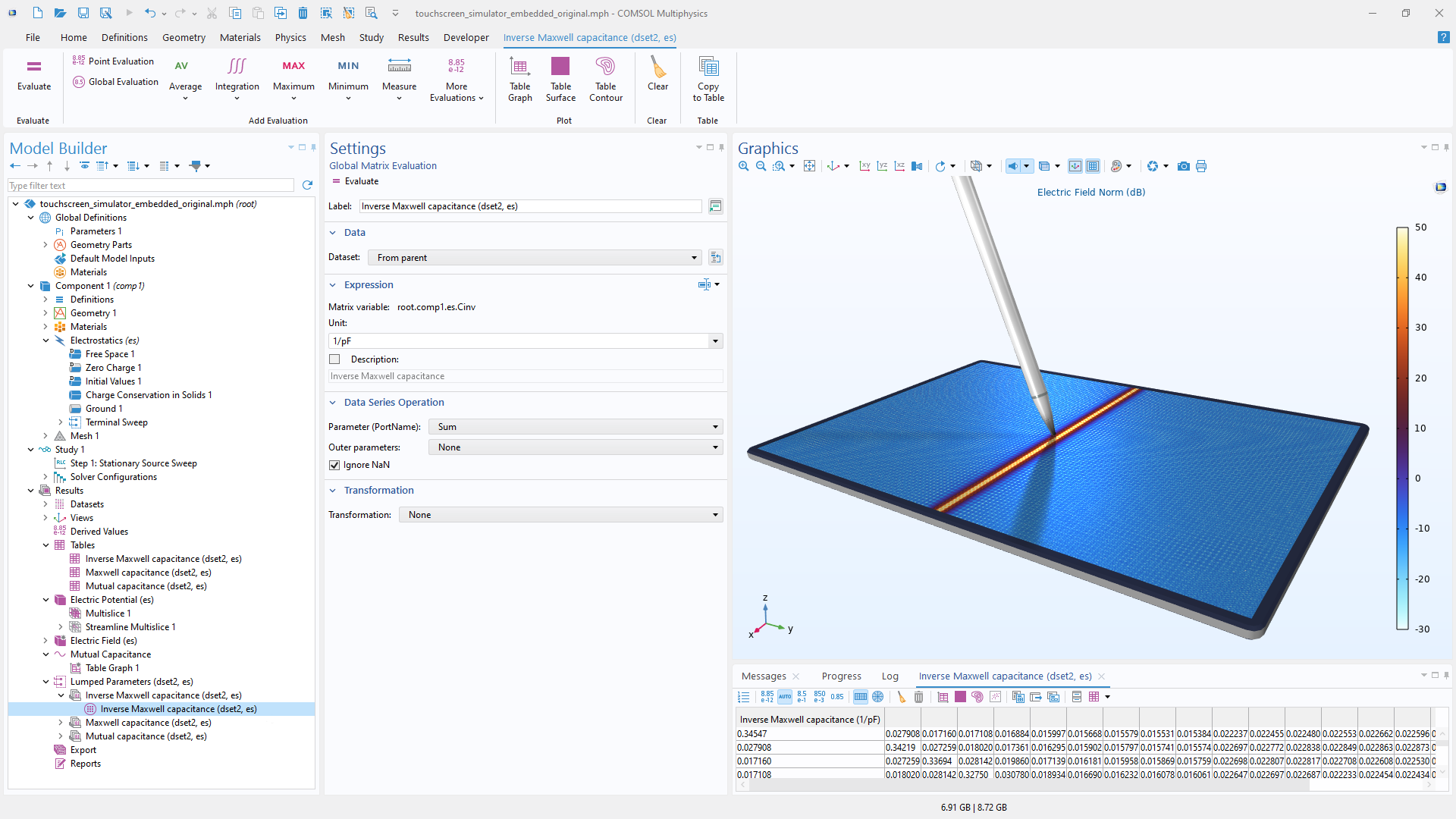
A close-up view of the Global Matrix Evaluation node highlighted and a touchscreen model in the Graphics window.

Data Extraction and Results Evaluation

Excitation features, such as Coil, Terminal, and Port, automatically provide output variables for various electrical quantities, including:

  • Voltage, current, and charge
  • Resistance, inductance, and capacitance
  • S-parameters

Dedicated frequency-sweep functionality, together with optimized solver settings, enables efficient extraction of capacitance, resistance, and inductance matrices. This functionality makes it straightforward to convert a detailed finite element model into a simplified lumped electrical circuit representation.

Specialized features are also available for computing specific physical quantities, such as electromagnetic forces and total losses.

Extensive customization options make it possible to evaluate, integrate, or differentiate any quantity derived from the solution. A wide range of results-evaluation tools enables precise extraction of the data required for analysis.

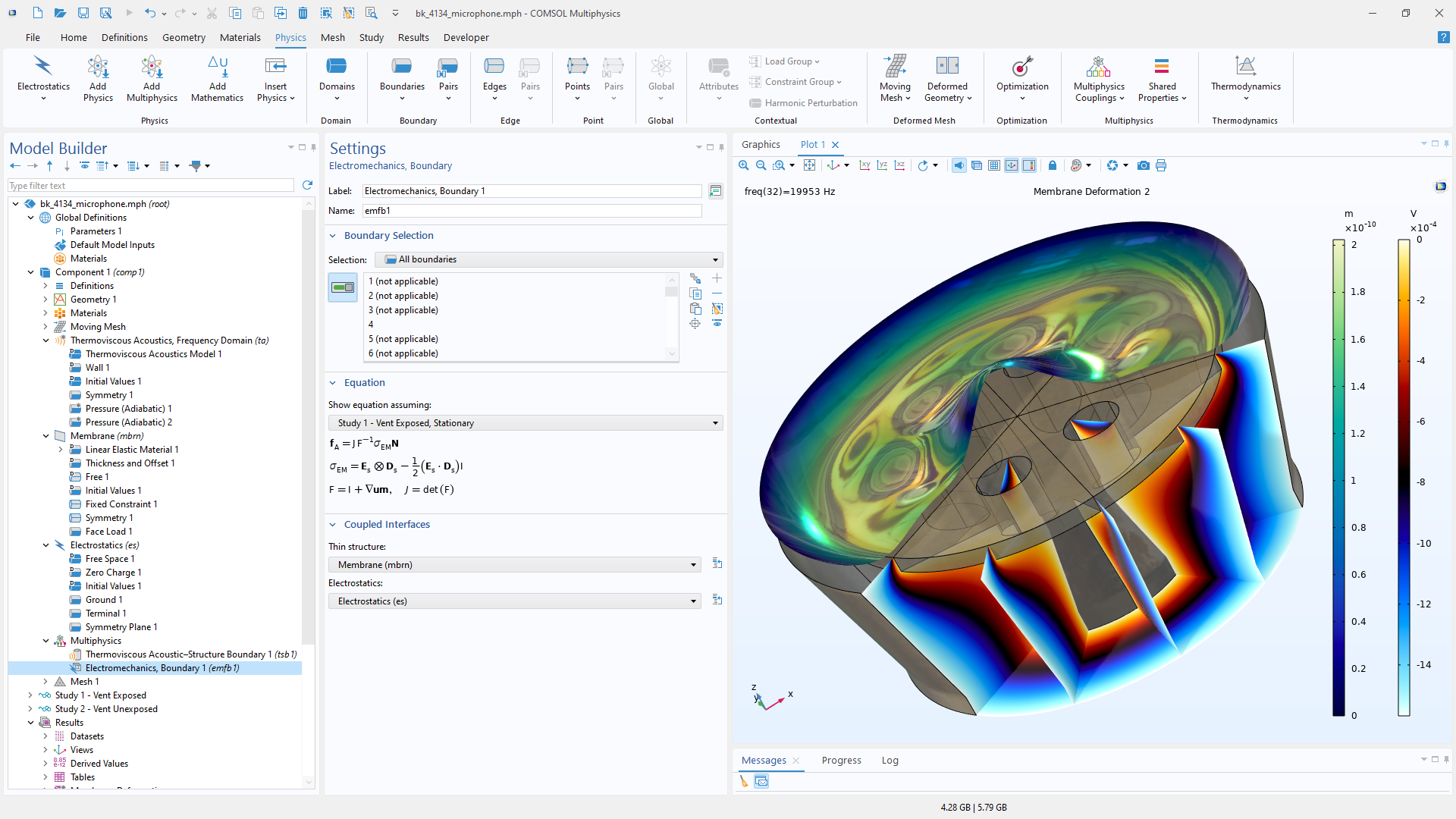
A close-up view of the Electromechanics, Boundary node highlighted and a microphone model in the Graphics window.

Multiphysics

Because electromagnetic phenomena typically occur in a multiphysics context, the AC/DC Module offers extensive options for coupling its physics with those from other add-on products, such as the:

  • Structural Mechanics Module
  • Heat Transfer Module
  • Acoustics Module
  • CFD Module
  • Plasma Module
  • Electric Discharge Module

Built-in multiphysics couplings provide functionality for modeling magnetomechanics, electromechanics, Joule heating and thermal expansion, induction heating, piezomagnetism, piezoelectricity, piezoresistivity, nonlinear magnetostriction, electrostriction, ferroelectroelasticity, the thermoelectric effect, pyroelectricity, and magnetohydrodynamics.

In addition to these predefined couplings, manual multiphysics couplings can be defined and solved using fully coupled or sequential approaches.

低周波電磁気学とマルチフィジックス

電磁気部品は, 複数の物理現象に影響を与え, また影響を受けます. COMSOL Multiphysics® では, これはシングルフィジックスの問題をモデリングするのと変わりません.
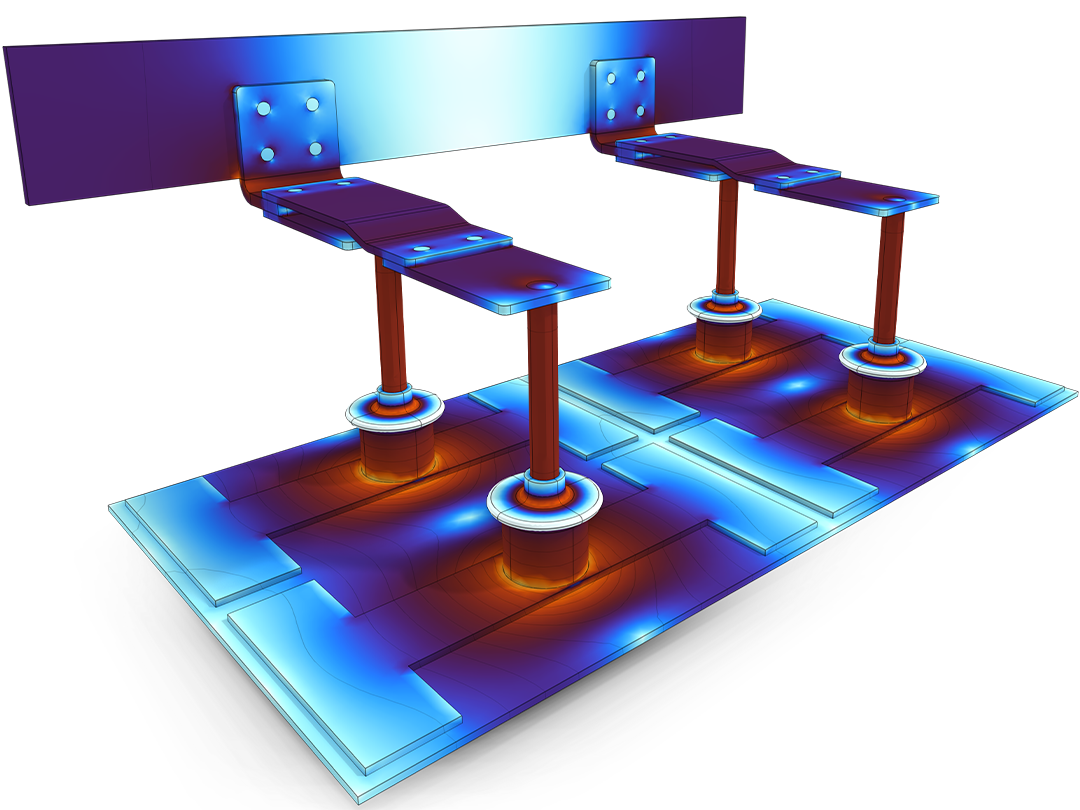
A close-up view of a busbar–anode assembly showing the distribution of electromagnetic heat sources.

ジュール加熱と抵抗加熱1

固体, 流体, シェル, および積層シェルでのジュール加熱 (抵抗加熱とも呼ばれる).
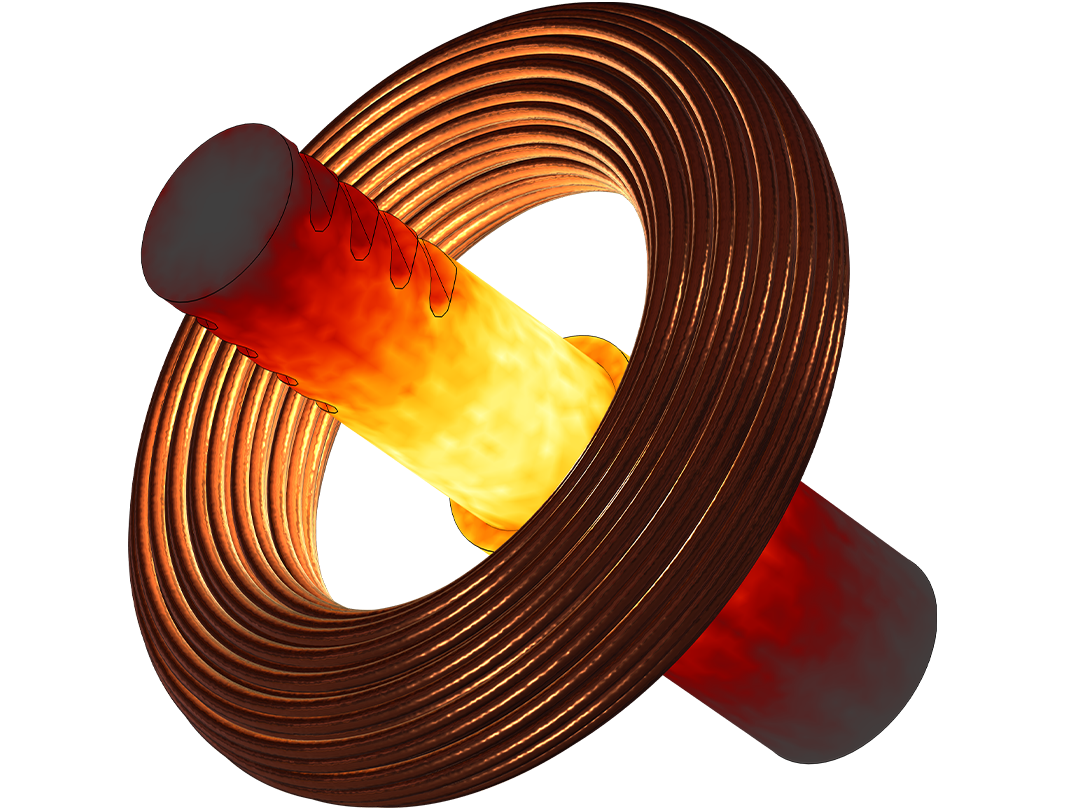
A close-up view of a workpiece model showing industrial induction heating.

誘導加熱

誘導加熱によるインライン誘導加熱器のモデル化, および金属加工.

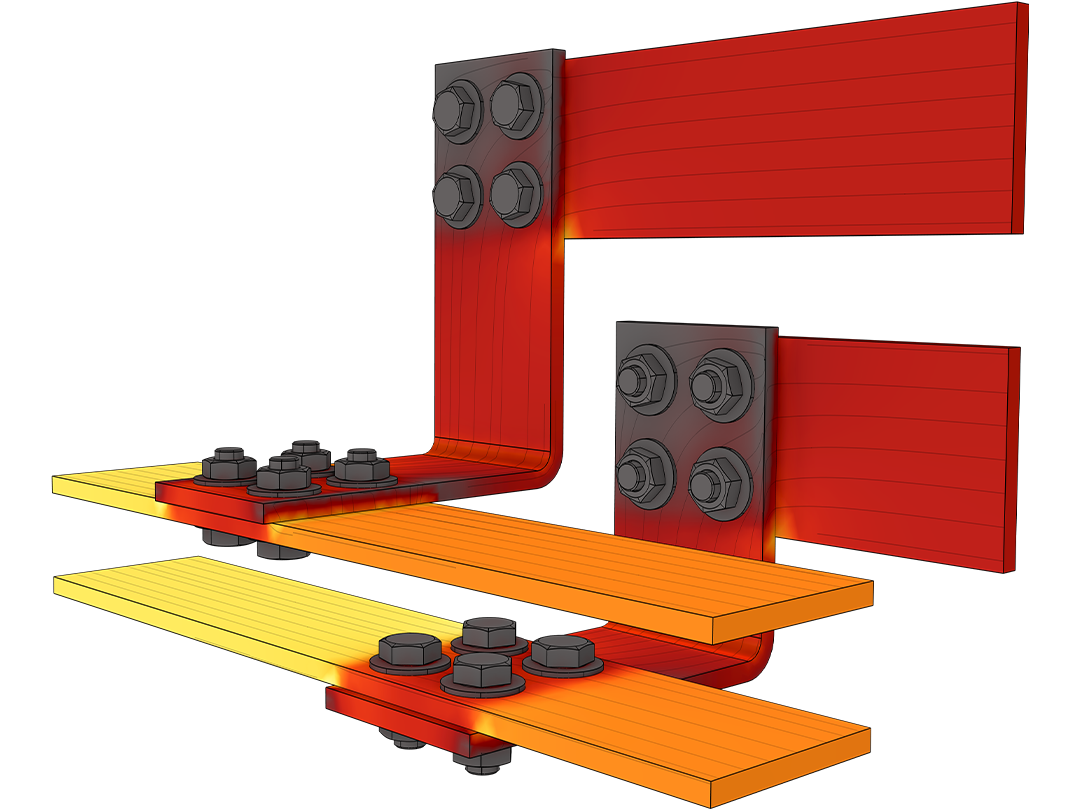
A close-up view of bolted busbars showing electrical contact points.

電気接触抵抗

接触させた金属片の間に流れる電流. 熱接触2 と機械的接触3とを合わせたもの.
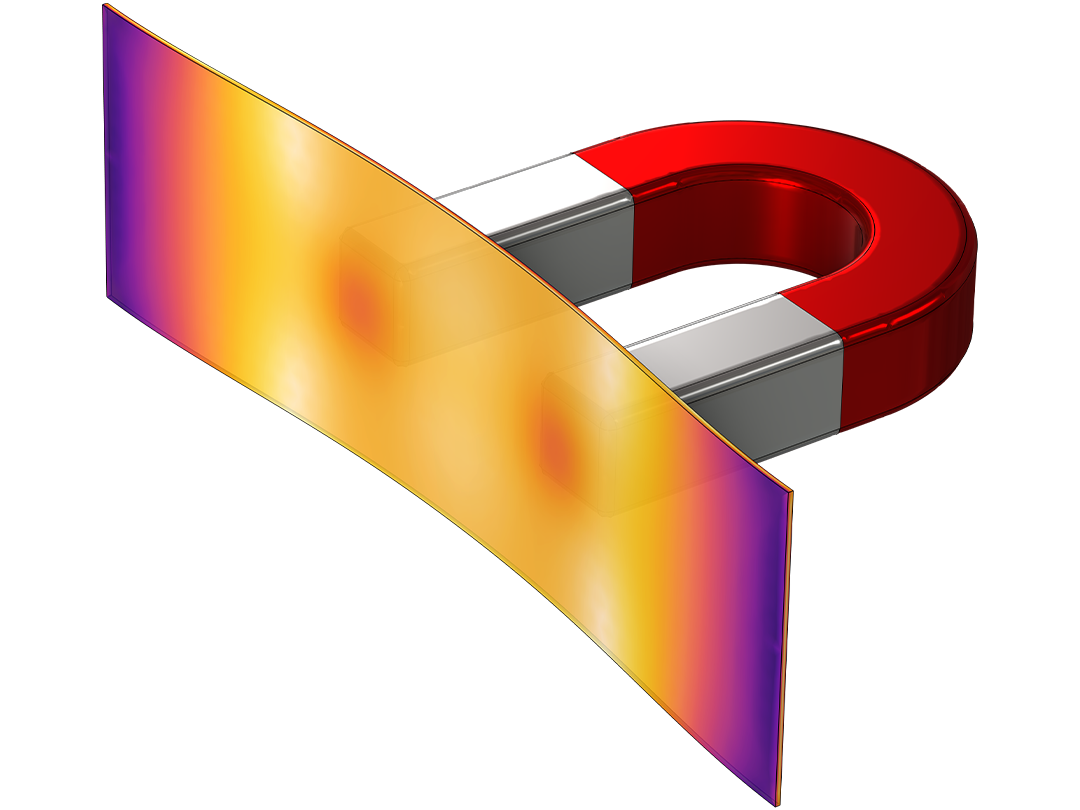
A close-up view of a permanent magnet model showing the deformation in an iron plate.

電磁力とトルク

有限要素法と境界要素法に基づく, 電磁応力, 力, およびトルクの計算.

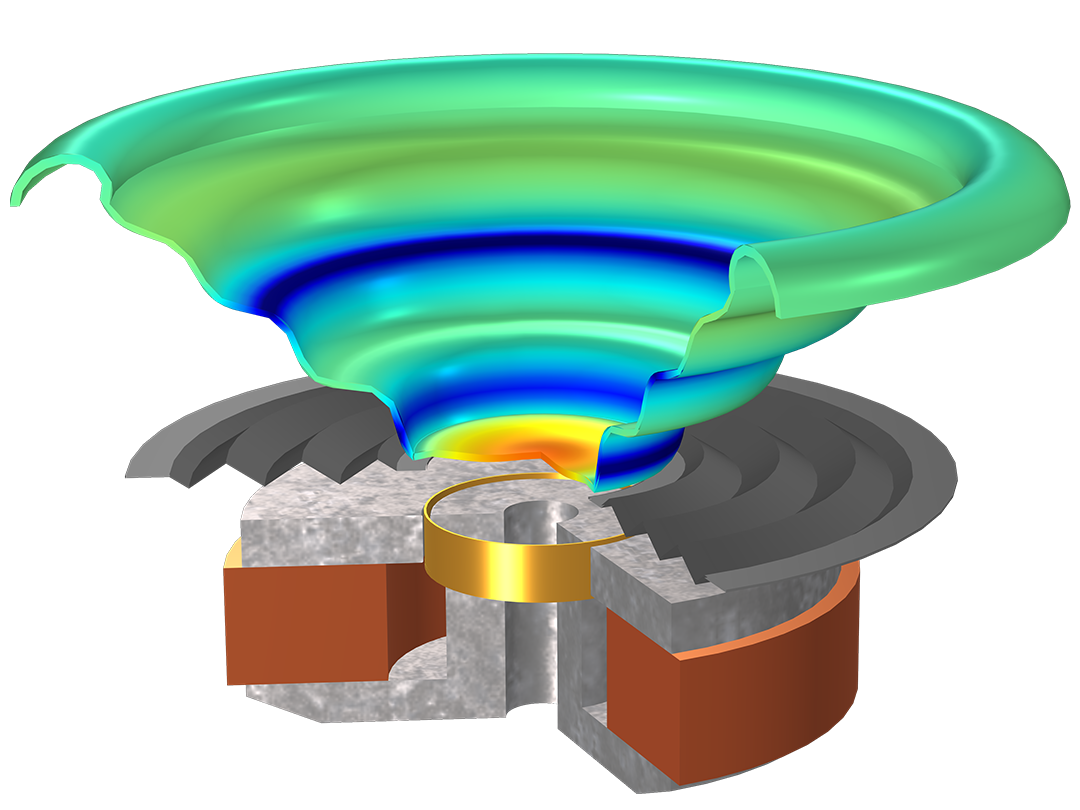
変位量の大きさを示すスピーカドライバの詳細図.

ローレンツ力

電気音響トランスデューサーなどなどのモデリングに, 体積構造荷重として使用される電流誘導ローレンツ力.
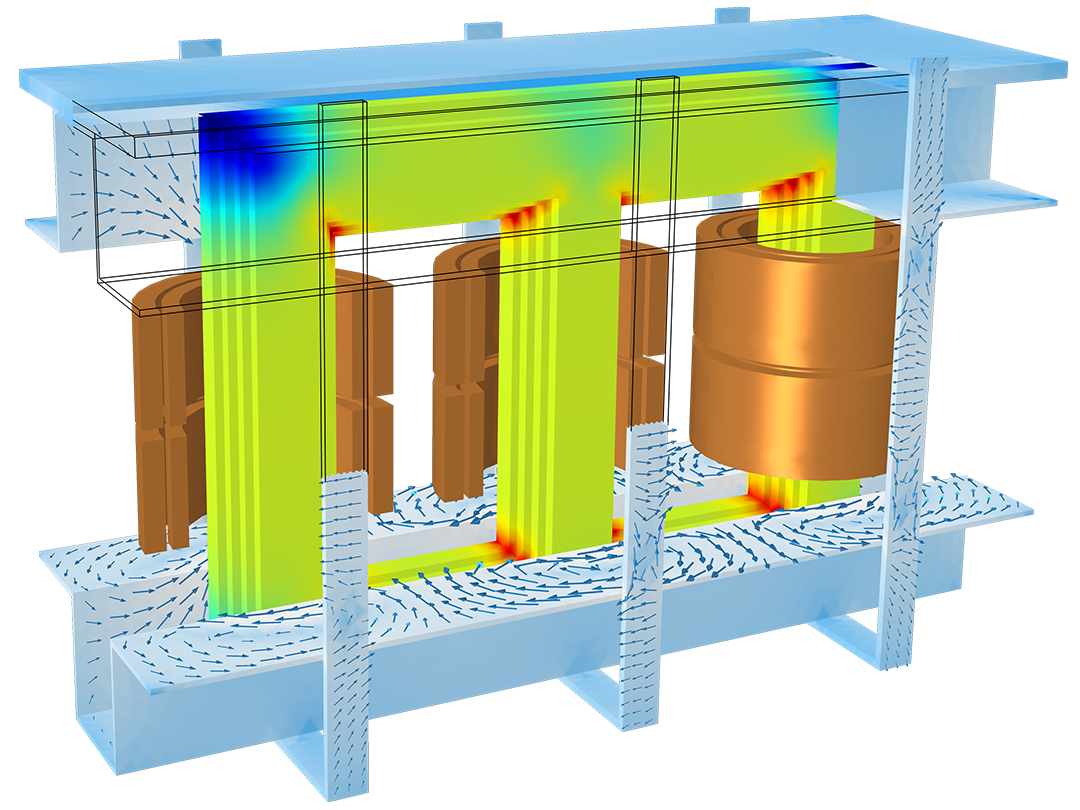
損失分布を示す電力用変圧器.

磁歪4

磁場にさらされたときの磁性材料の形状の変化で, ソナーやトランスフォーマーのノイズにとって重要.
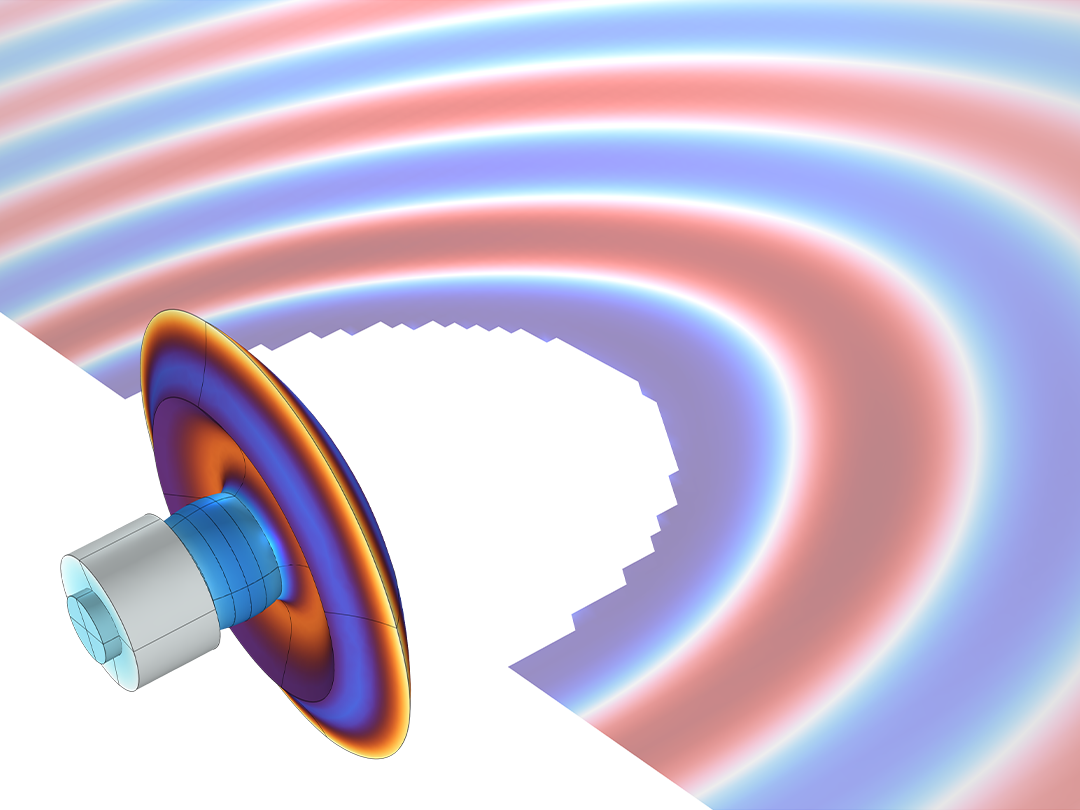
A close-up view of a tonpilz transducer showing piezoceramic rings.

Piezoelectricity1

Model piezoelectric devices, including metallic and dielectric components.

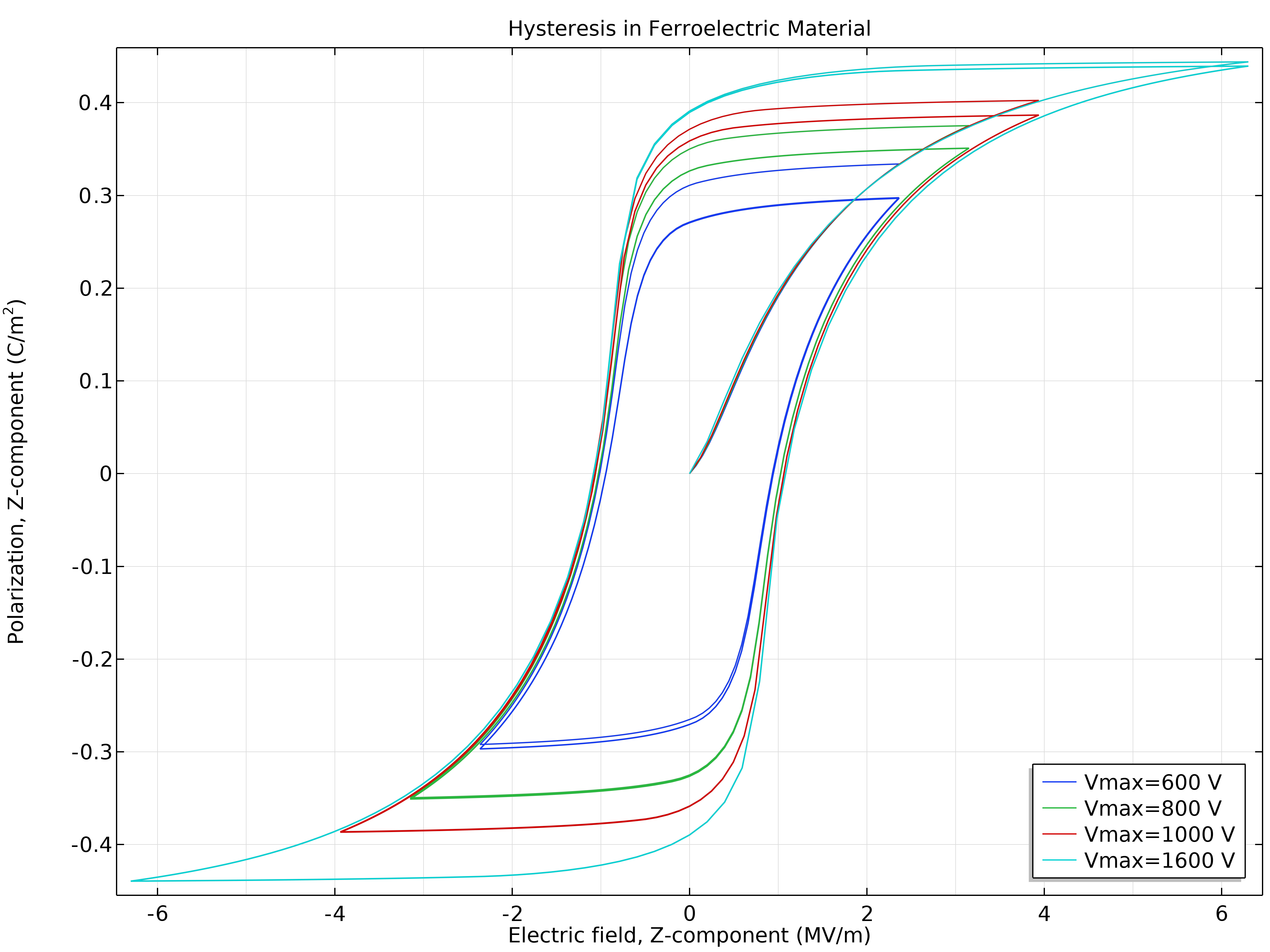
A 1D plot with electric field on the x-axis and polarization on the y-axis.

強誘電性

時間的に変化する分極をモデル化するために用いられる強誘電体の機能.

A close-up view of a magnetohydrodynamic pump showing the flow of electrically conducting fluids.

Magnetohydrodynamics

Model the interaction between electromagnetic fields and electrically conducting fluids.

A close-up view of an electrode-less lamp model with plasma acting as the secondary winding.

誘導結合プラズマ5

半導体のプロセスで使用される誘導結合プラズマ.

A close-up view of an electron beam model diverging due to its own space charge.

荷電粒子トレーシング6

電磁力による荷電粒子または磁性粒子の運動.

誘電泳動6

電界勾配による中性粒子の運動.

A close-up view of a loudspeaker core model with  optimized topology.

Optimization7

Combine electromagnetic analysis with parameter optimization, shape optimization, and topology optimization.

  1. AC/DC モジュールは必要ありません.
  2. 伝熱モジュールが必要です.
  3. さらに, MEMS モジュールまたは構造力学モジュールのいずれかが必要です.
  4. さらに, 音響モジュール, MEMS モジュール, 構造力学モジュールのいずれかが必要です.
  5. さらにプラズマモジュールが必要
  6. さらに粒子追跡モジュールが必要

COMSOL Multiphysics® でサードパーティ製のソフトウェアを使用する

MATLAB® ソフトウェアを使用すると, MATLAB® スクリプトと関数を使用して COMSOL Multiphysics® のシミュレーションを簡単に実行できます. LiveLink™ for MATLAB® インターフェース製品を使用すると, MATLAB® 環境内で COMSOL® の操作に直接アクセスし, 既存の MATLAB® コードと調和させることができます.

CAD モデルや電子回路のレイアウトの電磁気特性を簡単に解析できるように, COMSOL は主要な CAD システムのための ECAD インポートモジュール, CADインポートモジュール, デザインモジュール, LiveLink™ 製品を製品群の一部として提供しています.

また, LiveLink™ for Excel® により, Microsoft Excel® スプレッドシートのデータと COMSOL Multiphysics® 環境で定義したパラメーターを同期することができます.
シミュレーションのニーズはそれぞれ異なります.

COMSOL Multiphysics® ソフトウェアがお客様のご要望を満たすかどうかをきちんと評価するために, ぜひ当社までお問い合わせください. 営業担当者との打ち合わせを通じて, 各個人に向いたお勧めや文書化されたモデル事例などをお送りすることができ, 最大限の評価結果を引き出すことができます. 最終的にどのライセンスオプションがあなたの要望にとって最適かを選択することができます.

"COMSOL へお問い合わせ" ボタンをクリックしてください. あなたの連絡先情報およびご意見やご質問をご入力のうえ送信してください. 1営業日以内に営業担当者よりご連絡いたします.

次のステップ:

ソフトウェアデモをリクエスト